How Automation and Digital Controls Are Powering the Next Generation of Packaging Machinery
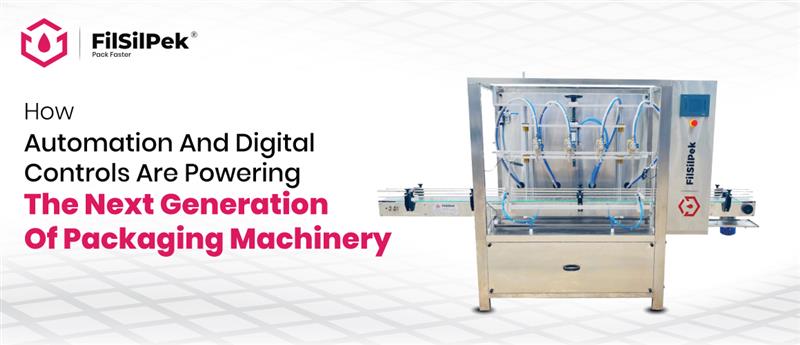
Packaging machinery has moved far beyond simple conveyors and pneumatic actuators. Today’s systems are intelligent, data aware, and capable of reacting to real time conditions on the plant floor. Driven by the need for speed, flexibility, and compliance, manufacturers are replacing rigid mechanical sequences with digitally controlled, software-defined platforms that adapt to changing product formats, material properties, and throughput demands.
At the core of this transformation are industrial automation technologies servo drives, programmable logic controllers, machine vision, and industrial networking protocols that work in concert to deliver precision, consistency, and traceability. These systems don’t just execute commands; they monitor performance, self-correct deviations, and log every action for later analysis. This level of control minimizes human intervention while maximizing uptime and product quality.
This article explores the technical backbone of modern packaging automation. It covers the key hardware and software components, how they communicate, and the practical benefits they deliver on the production floor.
The Growing Need for Automation in Packaging
Packaging operations today must handle dozens of SKUs, comply with strict traceability rules, and respond instantly to quality deviations. Manual adjustments and fixed mechanical setups simply can’t keep pace. Automation bridges this gap by embedding intelligence directly into the machine enabling real-time decision making based on sensor data, vision feedback, or upstream production signals.
Digital controls further elevate this capability by standardizing changeovers, reducing mechanical wear, and enabling remote diagnostics. They turn packaging lines from isolated equipment into connected nodes within a broader production ecosystem ready to share data with MES, ERP, or cloud analytics platforms.
- Servo-driven axes eliminate mechanical cams for smoother, quieter, and more precise motion
- Real time industrial Ethernet protocols synchronize fillers, cappers, and labelers with microsecond accuracy
- Smart sensors provide diagnostic data beyond simple on/off states
- Recipe-based changeovers reduce format switch time from hours to minutes
- Integrated vision systems catch fill errors, mislabels, or seal defects instantly
- Edge controllers run analytics for early fault detection and predictive maintenance
- Secure remote access allows OEMs to troubleshoot without on-site visits
Key Components of Digital Control Systems in Packaging Machinery
Modern packaging machinery relies on a multi-layer control architecture that separates real-time motion tasks from supervisory functions. At the lowest level, distributed I/O modules and servo drives handle high speed actuation with deterministic timing. Above that, a programmable logic controller (PLC) coordinates sequences across stations using synchronized motion profiles. At the top, an HMI or SCADA system provides operators with real-time dashboards, recipe selection, and alarm management. This layered approach ensures that time critical tasks like triggering a reject arm or adjusting fill volume are never delayed by higher level functions like data logging or remote access.
- Servo Motion with Electronic Line Shafting
Replaces mechanical shafts with virtual master-slave relationships over Ether CAT or PROFINET IRT. Each axis filling, capping, labeling can adjust speed and position independently while staying perfectly synchronized. This enables rapid format changes without mechanical retooling. - IO-Link and Smart Sensor Networks
Sensors now transmit not just status but diagnostic data like lens contamination, internal temperature, or signal strength via IO-Link masters. This allows condition monitoring and early fault prediction before a sensor fails completely. - High Speed Machine Vision Integration
Cameras inspect fill levels, cap presence, label placement, and seal integrity at line speeds exceeding 300 bottles per minute. Results are processed in milliseconds and fed directly into PLC logic to trigger rejects or auto compensation. - Recipe Management via Structured Data Models
Each product format is stored as a digital recipe containing servo offsets, PID parameters for temperature control, vision inspection tolerances, and reject thresholds. Switching SKUs is a one-click operation with no manual recalibration. - Real Time Operating Systems in PLCs
PLCs run dual environments: a hard real time kernel for I/O scanning (1–5 ms cycles) and a general-purpose OS for HMI and networking. This guarantees a deterministic response for safety and motion tasks. - Predictive Maintenance Through Vibration Analytics
Embedded accelerometers on motors and gearboxes capture vibration spectra. Onboard FFT algorithms detect bearing wear, imbalance, or misalignment long before catastrophic failure. - OPC UA for Vertical Integration
Packaging machines publish OEE, downtime codes, and batch records via OPC UA information models. This enables seamless data flow to MES or cloud analytics without custom middleware.
Implementing Automation and Digital Controls in Packaging Lines
Deploying intelligent packaging machinery requires more than just buying new equipment it demands a strategic approach to integration, data flow, and workforce readiness. Start by mapping your most frequent changeovers, quality pain points, and compliance requirements. Then select machinery with open communication standards (like OPC UA, Ethernet/IP, or PROFINET) and modular I/O architecture that supports future expansion.
Equally important involves maintenance and operations teams early. Provide hands on training on HMI navigation, alarm interpretation, and basic diagnostics. Equip them with access to digital manuals, remote support tools, and spare part QR codes that link to maintenance histories. When operators understand the logic behind the automation not just the buttons to press they become active participants in system reliability and continuous improvement.
Summing It Up
The era of “set it and forget it” packaging is over. Today’s competitive landscape demands machinery that learns, adapts, and communicates. With the right blend of servo control, sensor intelligence, and industrial networking, your packaging line can become a responsive, data rich asset that drives quality, compliance, and uptime.
Ready to upgrade to a smarter, more resilient packaging system? Filsilpek builds liquid filling and packaging machinery with native support for digital controls, remote diagnostics, and seamless MES integration. Reach out to our engineering team at [email protected] let’s build a line that grows with your business.

Adapting Filling Lines for High Viscosity Cosmetic Products
You are selecting a filling….
Filling & sealing innovations for ready to eat sauces and condiments
You’re entering a space where….
Augmented reality for remote troubleshooting & service
Augmented reality transforms field….