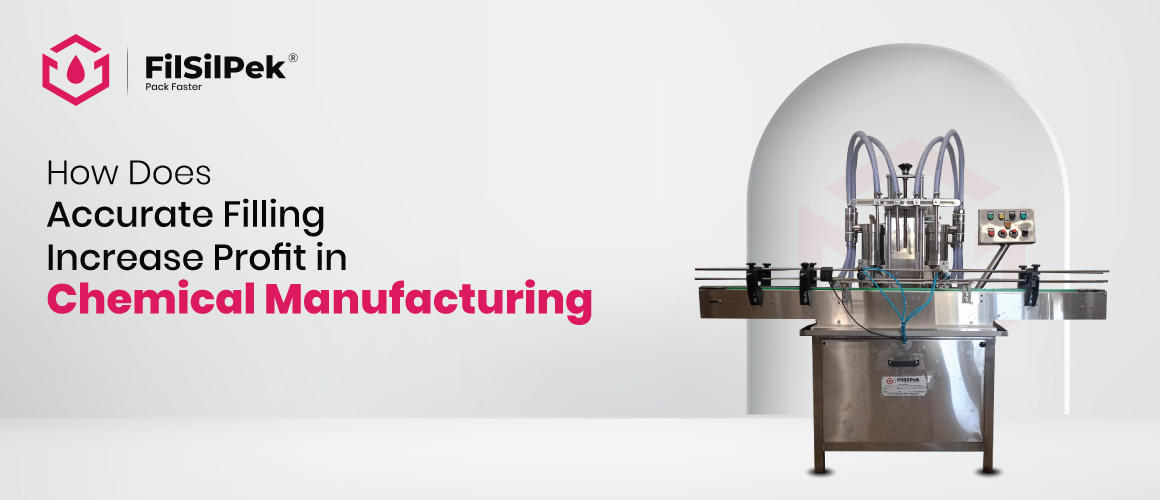
How Does Accurate Filling Increase Profit in Chemical Manufacturing
Chemical manufacturing runs on formulas, measurements, and margins. When volumes drift even slightly, those margins shrink fast. Extra product given away, customer rejections, compliance fines, and wasted labor all trace back to inconsistent filling. Controlling this step tightly is one of the fastest ways to protect and grow profit.
Most plants track yield, energy use, and downtime—but miss the hidden cost of fill variance. A drum filled 2% over spec might seem harmless until multiplied across 10 000 units. That’s real money walking out the door in unmeasured liquid. The best operations treat every fill event as a direct financial transaction, not just a packaging task.
This article shows how accurate filling lifts profitability through material control, compliance, and operational efficiency. We’ll cover where losses happen, how to fix them, and what practices turn your fill line into a profit safeguard.
Why Do Chemical Plants Lose Money on Inconsistent Fills
In chemical production, every batch has a target volume tied to cost, safety, and labeling. When actual fills stray from that target, the financial impact spreads across multiple departments. Overfills cost raw material. Underfills risk customer penalties or regulatory action. Both create extra work in quality and logistics.
The problem gets worse with reactive or high value chemicals where a few extra ounces can alter performance or safety data sheets. Even non regulated products suffer when fill errors trigger customer returns or inventory mismatches. The fix starts by seeing filling not as an endpoint, but as a core control point in your profit chain.
Key profit leaks caused by poor fill control:
- Raw material giveaway adds up fast across high volume runs
- Short fills lead to customer claims and lost repeat business
- Batch records become unreliable, slowing audits and approvals
- Packaging costs rise when container usage is unpredictable
- Quality teams spend hours chasing phantom formulation issues
- Inventory systems show phantom shortages or surpluses
- Shipping weights vary, causing unexpected freight cost spikes
- Operator time is wasted on manual corrections and checks
How Does Accurate Filling Directly Boost Bottom Line in Chemical Manufacturing
Accurate filling means every container leaves your line with the correct amount of product, batch after batch. This consistency cuts waste, reduces risk, and ensures you get paid for every unit you produce. It also keeps your operation running smoothly without unexpected stops or rework.
Plants that lock in accurate fills see faster throughput, fewer deviations, and stronger customer trust. The financial benefit comes from three areas: lower material use, reduced labor for corrections, and fewer compliance events. All of these feed directly into gross margin.
To make accurate filling a profit driver, focus on these proven methods:
Run weekly calibration on all fill meters and scales
Sensors and flow devices shift with use. Weekly checks against certified standards catch small drifts before they turn into big losses. This simple habit prevents silent giveaway that erodes margins over time.
Use real time weight-based shutoff instead of timed fills
Timed systems assume constant flow which rarely happens in real plants. Weight based shutoff guarantees the right amounts every time even if pump speed or viscosity changes during the run.
Train teams to spot common fill errors early
Operators should know how to see signs of air in lines, nozzle drip, or pressure drops. Quick recognition stops bad fills before they enter finished goods.
Connect fill data to your production management system
When filling records link to batch numbers and material lots, you gain traceability. This helps track trends like rising variance on certain products or equipment wear patterns.
Apply statistical checks to every product weekly
Plot to fill weight on a simple control chart. If values cluster near limits, investigate the cause before it creates a quality event. Early detection saves scrap and rework.
Never allow manual top offs without full documentation
Adding product after the fill cycle breaks traceability and hides true usage. If a top off is needed, log it as a deviation with full batch reconciliation.
Use temperature adjusted fills for sensitive chemicals
Some liquids expand or contract with ambient changes. Systems that adjust for real time fluid density deliver consistent net weight which matters for billing and safety.
What Daily Practices Keep Filling Accuracy on Track in a Chemical Plant
Technology helps, but daily discipline seals the results. These habits ensure your filling process stays tight shift after shift.
- Always verify container tare weight before starting a batch
- Clean fill nozzles and lines between product changes to avoid buildup
- Tracks dispense cycles to time maintenance on pumps and valves
- Hold short weekly reviews with production and finance on fill variance
- Enforce a standard operating procedure for every fill type
- Store calibration logs in an accessible digital format for audits
- Replace worn seals and gaskets on schedule not just when they fail
Ready to Turn Filling into a Profit Center?
Accurate filling gives you full control over your product output. It ensures you use only what you need, ship only what you bill for, and meet every customer and regulatory requirement without surprises. In chemical manufacturing, that level of control is a direct path to higher profit.
The best part is that most improvements require no major capital. Better calibration, smarter shutoff logic, and tighter operator routines often pay for themselves in under 90 days through material savings alone.
Want a free review of your current fill process and profit leak points? – Reach out to our team of experts at [email protected]. We help chemical manufacturers lock in accurate filling and protect every dollar in their production stream.
How can automatic powder filling technology streamline packaging of powdered biofertilizers in sustainable agriculture?
The demand for biofertilizers has increased sharply as agriculture moves toward….
What new challenges arise in packaging high-value cosmetic oils extracted from food-grade raw materials, and how do filling machines adapt?
High-value cosmetic oils like argan, almond, jojoba, avocado….

How are D2C edible oil startups using smart filling systems to offer personalized packaging for home delivery?
Direct-to-consumer (D2C) edible oil brands are changing the way households buy and use cooking oils. By cutting….