How Do You Choose Between Semi-Automatic and Fully Automatic Oil Filling Machines?
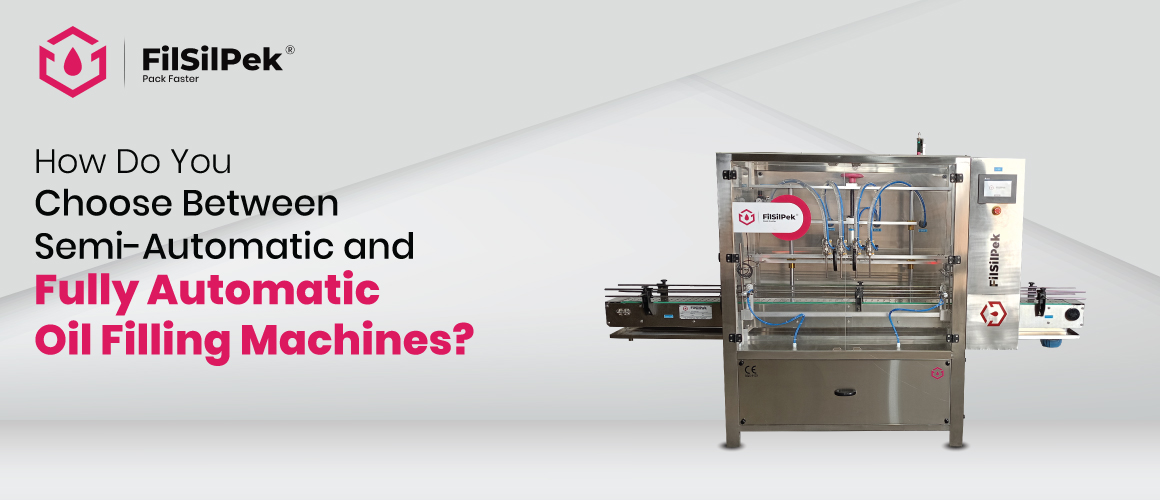
Oil filling is a critical step in packaging operations across industries like food, automotive, cosmetics, and pharmaceuticals. Getting the right amount of oil into every container consistently affects product quality, customer trust, and regulatory compliance. As demand for efficiency grows, manufacturers often face a key decision: invest in semi-automatic or fully automatic oil filling machines.
Both types of systems offer distinct advantages depending on production scale, budget, labor availability, and long-term goals. While semi-automatic machines give more hands-on control with lower upfront costs, fully automatic systems deliver speed, precision, and reduced human intervention. The wrong choice can lead to bottlenecks, higher operational costs, or underutilized equipment.
This article breaks down the core differences between semi-automatic and fully automatic oil filling machines. It covers performance expectations, cost implications, technical requirements, and practical considerations to help you select the best fit for your operation in 2026 and beyond.
Why Oil Filling is More Technical Than It Looks
Oil might seem like a simple liquid, but it is not. Some oils are thin like water, while others are thick like syrup. Temperature changes can make them behave differently during filling. If your machine cannot handle that, you end up with spills, inconsistent fills, or foam in the bottle. That hurts both your brand and your bottom line.
Regulations are also getting stricter. In the US and Europe, food-grade oil producers must now keep detailed records for every batch. Fully automatic machines can log each fill cycle automatically, including time, operator, container ID, and oil temperature. Semi-automatic machines usually cannot do this unless you add extra tools and manual steps, which slows things down and adds room for error.
Labor is another big factor. Finding skilled workers who can run filling lines consistently is harder than ever. Fully automatic systems reduce the need for constant human input, which helps maintain quality even when staff turnover is high. Semi-automatic machines still need someone to place bottles, start cycles, and watch for issues—tasks that become tiring over long shifts.
What Really Sets Semi-Automatic and Fully Automatic Machines Apart in 2026
Choosing the right machine means looking at how it performs in your actual plant, not just what the brochure says. Here are the key points that matter most right now:
- Fully automatic machines use smart pumps that adjust to oil thickness on the fly, while semi-automatic ones often need manual tuning when you switch oil types
- Automatic systems can fill 800 to 1,500 bottles per hour with one person watching, whereas semi-automatic setups usually max out around 200 to 300 bottles per hour with constant operator attention
- Changeovers take less time on modern automatic lines because they store settings for different bottle sizes and recall them with a button press
- Data from automatic machines can connect directly to your production software, helping you track waste, uptime, and batch history without extra work
- Maintenance on automatic machines is more predictable because sensors monitor wear and send alerts before failures happen
- Energy use is often lower on newer automatic fillers because they use electric motors instead of constant air pressure
- Floor space is used more efficiently with automatic systems since they combine filling, indexing, and sometimes capping in one compact unit
- Over five years, the total cost of a fully automatic machine can be lower once you account for labor savings, less product loss, and fewer compliance risks
What Buyers Are Actually Asking for Right Now When Buying Oil Filling Machine
The market has shifted in subtle but important ways. Companies are no longer just asking “How fast does it go?” Instead, they want to know:
- Can it handle my thickest oil without dripping?
- Will it work with my existing conveyor and labeling system?
- Can I add a second filling head next year if sales grow?
- Does it record data in a way that meets FDA or EU rules?
- How easy is it to train a new operator?
These questions show that buyers care about flexibility, future upgrades, and ease of use, not just automation for their own sake. Some choose semi-automatic machines not because they are cheaper, but because they pack small batches or test new products where speed is not the priority. Others invest in full automation because they ship thousands of bottles a day and cannot afford inconsistencies.
One trend worth noting is the rise of modular designs. A few manufacturers now offer base units that start as semi-automatic but can be upgraded to full automation by adding sensors, conveyors, or robotic arms later. This gives smaller businesses a path to grow without replacing everything at once.
Key Factors Buyers Consider When Choosing Between Semi-Automatic and Fully Automatic Oil Filling Machines
Forget marketing claims. The right choice hinges on measurable operational parameters aligned with your 2026–2028 roadmap. Below is a technically grounded framework used by plant engineers and packaging managers to evaluate options:
- Viscosity Handling Range: Fully automatic machines with servo-driven progressive cavity pumps handle 10–10,000 cP without hardware changes. Semi-automatic piston fillers typically max out at 2,000 cP and require manual spring tension or nozzle swaps for thicker oils.
- Fill Repeatability Under Load: During continuous 8-hour runs, automatic systems maintain ±0.5% CV (coefficient of variation). Semi-automatic units often drift to ±1.5% due to operator fatigue or inconsistent bottle placement timing.
- Changeover Time for Multi-SKU Lines: Modern automatic fillers with tool-less nozzle carriages and recipe-based PLCs switch SKUs in under 8 minutes. Semi-automatic models average 15–25 minutes, requiring manual calibration and leak checks.
- Data Integration Capability: Fully automatic machines support OPC UA, MQTT, or REST APIs for direct connection to MES or ERP systems. Semi-automatic units rarely offer native connectivity adding it requires third-party gateways and custom scripting.
- Predictive Maintenance Features: Top tier automatic oil filling machines monitor pump wear, seal leakage, and motor load via embedded vibration and pressure sensors. Alerts trigger before failures occur. Semi-automatic systems lack this foresight, relying on scheduled downtime.
- Energy and Air Consumption: Contrary to assumptions, newer automatic machines use 20-30% less compressed air thanks to servo-electric actuators instead of pneumatic cylinders. Semi-automatic units often run on constant air pressure, wasting energy during idle cycles.
- Footprint vs Output Density: A compact automatic rotary filler can process 1,200 bottles/hour in 3 m². Achieving similar output with semi-automatic stations would need 3–4 operators and double the floor space inefficient in urban or leased facilities.
- Total Cost of Ownership (TCO) Over 5 Years: When factoring labor, waste reduction, downtime, and compliance risk, automatic systems often show TCO parity or advantage by Year 3 even with 2.5x higher initial cost.
Emerging Trends Reshaping Buyer Priorities in 2026
Three market shifts are redefining what “value” means in oil filling equipment:
- Modular Automation: Buyers now prefer scalable platforms start with one automatic filling head, add capping or labeling later via plug-and-play modules. Vendors like Filsilpek and Sidel offer such architectures, reducing upgrade risk.
- Edge Intelligence: On-machine AI analyzes fill curves to detect anomalies (e.g., foaming, air entrainment) and auto-adjusts parameters. This isn’t sci-fi, it’s shipping in 2026 models from Bosch and Krones.
- Sustainability-Driven Design: Low-oil-residue circuits, stainless steel recovery loops, and energy-efficient drives are now standard in premium automatic fillers. Waste reduction isn’t just eco-friendly; it directly impacts COGS in high-margin oil segments.
These trends favor fully automatic systems, but only if your operation can leverage their data and uptime potential. For micro-batch producers or contract packagers handling erratic order volumes, a smart semi-automatic unit with digital logging may still be optimal.
Summing it up
The line between semi-automatic and fully automatic oil filling machines is fading, but the strategic implications remain sharp. In 2026, the best choice isn’t about automation level alone; it’s about how well the machine aligns with your data strategy, compliance posture, and scalability timeline. Technical buyers are moving beyond “how fast?” to “how smart, how traceable, and how adaptable?”
If you’re evaluating automatic oil filling machines for a new line or retrofit, partner with engineers who speak fluid dynamics, not just sales scripts.
For a technical consultation on selecting the right oil filling system based on your oil type, container format, and production targets, contact [email protected]
Top 5 Ways Wholesalers can reduce their cost with automation process
Look if you’re a wholesaler still filling bottles or slapping labels by hand….
Why Should You Automate Your Filling Systems?
Walk into any factory still running manual filling lines and you’ll see the same thing: tired eyes, scribbled notes….
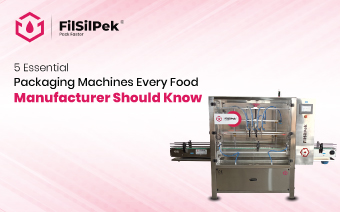
5 essential packaging machines every food manufacturer should know
Packaging is one of the most important steps in food manufacturing It protects products from contamination,….