
What Floor Space is Needed for an Automatic Oil Filling Machine Setup?
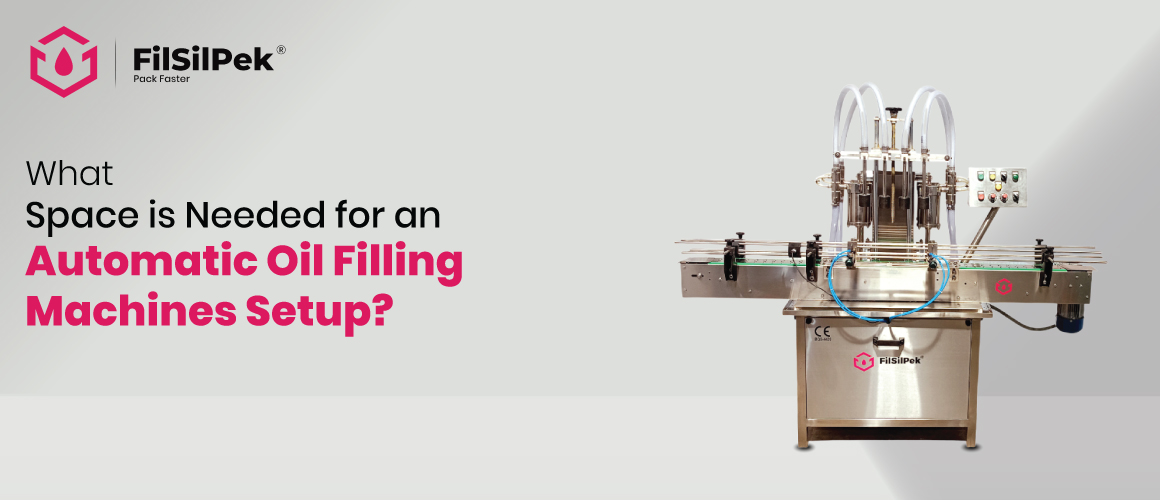
When planning to add an automatic oil filling machine to your production line, floor space is often the first real constraint you face. It is not just about the machine footprint it is about how much room you need for conveyors, operators, maintenance access, and utility connections. Many plants discover too late that their “available” space does not account for service aisles, bottle accumulation zones, or safety clearances.
In 2026, automatic oil filling machines come in compact, modular designs that help fit tighter layouts, but each configuration has different spatial demands. A small linear filler for edible oil may need only 2.5 meters of line length, while a high-speed rotary system for automotive lubricants can stretch over 6 meters with full integration. The key is to measure not just the machine, but the entire operational envelope it requires to run safely and efficiently.
This article breaks down realistic floor space requirements for common types of automatic oil filling setups, including buffer zones, utility zones, and human workflow paths based on actual installations in food, cosmetic, and industrial oil facilities this year.
Why Total Operational Footprint Matters More Than Machine Dimensions
The listed dimensions of an automatic oil filling machine reflect only the equipment frame, not the space needed for it to function reliably in a live production environment. Bottles must enter the filler in a controlled, evenly spaced manner, which requires upstream accumulation of conveyors that typically extend 1.5 to 2 meters beyond the machine’s front edge. On the discharge side, filled containers need room to stabilize before moving to capping or labeling, adding another 1.5 meters or more. Without these buffer zones, the line suffers frequent jams, inconsistent indexing, and reduced throughput even if the filler itself operates perfectly.
Maintenance access is another major factor that expands the real footprint. Components like pump heads, servo motors, and control cabinets need regular inspection, cleaning, or replacement. Technicians require clear pathways to open panels, swap seals, or troubleshoot sensors without moving other machinery. Most manufacturers specify a minimum service clearance of 0.7 to 1 meter on at least two sides. In facilities where space is tight, skipping this allowance leads to longer downtime, rushed repairs, and higher risk of cross-contamination in food or pharma applications.
Utility connections also consume floor area that isn’t obvious from spec sheets. Air preparation units, oil filtration housings, emergency shutoff valves, and drip containment trays are usually mounted nearby not inside the machine. High-viscosity oils may need heated hoses or insulated manifolds that require additional routing space to avoid sharp bends or heat loss. When these elements are squeezed into corners or stacked haphazardly, they create safety hazards and make routine checks difficult. The operational footprint includes every inch needed for safe, compliant, and uninterrupted production not just the metal base of the filler.
Space Requirements for Common Automatic Oil Filling Machine Types in 2026
Choosing the right automatic oil filling machine starts with understanding not just its capacity or speed, but how much actual floor space it will consume in your facility. Catalog dimensions often leave out critical zones for conveyors, operator access, and service clearance leading to costly layout errors during installation. In 2026, machine designs have become more compact, but spatial needs still vary widely based on configuration, output, and integration level. Below is a technically grounded breakdown of real-world space requirements for common filler types used across edible oil, lubricant, and cosmetic production lines.
- Compact Linear Fillers These systems are popular for small-batch or startup operations, handling 100 to 300 bottles per hour. While the machine base may measure only 1.2 m by 1.0 m, a functional setup requires 1.5 meters of infeed and outfeed conveyor on each side to prevent bottle backup and ensure smooth indexing. Add 0.8 to 1 meter of front clearance for operator monitoring and quick cleaning, plus a 0.7-meter rear service aisle for pump access. Total recommended space is 3.5 to 4.5 meters in line length and at least 2.0 meters in width.
- Mid-Range Linear Systems
Designed for medium-volume producers running 300 to 800 bottles per hour, these fillers use longer manifolds and often integrate drip trays or dual-nozzle heads. The base frame typically spans 2.0 m by 1.3 m, but operational needs push the total footprint to 5–6 meters in length when including accumulation zones and downstream transfer to cappers. Width expands to 2.2–2.5 meters to allow side access for maintenance and accommodate control panels mounted on the machine frame. These units often share power and air drops with adjacent equipment, so utility routing must be planned early.
- Rotary Fillers
High-speed rotary machines handle 800 to 1,500+ bottles per hour and use a circular turret design that reduces linear footprint but increases radial space demand. The turret diameter ranges from 2.0 to 3.0 meters, but surrounding star wheels, safety guarding, and curved conveyors require a clear 4.5 m by 4.5 m zone. Maintenance hatches on the underside and perimeter sensors need unobstructed access, so columns or walls within 0.8 meters can block service. These systems also generate more heat and vibration, often requiring isolated flooring or anti-slip pads that add to the effective footprint.
- Fully Integrated Monoblocs
Monobloc units combine multiple functions into one synchronized platform, ideal for high-consistency lines but demanding in spatial planning. A typical system for 300-600 bottles per hour occupies a 5 m by 3 m core area, but OSHA and food safety guidelines mandate a 1-meter perimeter clearance for sanitation and emergency access. Conveyors feed in and out at precise angles, so diagonal space must be verified in CAD layouts. These machines also house larger oil reservoirs and centralized control cabinets, which extend utility zones beyond the main frame.
- Modular Systems
Built for future growth; these platforms start as 2–4 head fillers but reserve structural and electrical capacity for adding stations later. While initial use may need only 2.5 meters of line length, smart planners block 4 meters upfront to avoid moving conveyors or rewiring during upgrades. Modular frames often include standardized mounting rails and shared manifold ports, which reduce rework but still require extra width for tool access during expansion. This approach saves long-term cost but demands disciplined space reservation from day one.
Tips to Maximize Limited Floor Space
If your plant is tight on room, these strategies can help you fit an automatic oil filling machine without major renovations:
- Choose a machine with vertical integration some models stack the oil reservoir above the fill heads to reduce ground footprint
- Use right-angle conveyor turns to route bottles around obstacles instead of requiring long straight runs
- Install overhead utility rails for air and power to keep floor-level space clear for movement and cleaning
- Opt for servo-driven linear fillers over pneumatic ones they often have smaller actuators and no bulky air manifolds
- Coordinate with your supplier early to get a 2D layout drawing with exact service zones, then overlay it on your plant CAD or scaled floor plan
- Consider mobile skid-mounted units if you run seasonal batches they can be rolled into place and stored when not in use
- One growing trend is “line nesting,” where fillers are placed between existing cappers or labelers with shared conveyors. This cuts total line length by up to 30% but requires precise timing and control integration.
Summing it up
Planning floor space for an automatic oil filling machine is less about the equipment and more about how people, products, and utilities move around it. The most efficient installations balance machine performance with human workflow and maintenance practicality—not just square meters.
If you are evaluating space for a new filler, do not rely on catalog dimensions alone. Request a detailed layout from your vendor that includes service envelopes, conveyor curves, and safety zones.
For a free space assessment and custom layout proposal for your facility, contact [email protected]
A Complete Guide to Automatic oil filling machines
Oil packaging has changed a lot over the last decade. What once depended heavily on manual labor…..
How to Select the Right Capping System for Your Product Type
Picking the right capping system has a direct impact on how smoothly your packaging line runs…..
How Does Accurate Filling Increase Profit in Chemical Manufacturing
Chemical manufacturing runs on formulas, measurements,…..