What role does PLC play in automatic oil filling machines?
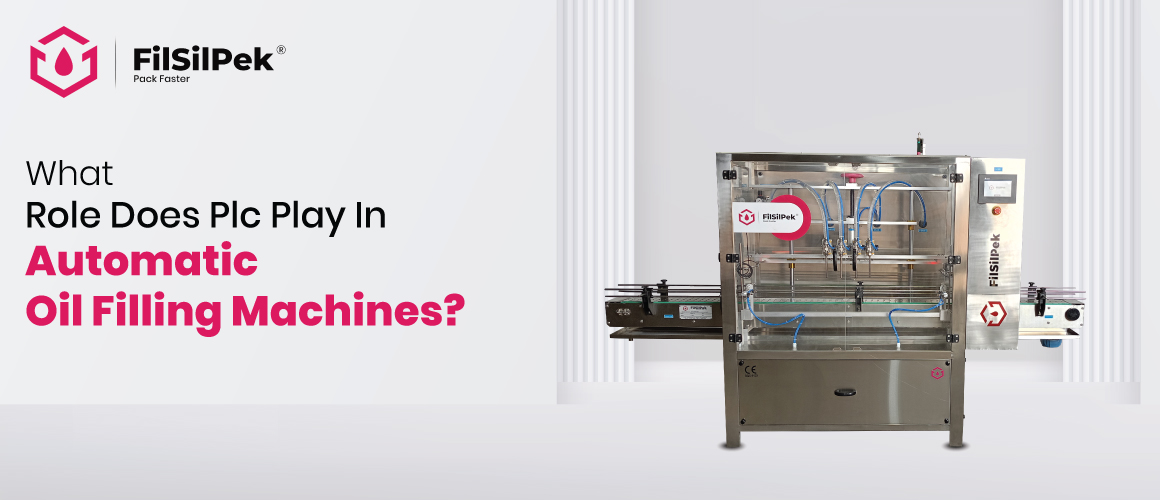
Automatic oil filling machines run many small and complex actions at the same time. Each bottle must stop at the right point; the valves must open only for the correct duration, and the exact amount of oil must enter without spills or product waste. Managing all this manually is almost impossible at the speed of modern industries’ demand. That is where PLC comes in as the main controller that keeps everything running in a smooth and reliable way.
Many factories now depend on PLC-based systems because oil as a product needs careful handling, stable flow control, and proper coordination with conveyors, sensors, and filling heads. Without a smart controller at the center, the entire system can slow down, make mistakes, or produce low-quality output.
This article explains the key functions of a PLC in automatic oil filling machines, how it improves quality, and why industries see it as an important electrical and automation component for consistent production.
What is a PLC in industrial machines?
A PLC (Programmable Logic Controller) is an industrial computer designed to control machines, processes, and electrical systems in a predictable, stable, and programmable manner. It reads signals from sensors, processes them through logic, and gives output commands to motors, valves, actuators, pumps, and alarms.
In oil filling machines, the PLC works as the main decision-maker that manages all activities in real time so that the filling cycle stays accurate, safe, and fast.
Why PLC is used in automatic oil filling machines
Automatic oil filling machines deal with sticky and viscous liquids, different bottle sizes, flow variations, and changing line speeds. PLC helps the machine handle all these challenges without downtime or product loss. It coordinates mechanical and electrical parts and helps factories achieve stable filling quality even at high speeds.
The next sections explain the specific technical roles PLC performs inside the machine.
Flow control and filling accuracy
Oil behaves differently from water or juice. It flows slower and needs proper timing to avoid overfilling. The PLC monitors flow sensors, load cells, and timing circuits to ensure that the right quantity enters each bottle.
- It reads the signal from flow meters and adjusts valve open-time based on oil thickness and temperature.
- It controls servo or pneumatic valves so the flow remains steady during the fill cycle.
- It corrects underfill or overfill conditions by adjusting the next cycle in real time.
- It manages multi-head filling so all heads discharge equal quantity even when machine speed changes.
Conveyor movement and bottle positioning
Automatic oil filling machines depend on conveyors to bring bottles to the filling station. If bottles are not placed correctly, the filling head may spill or cause leakage. The PLC maintains perfect timing and bottle alignment.
- It reads signals from photoelectric sensors to detect bottle arrival.
- It slows or stops the conveyor when the bottle is under the filling nozzle.
- It releases the conveyor after filling is completed to maintain continuous operation.
- It synchronizes indexing systems so that spacing between bottles stays uniform.
Nozzle movement and filling head control
The filling heads move up and down or stay in place depending on machine design. PLC manages this movement based on sensor feedback.
- It lowers the nozzle into the bottle to avoid foam or splashing.
- It raises the nozzle gradually based on fill level.
- It coordinates all nozzles, so they complete filling at the same time.
- It controls pressure and flow rate when using servo-based filling heads.
Safety control and fault handling
Oil filling machines include heaters, motors, pneumatic parts, and electrical systems. The PLC ensures that all safety interlocks are active and that the machine stops immediately if any unsafe condition appears.
- It monitors motor overload, air pressure, and temperature.
- It stops filling when a bottle is missing to prevent spillage.
- It signals low oil level in the tank and prevents dry running of pumps.
- It logs fault codes, helping technicians trace and fix issues faster.
Recipe management for different oil products
Factories often pack many types of oil in the same line—sunflower oil, mustard oil, soybean oil, engine oil, etc. Each type needs different flow speeds, valve timing, and bottle size settings. PLC stores these details as “recipes.”
- It allows operators to switch product type with one selection.
- It changes timing, filling volume, and head height automatically.
- It stores data for multiple bottle sizes and cap types.
- It reduces setup time during changeovers.
Real-time monitoring and communication
Modern PLCs connect with HMIs (touch panels), SCADA systems, and factory networks. This helps supervisors monitor production without stopping the machine.
- It displays fill count, error logs, and oil usage.
- It shows cycle time, line speed, and bottle count per minute.
- It supports remote troubleshooting through industrial communication ports.
- It sends alerts for predictive maintenance.
Energy and pump control
Oil needs pumps to move from tanks to filling heads. PLC ensures pump motors run efficiently and maintain correct pressure.
- It avoids pump overruns by matching pump speed with fill demand.
- It reduces pressure variations using VFD-controlled motors.
- It prevents cavitation by maintaining stable suction and tank levels.
- It balances pump cycles for longer pump life.
Benefits of using PLC in automatic oil filling machines
Factories experience many long-term benefits when using PLC-controlled oil filling machines. These benefits come from stable logic, reliable timing, and the ability to adjust machine behavior through programming instead of mechanical changes.
- Machines run with fewer breakdowns because PLC protects motors, valves, and sensors from unsafe conditions.
- Production quality stays uniform across batches, even when using different oil types or bottle sizes.
- Operators can complete changeovers faster since all settings are already saved inside the system.
- Human error reduces because the machine does not depend on manual switches or timing adjustments.
- Maintenance teams identify problems quickly through on-screen diagnostics and stored fault codes.
- Energy consumption stays low as pumps and motors run at controlled speeds based on real demand.
Summing it up
PLC keeps every part of an automatic oil filling machine working in a steady, coordinated, and predictable manner. It supports smooth flow control, safer operation, faster changeovers, and consistent output even when factories handle many oil types or operate at higher line speeds. With clear diagnostics and stable logic at the core, production teams gain more control, fewer interruptions, and better overall performance on the filling line.
If you want support with choosing the right filling automation or need technical guidance for your project, you can reach out at [email protected]
Maintenance tips and best practices to extend the life of your filling & capping line
A filling and capping line operate at the heart of production…..
How Automation and Digital Controls Are Powering the Next Generation of Packaging Machinery
Packaging machinery has moved far…
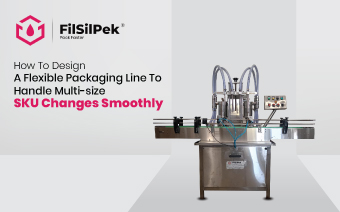
How to design a flexible packaging line to handle multi-size SKU changes smoothly
Many factories today deal with a long list of product sizes, shapes, pack counts, and..