
AI powered predictive maintenance for filling & capping lines
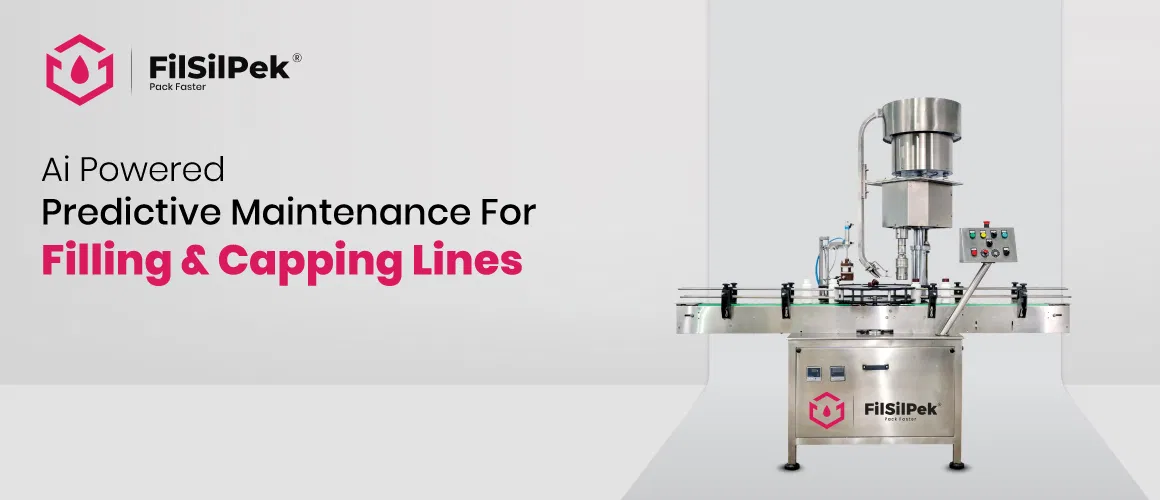
The relentless demand for efficient and reliable production within the packaging industry places immense pressure on filling and capping lines. Downtime, even for a few minutes, can translate into significant financial losses, delayed shipments, and a tarnished brand reputation. Traditionally, maintenance strategies have relied on reactive measures or scheduled preventive actions, both of which have inherent limitations. Reactive maintenance addresses issues only after they arise, leading to unexpected stoppages and costly emergency repairs. Preventive maintenance, while better, often results in over-maintenance of healthy components or insufficient attention to those on the verge of failure. A paradigm shift is underway, driven by the transformative power of Artificial Intelligence (AI) and its application in predictive maintenance for these critical packaging operations.
The Dawn of AI-Powered Predictive Maintenance for Filling & Capping Lines
The concept of predictive maintenance is not entirely new. It aims to anticipate equipment failures before they occur by analyzing operational data. However, the sophistication and accuracy of these predictions have been significantly amplified by the advent of AI. AI, with its ability to learn from vast datasets, identify subtle patterns, and make informed predictions, is revolutionizing how manufacturers approach the upkeep of their filling and capping lines. Instead of reacting to breakdowns or replacing parts based on a ticking clock, AI enables a proactive and intelligent approach, optimizing maintenance schedules and minimizing disruptions. This introduction marks the beginning of a new era, where machines can effectively communicate their impending needs, allowing for timely interventions that safeguard production integrity.
The Evolving Landscape of Industrial Maintenance
Historically, maintenance in manufacturing facilities has progressed through distinct phases. From the early days of running equipment until it broke down, manufacturers moved to scheduled replacements and inspections. While these methods provided a degree of control, they were often inefficient. AI-powered predictive maintenance represents the pinnacle of this evolution, offering a dynamic and data-driven solution. It shifts the focus from managing breakdowns to proactively managing potential failures, thereby enhancing overall operational efficiency and profitability.
Defining AI in the Context of Predictive Maintenance
At its core, AI in predictive maintenance refers to the utilization of machine learning algorithms and advanced analytical techniques to process sensor data, operational logs, and historical maintenance records. These systems can identify anomalies, detect early signs of wear and tear, and forecast the probability and timing of component failures with remarkable accuracy. This goes beyond simple threshold alerts, delving into complex correlations and causal relationships that human operators might miss.
The Transformative Role of AI in Predictive Maintenance for Filling & Capping Lines
AI’s influence on predictive maintenance for filling and capping lines is multifaceted, touching upon every aspect of equipment health management. It acts as an intelligent analyst, constantly observing, learning, and advising. The ability of AI algorithms to process and interpret massive streams of data from various sensors embedded within the machinery is a game-changer. From vibrations and temperature readings to pressure fluctuations and motor current signatures, AI can identify minute deviations that signal potential issues. This proactive approach allows maintenance teams to move from an “all hands on deck” emergency response to a carefully planned and executed intervention.
Enhancing Data Analysis and Pattern Recognition
The core strength of AI lies in its capacity to analyze complex data patterns that are often imperceptible to humans or traditional software. On a filling and capping line, numerous parameters change constantly. AI algorithms can sift through this data, identifying the subtle signatures of impending failure. For instance, a slight, consistent increase in motor current draw during a capping operation, combined with a specific vibration frequency, might indicate a worn seal or an imbalanced rotor – an issue that could escalate into a costly breakdown if not addressed. AI’s ability to correlate these seemingly disparate data points is what sets it apart.
Real-time Monitoring and Anomaly Detection
AI-powered systems offer continuous, real-time monitoring of critical equipment components. Instead of relying on periodic checks, these systems constantly analyze live data feeds. Anomalies, deviations from normal operating conditions, are flagged immediately. This instantaneous detection of unusual behavior is crucial for preventing minor issues from snowballing into major failures. For example, a sudden spike in pressure within a filling nozzle, or an inconsistent torque reading during capping, can be instantly identified and alerted, allowing for immediate investigation.
Predictive Modeling and Failure Forecasting
Beyond just detecting anomalies, AI excels at building predictive models. By analyzing historical data on how specific components have failed in the past under various operating conditions, AI algorithms can forecast the remaining useful life (RUL) of individual parts or entire subsystems. This allows for proactive scheduling of maintenance and part replacements during planned downtime, rather than during critical production periods. This predictive capability significantly reduces unexpected interruptions and optimizes inventory management for spare parts.
Implementing AI-Powered Predictive Maintenance in Filling & Capping Lines
The transition to AI-powered predictive maintenance requires a strategic and phased approach. It’s not simply a matter of installing new software; it involves a holistic integration of technology, data infrastructure, and skilled personnel. Successful implementation hinges on careful planning, robust data collection, and a willingness to adapt existing maintenance workflows.
Essential Data Collection and Sensor Integration
The foundation of any effective AI predictive maintenance system is comprehensive and accurate data. This necessitates the strategic placement of sensors across the filling and capping line. These sensors should capture a wide range of parameters, including but not limited to vibration, temperature, pressure, current draw, motor speed, cycle times, and even acoustic emissions. The quality and completeness of this data directly influence the accuracy and reliability of AI-driven predictions.
Developing and Training AI Models
Once the data is collected, the next critical step is to develop and train AI models. This involves selecting appropriate machine learning algorithms (e.g., regression, classification, deep learning) and feeding them with historical operational and failure data. The models learn to identify patterns associated with normal operation and those that precede various types of failures. This training process is iterative, with the models continuously refining their predictions as more data becomes available.
Integrating AI with Existing Maintenance Workflows
The true power of AI is realized when it is seamlessly integrated into existing maintenance workflows. This means that the alerts and predictions generated by the AI system should be actionable and easily accessible to maintenance teams. This might involve dashboards that provide clear visualizations of equipment health, automated work order generation, or direct integration with enterprise asset management (EAM) systems. The goal is to empower maintenance personnel with the insights needed to make informed decisions.
The Role of Human Expertise and Collaboration
While AI augments human capabilities, it does not replace them. The expertise of experienced maintenance technicians remains invaluable. AI provides the data-driven insights, but human operators and engineers are crucial for interpreting these insights, diagnosing complex issues, and implementing solutions. A collaborative approach, where AI and human expertise work in tandem, is essential for optimal outcomes.
Unlocking the Multifaceted Benefits of AI-Powered Predictive Maintenance
|
Benefits of AI-Powered Predictive Maintenance |
Metrics |
|
Reduced Downtime |
Percentage of downtime reduction after implementing AI-powered predictive maintenance |
|
Cost Savings |
Amount of money saved on maintenance and repair costs |
|
Improved Equipment Efficiency |
Percentage increase in equipment efficiency |
|
Extended Equipment Lifespan |
Percentage increase in equipment lifespan |
|
Enhanced Safety |
Number of safety incidents prevented due to predictive maintenance |
The adoption of AI-powered predictive maintenance for filling and capping lines yields a cascade of benefits that extend beyond simply preventing breakdowns. These advantages contribute to enhanced operational efficiency, improved product quality, and significant cost savings, ultimately driving greater profitability.
Minimizing Unplanned Downtime and Maximizing Throughput
The most immediate and tangible benefit of predictive maintenance is the drastic reduction in unplanned downtime. By anticipating failures, maintenance can be scheduled proactively during planned outages or at times of low production demand. This leads to significantly higher equipment uptime and, consequently, increased production throughput. For a high-volume filling and capping operation, even a few hours of avoided unplanned downtime can represent substantial production gains.
Reducing Maintenance Costs and Optimizing Resource Allocation
Predictive maintenance allows for a shift from reactive, often expensive, emergency repairs to planned, more cost-effective interventions. Instead of replacing parts prematurely as part of a rigid preventive schedule, AI enables their replacement only when necessary, extending their lifespan. Furthermore, by accurately forecasting failure times, maintenance teams can optimize their schedules, ensuring that the right technicians and spare parts are available precisely when needed, thereby reducing labor costs and inventory holding expenses.
Enhancing Product Quality and Consistency
Equipment malfunctions on filling and capping lines can directly impact product quality. For example, a malfunctioning capping machine might lead to inconsistent seal tightness, compromising product integrity and shelf life. An improperly calibrated filling nozzle could result in under- or over-filling, leading to product shortages or waste. AI-powered predictive maintenance helps to identify and rectify these issues before they affect product quality, ensuring greater consistency and adherence to specifications.
Improving Safety and Reducing Risk
Unplanned equipment failures can pose significant safety risks to operators. A sudden catastrophic failure can lead to injuries or damage to surrounding equipment. By predicting and preventing these failures, AI-powered predictive maintenance contributes to a safer working environment for all personnel involved in the operation of filling and capping lines.
Case Studies: Real-World Successes of AI in Predictive Maintenance
The theoretical benefits of AI in predictive maintenance are being realized in practical applications across the packaging industry. Numerous companies have already witnessed significant improvements by embracing this technology. These real-world examples provide compelling evidence of its efficacy and adaptability.
Pharmaceutical Bottling Line: Preventing Contamination and Downtime
A major pharmaceutical company implemented an AI-powered predictive maintenance solution on its high-speed sterile liquid filling and capping line. The system analyzed vibration data from capping chucks and pressure readings from filling nozzles. Within months, the AI flagged an anomaly in a capping chuck that was subtly deviating from its normal torque pattern, indicating early signs of bearing wear. Acting on this prediction, maintenance replaced the bearing during a scheduled shutdown, preventing a potential catastrophic failure that could have led to particulate contamination and a significant product recall. This proactive intervention saved the company millions in potential lost product and reputational damage.
Beverage Filling Line: Optimizing Bottle Sealing and Energy Consumption
A large beverage producer integrated AI into its high-volume bottling line’s capping machinery. The AI analyzed motor current, vibration, and temperature data from the capping heads. It identified that certain capping heads were consuming more energy and exhibiting slight torque inconsistencies, suggesting a potential issue with the sealing mechanisms. The AI accurately predicted the RUL of the worn-out seals. By scheduling their replacement during off-peak hours, the company avoided unexpected line stoppages, ensured consistent bottle sealing to prevent carbonation loss, and reduced overall energy consumption by optimizing the performance of the capping heads.
Food Product Filling Line: Ensuring Product Integrity and Shelf Life
A producer of sensitive food products faced challenges with inconsistent fill levels and capping integrity, leading to premature spoilage and customer complaints. An AI system was deployed, monitoring fill volumes, capping torque, and the temperature of filling heads. The AI detected subtle variations in fill volumes that were previously undetectable. It also identified a pattern of slight over-tightening in some capping operations, which could compromise the integrity of seals over time. This proactive approach allowed for timely adjustments to filling and capping parameters, ensuring product consistency, extending shelf life, and significantly reducing product spoilage and customer complaints.
Overcoming the Hurdles in Adopting AI-Powered Predictive Maintenance
Despite the compelling advantages, the adoption of AI-powered predictive maintenance for filling and capping lines is not without its challenges. Organizations often encounter resistance, technical complexities, and financial considerations that can impede progress. Addressing these obstacles proactively is crucial for successful implementation.
Addressing Data Quality and Availability Concerns
One of the primary challenges is ensuring the availability of high-quality, relevant data. Older machinery may not be equipped with the necessary sensors, or existing data might be incomplete or inconsistent. This requires an initial investment in sensor upgrades and a robust data governance strategy. Establishing clear protocols for data collection, storage, and integrity checks is paramount.
Overcoming Resistance to Change and Skill Gaps
The introduction of AI-driven maintenance can be met with apprehension from existing maintenance teams, who may fear job displacement or feel overwhelmed by new technology. Comprehensive training programs are essential to upskill the workforce, demonstrating how AI acts as a powerful tool to augment their expertise rather than replace it. Fostering a culture of continuous learning and adaptation is key to overcoming resistance.
Navigating the Initial Investment and ROI Justification
The initial investment in AI-powered systems, including sensors, software, and data infrastructure, can be substantial. Justifying this investment often requires a thorough cost-benefit analysis that clearly outlines the projected return on investment (ROI). Demonstrating the tangible benefits, such as reduced downtime, lower maintenance costs, and improved throughput, is crucial for securing the necessary buy-in from leadership.
Ensuring Cybersecurity and Data Privacy
As AI systems become more integrated into industrial operations, ensuring the cybersecurity of data and operational technology (OT) becomes critically important. Protecting sensitive production data and preventing unauthorized access or manipulation is essential to maintain operational integrity and prevent potential disruptions. Robust cybersecurity protocols are non-negotiable.
The Future of Predictive Maintenance: AI Advancements on the Horizon
The evolution of AI technology continues at an astonishing pace, promising even more sophisticated and integrated predictive maintenance solutions for filling and capping lines. The future holds the potential for even greater automation, deeper insights, and more seamless integration into the broader manufacturing ecosystem.
The Rise of Edge AI and Real-time Decision Making
The processing of AI algorithms is increasingly moving from centralized cloud servers to “the edge,” closer to the data source – the filling and capping machinery itself. Edge AI allows for almost instantaneous analysis and decision-making directly on the equipment. This reduces latency and enables immediate corrective actions for critical issues, further minimizing downtime.
Advanced Anomaly Detection with Deep Learning
Deep learning, a subset of AI, is enabling more sophisticated anomaly detection capabilities. These models can identify highly complex and subtle patterns that traditional machine learning might miss, leading to even earlier and more accurate predictions of impending failures. This is particularly valuable for identifying rare failure modes or interdependencies between different components.
The Integration of Digital Twins and AI
The concept of “digital twins” – virtual replicas of physical assets – is gaining traction. When combined with AI, digital twins can provide an incredibly powerful platform for predictive maintenance. AI algorithms can simulate various operating scenarios within the digital twin, predicting how the physical asset will respond and identifying potential failure points long before they manifest in reality.
Autonomous Maintenance and Self-Healing Systems
The ultimate vision for AI-powered maintenance is the development of autonomous maintenance systems. These systems, powered by advanced AI, will not only predict failures but also autonomously initiate corrective actions, such as adjusting operational parameters or even scheduling robotic maintenance tasks. This represents a significant leap towards truly “self-healing” manufacturing environments, where equipment proactively manages its own health.
The integration of AI into predictive maintenance for filling and capping lines is no longer a futuristic aspiration but a present-day reality that is rapidly transforming the manufacturing landscape. By embracing these advanced technologies, companies can move beyond the limitations of traditional maintenance, unlocking new levels of efficiency, reliability, and profitability in their critical packaging operations. The journey is ongoing, and the continuous advancements in AI promise an even brighter and more robust future for industrial maintenance.
FAQs
What is AI-powered predictive maintenance for filling & capping lines?
AI-powered predictive maintenance for filling & capping lines is the use of artificial intelligence (AI) technology to predict when equipment maintenance is needed in order to prevent unplanned downtime and optimize the performance of filling and capping lines in manufacturing facilities.
How does AI play a role in predictive maintenance for filling & capping lines?
AI plays a crucial role in predictive maintenance for filling & capping lines by analyzing data from sensors and equipment to identify patterns and anomalies that indicate potential issues. This allows for proactive maintenance to be scheduled, reducing the risk of equipment failure and improving overall efficiency.
What are the benefits of AI-powered predictive maintenance for filling & capping lines?
The benefits of AI-powered predictive maintenance for filling & capping lines include reduced downtime, lower maintenance costs, improved equipment reliability, increased operational efficiency, and the ability to prioritize maintenance tasks based on actual equipment condition.
What are some successful applications of AI in predictive maintenance for filling & capping lines?
Successful applications of AI in predictive maintenance for filling & capping lines include the use of machine learning algorithms to analyze equipment data, identify potential failures, and optimize maintenance schedules. Case studies have shown significant improvements in equipment uptime and cost savings.
What are the future advancements in AI technology for predictive maintenance in filling & capping lines?
The future of predictive maintenance in filling & capping lines involves advancements in AI technology such as the integration of more advanced machine learning algorithms, the use of predictive analytics for even more accurate maintenance predictions, and the incorporation of IoT devices for real-time equipment monitoring and analysis.

Evaluating biodegradable adhesives & capping materials – challenges & solutions
The growing imperative for environmental…..

Virtual reality training for packaging line operators
The modern manufacturing landscape is defined by its…..

Bio based lubricants: customizing filling lines for sustainable automotive oils
The hum of an engine, a symphony …..