
Collaborative robots for packaging & worker safety
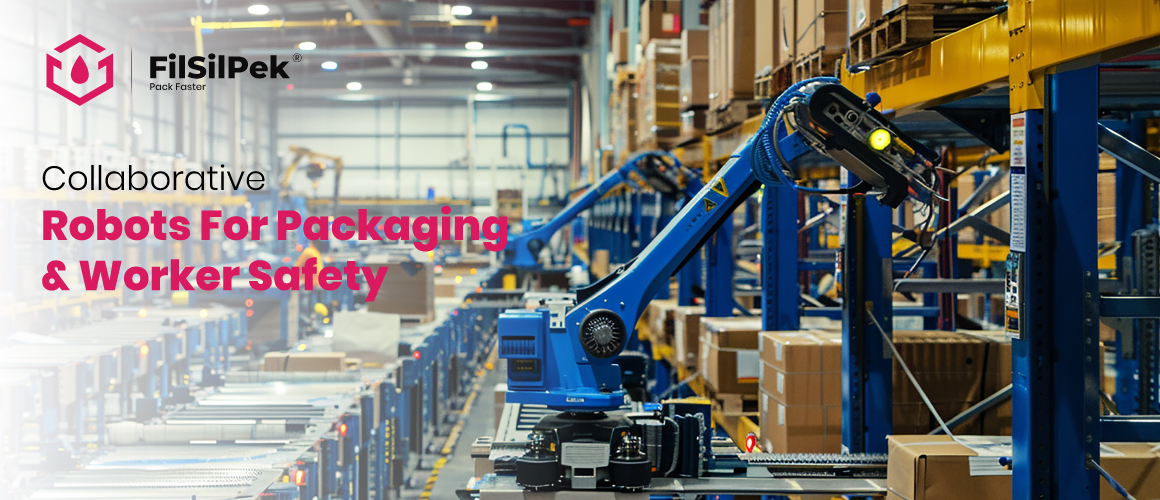
Cobots are rapidly changing how packaging lines operate, making tasks safer and more efficient. They’re designed to work directly alongside people, handling repetitive or strenuous jobs with precision without needing traditional safety cages. This means a more collaborative environment where humans and robots each do what they do best, leading to better productivity and a significant boost in safety.
How Are Collaborative Robots Transforming Modern Packaging Lines?
Modern packaging lines are constantly looking for ways to be more productive and flexible, and collaborative robots (cobots) are a key part of that evolution. They’re not just replacing workers; they’re augmenting them, taking on the dull, dirty, and dangerous tasks that human workers often find themselves doing. This frees up human employees to focus on more complex problem-solving, quality control, and supervisory roles that require human ingenuity.
Enhancing Flexibility and Adaptability
One of the biggest advantages of cobots in packaging is their inherent flexibility. Unlike large, traditional industrial robots that are often fixed in place and programmed for a single, long-run task, cobots are relatively easy to reprogram and re-deploy. This is crucial in packaging, where product changeovers are frequent, and batch sizes can vary wildly. A cobot can be quickly taught new pick-and-place patterns, adjusted for different box sizes, or moved to a different part of the line as production demands shift. This agility allows businesses to respond to market changes and customer demands much more quickly without significant retooling costs or downtime.
Optimizing Space Utilization
Packaging facilities, especially older ones, often have limited floor space. Traditional industrial robots require substantial safety fencing, which eats into valuable production area. Cobots, however, are designed to operate safely in close proximity to humans, often with integrated safety features like force sensors that stop the robot if it encounters an unexpected obstacle. This eliminates the need for bulky safety cages, allowing companies to reconfigure their layouts more efficiently and even install automation in areas where it wasn’t previously feasible. This space-saving aspect contributes directly to a more streamlined and efficient production flow.
Boosting Throughput and Consistency
While cobots might not always be as fast as larger industrial robots, their consistent performance is a game-changer. They don’t get tired, make mistakes due to fatigue, or require breaks. This means a steady, predictable throughput rate throughout the entire shift. For tasks like case packing, palletizing, or even delicate product handling, cobots ensure every action is performed with the same precision, reducing errors, minimizing product damage, and ultimately leading to a higher quality output. This consistency is vital for meeting tight production schedules and maintaining product integrity.
How Do Collaborative Robots Improve Worker Safety in Packaging Facilities?
Worker safety is a paramount concern in any manufacturing environment, and packaging lines are no exception. They often involve repetitive motions, heavy lifting, and interactions with machinery that can pose risks. Collaborative robots offer a significant leap forward in creating safer workplaces by directly addressing these common hazards.
Eliminating Repetitive Strain Injuries (RSIs)
Many packaging tasks involve highly repetitive motions, such as repeatedly lifting small items, twisting wrists, or performing the same action thousands of times a day. Over time, these actions can lead to debilitating repetitive strain injuries (RSIs) like carpal tunnel syndrome, tendonitis, and back pain. Cobots are perfectly suited to take over these monotonous, high-frequency tasks. By offloading these duties to robots, human workers are spared the physical toll, significantly reducing the incidence of RSIs and improving overall worker well-being.
Reducing Heavy Lifting and Awkward Postures
Manual handling of boxes, bags, and other packaging materials often involves heavy lifting and awkward bending or stretching, which are major contributors to back injuries and musculoskeletal disorders. Cobots can be deployed to handle these heavy or ergonomically challenging tasks, such as stacking boxes onto pallets, loading materials onto conveyors, or decanting ingredients. This means fewer instances of workers straining their backs or operating in uncomfortable positions, directly preventing a wide range of workplace injuries that are common in packaging.
Minimizing Exposure to Hazardous Environments
Some packaging processes might involve working in environments that are too hot, too cold, dusty, or even involve handling materials that could be irritating or slightly hazardous. While extensive precautions are always in place for human safety, cobots can operate reliably in these less-than-ideal conditions without discomfort or risk to their “health.” This allows businesses to protect their human workforce by assigning these more challenging environmental tasks to robots, ensuring humans are working in the safest possible conditions.
What Are the Latest Packaging Automation Trends with Cobots in 2026?
The packaging industry is dynamic, and automation trends evolve rapidly. By 2026, we’re seeing some clear directions in how cobots are being integrated, moving beyond basic pick-and-place into more sophisticated applications.
Vision-Guided Cobot Applications
One of the most impactful trends is the increasing sophistication of vision-guided cobots. Traditional cobots often rely on fixed positions or precise programming. However, integrating advanced 2D and 3D vision systems allows cobots to “see” and adapt to variations in product placement, orientation, or even defect detection. This is crucial in packaging, where products might not always arrive in a perfectly organized manner on a conveyor belt. Vision systems enable cobots to pick randomly oriented items, inspect products for quality flaws before packaging, or even manage complex sorting tasks, significantly broadening their applicability and reducing the need for rigid fixturing.
AI and Machine Learning for Adaptive Packaging
The combination of artificial intelligence (AI) and machine learning (ML) with cobots is leading to truly adaptive packaging lines. Instead of being strictly programmed for every scenario, ML algorithms can allow cobots to “learn” from data and improve their performance over time. This could mean optimizing gripping forces for delicate items, adjusting picking paths for maximum efficiency based on real-time sensor data, or even predicting maintenance needs for themselves. AI-powered cobots can handle greater variations in product types, package designs, and even fluctuating production demands with minimal human intervention, making packaging lines smarter and more responsive.
Mobile Cobots (AMRs) for Flexible Material Handling
While traditional cobots are often mounted in fixed locations, the rise of collaborative mobile robots (AMRs) is also transforming packaging logistics. Instead of products moving to the robot via conveyor, AMRs bring the robot directly to the materials or finished goods. Imagine a cobot mounted on an autonomous mobile platform that can navigate a warehouse, pick up components for a packaging line, move to another station to assemble or pack, and then transport finished products to a dispatch area. This significantly enhances the flexibility of material flow within a facility, reducing forklift traffic, improving safety by separating humans from heavy machinery, and optimizing intra-logistics pathways.
Why Are Cobots Important for Reducing Workplace Injuries in Packaging?
|
Reasons |
Metrics |
|
Reduced human interaction with heavy machinery |
Percentage decrease in accidents involving heavy machinery |
|
Improved ergonomics |
Percentage decrease in musculoskeletal disorders |
|
Enhanced safety protocols |
Number of reported safety incidents |
|
Increased productivity |
Percentage increase in packaging output |
Focusing specifically on injury reduction, cobots offer a direct and powerful solution. The nature of packaging work often involves tasks that, while seemingly simple, carry significant risks when performed repeatedly or without proper ergonomic support. Cobots directly mitigate these foundational causes of injury.
Addressing Musculoskeletal Disorders (MSDs) Directly
MSDs are a huge problem in manual packaging operations. These include conditions like carpal tunnel, tendonitis, back pain, and shoulder injuries. They stem from repetitive motions, forceful exertions, sustained awkward postures, and contact stress. Cobots are inherently designed to excel at these very tasks. By assigning them the continuous picking, placing, lifting, and sorting, the cumulative strain on human bodies is drastically reduced. This isn’t just about preventing a single accident; it’s about eliminating the long-term, chronic wear and tear that leads to debilitating, career-ending MSDs.
Creating a Safer Physical Environment
Beyond the direct task delegation, cobots contribute to a generally safer physical environment. When cobots handle hazardous tasks, the need for humans to be in close proximity to hot sealers, sharp blades, or fast-moving machinery is diminished. This reduces the likelihood of accidental contact with dangerous equipment. Furthermore, by automating heavy lifting with cobots, the risk of dropped loads, crushed fingers, or strain from unexpected shifts in weight is effectively removed, preventing acute traumatic injuries that can have immediate and severe consequences.
Reducing Human Error and Fatigue-Related Accidents
Humans, by nature, are prone to fatigue and distraction, especially during monotonous tasks. As a shift progresses, attention can wane, leading to shortcuts, improper techniques, or missed safety warnings. This is when mistakes happen – hands getting caught, loads dropped, or improper machine operation. Cobots, however, do not experience fatigue, boredom, or distraction. They perform their programmed tasks consistently and precisely, significantly reducing the chances of human error-related accidents that arise from an operator’s diminished awareness or physical capability at the end of a long shift.
How Can Businesses Maximize Productivity and Safety with Packaging Cobots?
Simply introducing cobots won’t automatically unlock maximum productivity and safety. A strategic approach is essential to leverage their full potential effectively.
Strategic Task Assignment
The key to maximizing both productivity and safety lies in understanding which tasks are best suited for cobots and which for humans. Cobots excel at repetitive, high-volume, precision tasks, or those that are physically demanding or ergonomically challenging. Humans, on the other hand, are better at problem-solving, quality inspection that requires subjective judgment, creative tasks, and handling unexpected variations. By carefully analyzing the packaging line and strategically assigning tasks based on these strengths, businesses can create a highly efficient and safe human-robot collaboration where each entity complements the other, reducing human fatigue and leveraging robot consistency.
Comprehensive Training and Skill Development
For any collaborative robot implementation to succeed, human workers need to be part of the process, not replaced by it. Providing comprehensive training is crucial. This includes not only how to operate and interact safely with cobots but also how to program them for new tasks, perform basic troubleshooting, and understand their capabilities. Upskilling the workforce to become “cobot operators” or “cobot supervisors” not only increases their value to the company but also fosters a sense of ownership and reduces the fear of automation, leading to a smoother and more productive integration. A skilled workforce is a safer workforce.
Continuous Monitoring and Optimization
Implementing cobots isn’t a “set it and forget it” process. To maximize their impact, businesses need to continuously monitor their performance, both in terms of productivity metrics and safety outcomes. Regularly collecting data on throughput, error rates, uptime, and even incident reports can identify areas for improvement. This might involve fine-tuning cobot programming, adjusting workstation layouts for better human-robot interaction, or optimizing material flow. Continuous improvement ensures that the cobots are always operating at peak efficiency and safety, adapting to changing production needs and new insights.
Fostering a Culture of Collaboration
The most successful implementations of cobots happen when there’s a culture of genuine collaboration. This means open communication between management, engineers, and line workers about the goals of automation, how cobots will enhance their work, and providing avenues for feedback. When workers feel heard and are involved in the design and optimization of cobot workflows, they are more likely to embrace the technology, identify potential safety improvements, and contribute to overall productivity. This collaborative mindset turns cobots from mere tools into integral team members, contributing to both a safer and more productive workplace.
FAQs
- How Are Collaborative Robots Transforming Modern Packaging Lines?
Collaborative robots, or cobots, are transforming modern packaging lines by increasing efficiency, flexibility, and productivity. They can handle repetitive tasks, such as picking and packing, with precision and speed, allowing for faster production and reduced lead times.
- How Do Collaborative Robots Improve Worker Safety in Packaging Facilities?
Collaborative robots improve worker safety in packaging facilities by taking on the most hazardous and strenuous tasks, such as heavy lifting and repetitive motions. This reduces the risk of injuries for human workers and creates a safer working environment.
- What Are the Latest Packaging Automation Trends with Cobots in 2026?
In 2026, the latest packaging automation trends with cobots include advancements in artificial intelligence and machine learning, enabling cobots to adapt to changing production demands and work alongside human workers more seamlessly. Additionally, there is a growing focus on integrating cobots with other smart technologies, such as IoT and data analytics, to optimize packaging processes.
- How Can Collaborative Robots Increase Efficiency in Packaging Processes?
Collaborative robots can increase efficiency in packaging processes by streamlining operations, reducing errors, and improving cycle times. They can work 24/7 without breaks, leading to continuous production and faster throughput, ultimately increasing overall efficiency.
- Why Are Cobots Important for Reducing Workplace Injuries in Packaging?
Cobots are important for reducing workplace injuries in packaging because they can handle the most physically demanding and dangerous tasks, minimizing the risk of strain, repetitive motion injuries, and accidents. This allows human workers to focus on more complex and strategic aspects of packaging, further reducing the likelihood of injuries.
Energy Recovery and Heat Exchange Technologies in Filling Machines
Energy recovery and heat exchange technologies in filling machines….
Case study: filling machines supporting D2C nutraceutical brands
At Filsilpek Solutions, automated….
Smart labelling: QR codes, NFC and customer engagement
Smart labeling technology overview and….
Contact Us
Address
B-603, SHALIN SQUARE HATHIJAN CIRCLE VATVA G.I.D.C ROAD, VINZOL,AHMEDABAD-382445 GUJARAT
Contact
+91 90542 94961
Inquiry Form