
Filling & sealing innovations for ready to eat sauces and condiments
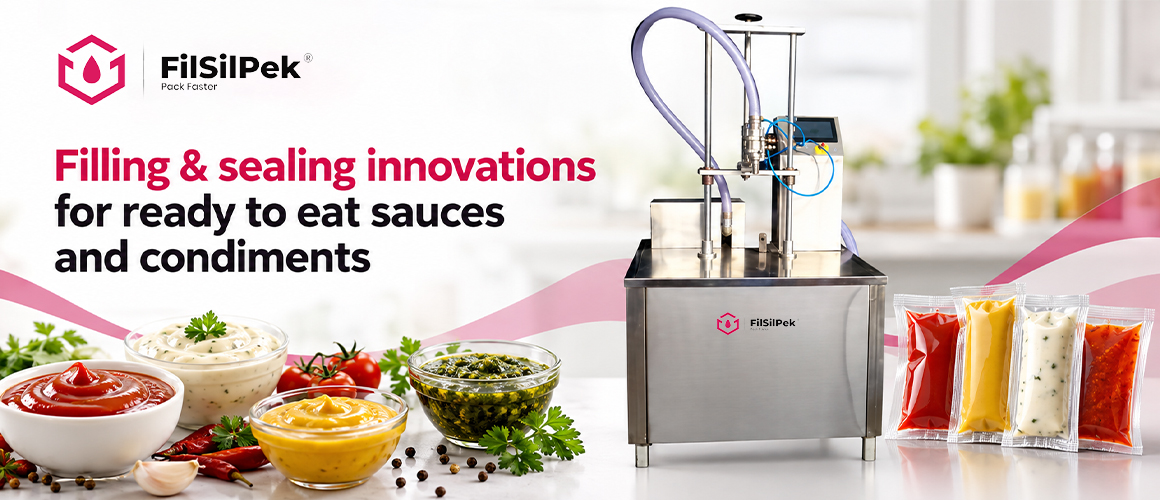
Explore filling and sealing machines for ready-to-eat sauces and condiments, with innovations in accurate dosing, hygienic packaging, and reliable sealing.
Introduction
You’re entering a space where filling and sealing innovations protect quality, extend shelf life, and deliver convenience for ready-to-eat sauces and condiments.
Advances in packaging technology now blend speed, reliability, and adaptability. Modern lines handle everything from high viscosity sauces to small, single serving portions with minimal waste.
Within this landscape, vertical form fill seal systems, stick packs and sachets, and specialty pouch technologies stand out. These formats respond to demands for portion control, portability, and a user-friendly experience. Stephanie Neu, a recognized industry analyst and packaging expert, notes how these formats unlock speed and reliability across multiple SKUs.
Modern Packaging brings a holistic approach to filling and sealing for sauces and condiments, integrating inline quality checks, data-driven line optimization, and modular equipment strategies to boost throughput and consistency.
Salad Dressing innovations are driving portions that stay aligned with consumer expectations, pairing clean labeling with portion-controlled sachets and stick packs designed for creamy, vinaigrette, and herb-lavored varieties.
Cosmetics packaging intersects with stick pack and sachet innovation where lightweight, hygienic formats meet consumer safety and brand storytelling, expanding the reach of ready-to-use cosmetic formulations in compact, on-the-go formats.
High speed stick pack and sachet filling technologies for dressings and sauces
SP6 and SP9 stick pack systems capabilities
The SP series builds on SP6 and SP9 capabilities, delivering higher throughput and robust handling for dressings and sauces with precise metering, reliable seals, and quick changeovers for multiple SKUs.
Single serving packaging plays a key role in minimizing waste and maximizing on-the-go convenience, fitting neatly with stick packs and sachets for sauces and dressings.
- Rapid changeovers minimize downtime between products
- Viscosity adaptable handling for sauces from light to thick textures
- Inline quality checks verify fill accuracy and seal integrity
- Compact footprints fit into existing line layouts
Single serving convenience and consumer needs
Single serving formats align with on-the-go trends while reducing product waste. Stick packs and sachets provide portability without compromising integrity. Modern sealing approaches minimize leaks during transport and storage, preserving flavor and texture.
- Portability for snack moments and lunchrooms
- Precise portion control supports labeling accuracy
- Multi-layer barrier films extend shelf life and protect freshness
Vertical form fill seal machinery for sauces and oils
Versatility of VFFS solutions for viscosity range
VFFS systems accommodate a broad viscosity spectrum, from pourable dressings to thick sauces. The optimal setup maintains consistent fill volumes while protecting texture and appearance. Different film structures and seal technologies support formats like sachets and stick packs without sacrificing cycle efficiency.
- Flexible sealing approaches for varying viscosities
- Film laydown optimization to reduce headspace
- Precise metering for multi component formulations
Automation and line integration considerations
R&D teams continually evolve formulations and packaging concepts, translating lab insights into scalable, market-ready solutions for sauces and condiments. Industry trade journals and data resources provide trusted insight and market intelligence that help manufacturers optimize stick pack and sachet lines for viscous dressings. In pharmaceutical contexts, similar precision and containment standards guide sterile fill and seal processes to safeguard product integrity. Sosland Publishing Company is a leading source for news and analysis on the food industry, offering data-driven reporting and market intelligence that helps packaging teams benchmark trends in sauces and condiments. Food Business News is frequently referenced for timely coverage of industry developments, supplier innovations, and market opportunities shaping condiment packaging.
Matrix Mercury brings precision motion control and real-time line analytics to sachet and stick pack operations, delivering tighter tolerances, higher uptime, and clearer paths to predictive maintenance.
MVA brings advanced motion control and line analytics to sachet and stick pack lines, delivering tighter tolerances, higher uptime, and clearer path to predictive maintenance.
KANSAS CITY serves as a hub for packaging innovation, with regional collaborators accelerating stick pack and sachet line integration for sauces and dressings. Local suppliers emphasize high-speed throughput and turnkey packaging solutions.
FLtècnics brings advanced control platforms to filling and sealing lines, driving precision in sauces and condiments with modular, maintenance-friendly solutions.
- Unified controls for real time monitoring and adjustments
- Modular feeders and conveyors to shorten changeover times
- Compatibility with in line quality checks and sorting
Specialized pouch and pre-made pouch solutions
Pacraft rotary pouch systems for liquids and viscous products
Pacraft rotary pouch machines deliver compact, high-efficiency packaging for liquids and viscous dressings. The rotary format reduces footprint while maintaining precise fill and reliable seals. Operators benefit from intuitive setup and quick changeovers tailored to multiple SKUs.
Key features include:
- Small footprint with easy access for cleaning and maintenance
- Rotary seal technology that supports consistent leak resistance
- Integrated dating and coding options for traceability
Advantages of pre-made pouches in dressings and condiments
Pre-made pouches offer a ready-to-run packaging path for sauces and condiments. They simplify filling strategy and enable rapid line changes without extensive tooling. The format also supports ergonomic dispensing and consumer convenience.
- Faster line setup and reduced changeover times
- Uniform pouch geometry improves stickability and downstream handling
- Compatibility with multiple closure styles for varied dispensing needs
Innovative closures and dispensing mechanisms
Spouted dispensing closures for sauces
Spouted closures deliver sauces cleanly with minimal drips. They pair with flexible sachets, pre-made pouches, and stick packs to balance controlled flow with easy access. The closure geometry helps preserve product integrity by limiting air exposure during use.
Key benefits include:
- Controlled dispensing that reduces waste
- Barrier retention to maintain flavor and texture
- Compatibility with a range of viscosities from thin dressings to thicker sauces
Tab top and push-to-close options for on-the-go use
Tab top designs enable quick tearing and reseal ability for single servings. Push-to-close mechanisms allow simple one-handed operation, improving the experience in portable formats. These closures support multiple formats, including stand-up pouches and stick packs across product lines.
Highlights of these closures:
- One-handed operation for convenience
- Reseal ability preserves freshness between uses
- Easy integration with existing pouch geometries and fill levels
|
Closure type |
Best-use formats |
Key consumer benefit |
Considerations |
|
Spouted closures |
Sachets, stick packs, pourable pouches |
Controlled flow, reduced mess |
Requires compatible seal finish and liner materials |
|
Tab top |
Single-serve pouches, flexible sachets |
Easy tearing, reliable reseal |
May affect stickability in some pack formats |
|
Push-to-close |
Stand-up pouches, mini bottles |
One-handed use, consistent closure |
Seal integrity must withstand repeated use |
Hot fill and packaging safety for shelf stability
Hot fill principles for sauces, dressings, and honey
Hot fill employs heat to reduce microbial risk while preserving flavor and texture. Sunday Night Premium Dessert Sauce leverages these principles to ensure shelf-stable sauces with consistent quality across SKUs.
Key factors to address include:
- Appropriate heat tolerance of packaging materials and closures
- Controlled cooling to prevent condensate formation and maintain integrity
- Viscosity adjustments or preconditioning to ensure uniform fill and seal
Regulatory and safety considerations in filling
Filling must meet food safety regulatory expectations and industry standards. Documentation, traceability, and process validation support compliance and risk management. Equipment validation ensures consistent performance across SKUs and line configurations.
Important considerations:
- Sanitation protocols and clean in place effectiveness
- Validated temperature profiles and batch records
- Material compatibility and risk assessment for all packaging components
|
Aspect |
Focus |
Outcome |
|
Container compatibility |
Heat tolerance of bottles, pouches, and closures |
Maintains seal integrity and prevents leakage |
|
Temperature control |
Precise fill and rapid cooling |
Consistent safety margins and product quality |
|
Documentation |
Batch records and validation data |
Regulatory readiness and traceability |
Sustainability trends in condiment packaging
Material efficiency with stick packs and sachets
Manufacturers are shrinking material use by favouring stick packs and sachets for single serving formats. The lighter profiles reduce raw material demand and overall packaging weight, which translates to lower transportation emissions.
New film structures enable thinner walls without sacrificing barrier performance. This preserves product integrity while cutting material usage across the value chain.
- Down-gauged films paired with optimized sealants
- Formulations geared toward reducing scrap in production lines
- Designs that minimize oversized headspaces in pouches
Recyclability and eco-friendly options in single-serving formats
Single-serving packaging is evolving toward recyclability and compostability where permissible. Recyclable mono-material options and certified compostable layers help close the loop while preserving shelf life.
Factories are adopting streamlined sorting and recovery strategies to support end-of-life processing for stick packs and sachets. This aligns with consumer demand for responsible choices without compromising convenience.
- Mono-material alternatives to ease recycling streams
- Biobased polymers where compatibility with product and closure is maintained
- Clear labeling of material composition to aid recycling processes
|
aspect |
benefit |
considerations |
|
Material weight |
Lower environmental footprint per unit |
Must maintain barrier and seal integrity |
|
Recyclability |
Simplifies end-of-life processing |
Requires compatible recycling streams and accurate labeling |
|
Biobased options |
Potential for renewable feedstocks |
Impacts on cost and performance under real-world use |
Future trends and integration with manufacturing
Digitalization and process control
Factories are adopting connected packaging lines that deliver real time visibility into fill accuracy, seal integrity, and overall line performance. Data from sensors, scales, and vision systems feeds centralized dashboards to support rapid decision making.
Advanced analytics forecast equipment wear, adjust setpoints, and minimize downtime, promoting consistent quality across SKUs and safer operations.
- Integrated SCADA and MES interfaces enable end to end oversight
- Traceability from raw materials to finished packs supports recalls and compliance
- Remote monitoring facilitates commissioning and upgrades without disruption
Maintenance, cleanliness, and regulatory compliance
Maintenance practices prioritize preventive care for seals, heating elements, and lubricants to reduce variance. Hygienic design and streamlined CIP/SIP workflows speed sanitation without compromising performance.
Regulatory readiness relies on ongoing validation and traceable change records across the line.
- Condition monitoring helps prevent outages
- Easy disassembly and hygienic design accelerate cleaning and sanitization
- Standardized validation packages simplify audits and documentation
|
Aspect |
Benefit |
Considerations |
|
Data integration |
Improved oversight and fast responses |
Cybersecurity and data governance |
|
Predictive maintenance |
Lower downtime, longer equipment life |
Accurate sensing and calibration |
|
Validation protocols |
Regulatory confidence |
Documentation and change management |
FAQs
- What is VFFS, and why is it popular for sauces and condiments?
Vertical Form Fill Seal (VFFS) technology enables continuous filling and sealing of liquid products in a compact, automated format. It is well suited for sauces, dressings, and condiments, particularly for single-serve and high-speed packaging applications.
- How do stick pack and sachet machines handle high-viscosity products?
Stick pack and sachet systems can use specialized filling mechanisms, pumps, and sealing technologies to maintain accurate dosing of high-viscosity products. Proper equipment selection helps minimize product shear while preserving the desired texture and consistency.
- What should you consider when selecting packaging equipment for sauces?
Key considerations include required production speed, product viscosity, the presence of particles or sediment, film compatibility, filling accuracy, seal performance, and integration with existing production and conveying systems. Pre-made pouches can be advantageous for products containing particles because they can simplify processing and support reliable sealing.
- Which closures are suitable for on-the-go sauces and condiments?
Spouted closures, tab-top formats, and push-to-close options can provide convenient dispensing and improved product control for on-the-go applications. The appropriate closure depends on factors such as product viscosity, package format, consumer usage, and resealing requirements.
- How can manufacturers maintain shelf stability and packaging compliance?
Shelf stability can be supported through validated hot-fill temperatures, effective heat sanitation, appropriate closure selection, and controlled filling and sealing processes. Manufacturers should also maintain documentation for process controls, packaging-material compatibility, and end-of-line quality verification to support food safety and regulatory requirements.
|
aspect |
guidance |
considerations |
|
Throughput |
Match line speed to product type |
Ensure consistent fill and seal timing |
|
Film compatibility |
Choose film with barrier and seal performance |
Evaluate heat resistance and sealing temperatures |
|
Closure integrity |
Assess dispensing reliability across SKUs |
Test after temperature cycles and transport |

Adapting Filling Lines for High Viscosity Cosmetic Products
You are selecting a filling….

Augmented reality for remote troubleshooting & service
Augmented reality transforms field….
Energy Recovery and Heat Exchange Technologies in Filling Machines
Energy recovery and heat exchange technologies in filling machines….
Contact Us
Address
B-603, SHALIN SQUARE HATHIJAN CIRCLE VATVA G.I.D.C ROAD, VINZOL,AHMEDABAD-382445 GUJARAT
Contact
+91 90542 94961
Inquiry Form
Contact Us
Address
B-603, SHALIN SQUARE HATHIJAN CIRCLE VATVA G.I.D.C ROAD, VINZOL,AHMEDABAD-382445 GUJARAT
Contact
+91 90542 94961
Inquiry Form
Contact Us
Address
B-603, SHALIN SQUARE HATHIJAN CIRCLE VATVA G.I.D.C ROAD, VINZOL,AHMEDABAD-382445 GUJARAT
Contact
+91 90542 94961
Inquiry Form
Contact Us
Address
B-603, SHALIN SQUARE HATHIJAN CIRCLE VATVA G.I.D.C ROAD, VINZOL,AHMEDABAD-382445 GUJARAT
Contact
+91 90542 94961
Inquiry Form
Contact Us
Address
B-603, SHALIN SQUARE HATHIJAN CIRCLE VATVA G.I.D.C ROAD, VINZOL,AHMEDABAD-382445 GUJARAT
Contact
+91 90542 94961
Inquiry Form