
Designing hygienic filling systems for plant-based meat and protein drinks
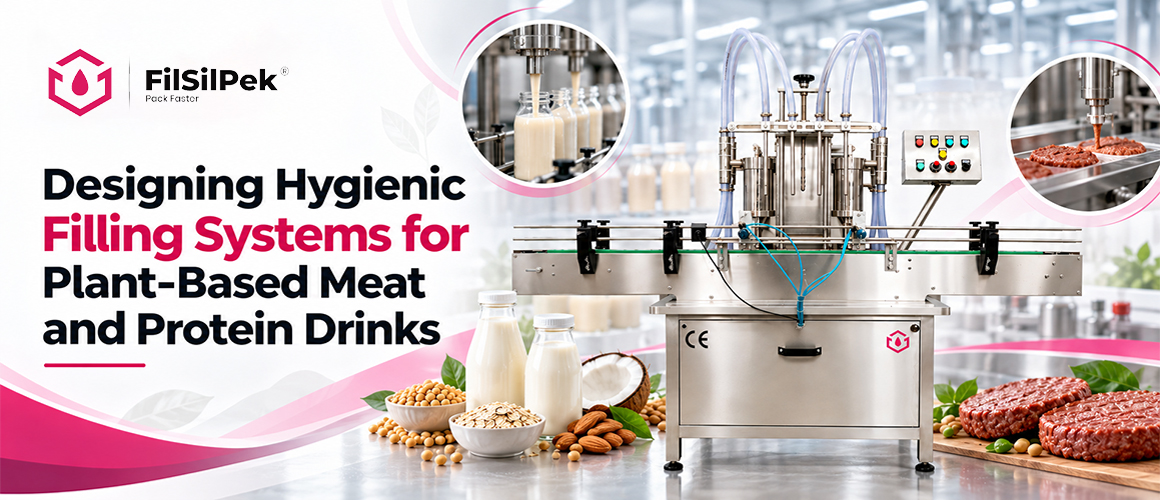
Explore hygienic filling systems for plant-based meat and protein drinks, covering sanitary design, product handling, cleaning and cross-contamination control.
Introduction
Rationale for hygienic design in plant-based processes
Hygienic design protects product quality, shelf life, and consumer safety in plant-based drinks and meats. Clean surfaces, smooth finishes, and minimal crevices help prevent residue buildup and microbial growth. This is critical when handling diverse raw materials such as oat-based beverages, soybeans, oats, almonds, rice, coconuts, nuts, and fruit pulp.
Equipment from reputable suppliers should support easy cleaning and reliable CIP performance. Frontiers’ research and guidelines help shape best practices for safe, scalable plant-based production. GFI’s research and guidelines help shape best practices for safe, scalable plant-based production. Alfa Laval’s hygienic filling and heat transfer solutions further enhance cleanability and process efficiency across dairy alternatives and plant-based beverages, and across plants as the sourcing and processing sites for ingredients.
Bioreactors play a key role in fermentation segments of plant-based systems, enabling controlled cultivation of microorganisms to produce proteins or enzymes used in meat analogy and protein drinks.
3D Printing is increasingly used to prototype complex hygienic components and fluidic interiors, enabling rapid iteration of fittings and non-wetted parts for plant-based filling systems. It supports customization without compromising cleanability or compliance.
Overview of filling system challenges and goals
Filling lines for plant-based drinks face challenges such as varying viscosity, foaming, and particle load from ingredients like fruit pulp. Goals include preventing dead zones, avoiding material buildup, and ensuring repeatable fill volumes and headspace control.
- Targeted cleanliness with minimal downtime
- Energy efficient operation and reliable throughput
- Versatile configuration for plant-based drinks production and plant-based meats
Hygienic design principles for filling equipment
Smooth surface finishes and cleanability
In plant-based drinks production, equipment surfaces must resist adhesion of viscous ingredients and particulate matter. Choose metal surfaces with mirror-like finishes and polished welds to reduce micro crevices where residues can hide. This supports consistent texture and mouthfeel across oat, soy, and almond-based beverages.
Routinely inspect sealing areas and gaskets to ensure compatibility with raw materials such as fruit pulp and nut particles. A design that prioritizes accessible cleaning paths enhances CIP effectiveness and minimizes post cleaning downtime.
Minimizing dead zones and interior geometry
Eliminate pockets where product can stagnate by selecting components with continuous, unobstructed interiors. Round transitions between fittings and vessels reduce shear zones that trap materials like plant-based proteins and sugar solutions used in beverage processing.
Plan for modular setups that can support hybrid foods, enabling smoother transitions between plant-based drinks and fermentation-derived ingredients without compromising hygiene or cleaning efficiency.
Material and surface considerations for plant-based products
Non-reactive, food-grade materials and coatings
Choose materials that do not react with a wide range of plant based raw materials such as oat milk, soybeans, and nut extracts. Stainless steels with low impurities and food-grade elastomers minimize flavor transfer and corrosion risk. Coatings should be approved for contact with dairy alternatives and plant-based beverages to preserve taste and stability over time.
Where possible, use surfaces that resist mineral buildup and pigment migration from fruit pulp and other particulate matter. Compatibility with cleaning agents used in CIP cycles is essential to avoid surface degradation that could harbor residues.
Mycelia offer a robust, filamentous scaffold for enzyme production in fermentation steps that can support plant-based textures and flavor development, enabling smoother integration with precision fermentation workflows.
Surface treatments to prevent stickiness and residue
Implement surface treatments that reduce adhesion of viscous plant-based ingredients and oils from nuts and seeds. Treatments should withstand repeated sanitized exposures without flaking or thinning, maintaining hygienic performance across batches.
Consider engineered textures that minimize contact area for high viscosity formulations while preserving flow. Such textures help maintain consistent texture and mouthfeel in beverages like oat or almond based drinks and support reliable texture in plant-based foods during processing and filling.
|
Material/Coating |
Benefit for Plant Based Drinks |
Considerations |
|
Polished stainless steel (AISI 304/316) |
Low reaction risk, easy CIP |
Keep away from aggressive cleaners that may dull finish |
|
Non-stick fluoropolymer coatings |
Reduces stickiness from fruit pulp and oils |
Must meet food contact standards and be abrasion resistant |
|
Glass or ceramic linings (where applicable) |
Excellent inertness with diverse raw materials |
Heavier, less forgiving for complex piping |
Cleanability and CIP strategies for filling lines
Effective cleaning in place for complex geometries
Plant based drinks production demands thorough cleaning without disassembly. CIP sequences should address complex geometries by incorporating gentle circulating profiles that reach fan shaped fittings, elbows, and flange interfaces. Use minimal dead zones and ensure that cleaning agents cover all surfaces, including interior corners of decanters and shell and tube sections.
Design considerations include accessible nozzles, removable clamps, and modular spray devices that can be adjusted for varying product loads such as oat milk, soy beverage, or nut derived emulsions. Align CIP cycles with product contact surfaces to prevent cross contamination and preserve texture and mouthfeel across line changes.
Validation and monitoring of cleanliness
Establish a validation protocol that documents CIP efficacy through routine surface sampling and rinse significance checks. Implement sensor-based monitoring to verify flow rates, temperature, and contact time during each cycle, ensuring repeatable cleanliness across shifts and product families.
Record keeping should cover load conditions, chemical concentrations, and dwell times, enabling traceability for plant-based drinks production. Regular reviews of CIP parameters help adapt to changes in raw materials such as almond milk or coconut milk variants, maintaining stability and taste throughout manufacturing runs.
- Stain and residue indicators can provide immediate feedback on cleaning success
- Periodic benchmarking against validated cleanliness targets supports compliance
- Routine calibration of sensors maintains accuracy for critical CIP metrics
Process integration and control for consistency
Ventilation, seals, and sanitary connections
Effective plant-based drinks processing relies on clean air handling and tight seals to prevent contamination and moisture ingress. Design ventilation to minimize condensation on control panels and sensitive instrumentation, while avoiding draft zones near open product contact areas. Choose sanitary connectors with standardized gaskets that resist swelling and degradation from cleaning agents used in CIP cycles. Ensure seals accommodate frequent temperature shifts without compromising fit, especially at filling interfaces handling oat milk, soy beverages, or nut-based emulsions.
Strategically place vents and breather filters to prevent airborne particles from reaching process zones. Use sanitary clamped connections that enable quick disassembly for inspection and maintenance, supporting rapid line changes between product families and batch sizes.
Automation and real-time quality assurance
Integrate automation that correlates sensory targets with process variables such as shear, homogenization pressure, and heat treatment. Real time data supports early detection of drift in texture, mouthfeel, or stability across variations in raw materials like rice or almond derives. Link sensors to a centralized control system that flags deviations before they impact finished drinks.
Implement inline QA checks at critical control points to verify viscosity, phase separation, and microbial indicators. Use alert thresholds to trigger containment measures and immediate parameter adjustments, reducing waste and downtime while sustaining uniform product quality across runs.
Maintenance, reliability, and scale-up considerations
Modular design for flexible production
A modular approach enables rapid reconfiguration to accommodate different plant-based drinks lines, such as oat milk to almond milk. Interchangeable modules support varying batch sizes, formulations, and seasonal demand without overhauling the entire filling system. Standardized interfaces simplify retrofit work and reduce downtime during transitions between products like soy beverages and rice milks.
Key benefits include lower capital exposure, faster line changes, and consistent hygienic performance across modules. Consider jointed shells, clamp connections, and plug-and-play sensors that maintain sanitary integrity while allowing fast swapping of components.
Predictive maintenance and uptime optimization
Forecasting maintenance needs relies on data from vibration, temperature, and flow metrics collected across the filling train. Proactive interventions minimize unplanned downtime and extend the life of critical parts such as gaskets, seals, and pump bearings. Use trend analysis to identify tendencies before failures occur, especially when switching between materials with different viscosities and particulates.
Europe is a leading hub for plant-based and fermentation-driven food innovation, with a robust regulatory framework and cross-border supply chains supporting hygienic filling systems across the region.
Schedule maintenance windows that align with production planning to avoid bottlenecks. Maintain an inventory of spare parts tied to the most common wear items seen in plant-based processing, including decanter interfaces and shell and tube heat exchangers. Regular calibration of sensors ensures accurate condition monitoring and consistent product quality across shifts and product families.
|
Aspect |
Impact on production |
Examples for plant-based drinks |
|
Modularity |
Faster line changes, lower risk of wide-scale stoppages |
Switching from oat milk to coconut milk emulsions |
|
Predictive analytics |
Reduced downtime, extended equipment life |
Monitoring gasket wear in sanitary connectors |
|
Spare part strategy |
Improved uptime, controlled costs |
Stocking HL8-WG seals, decanter wear components |
Conclusion
Designing hygienic filling systems for plant-based meat and protein drinks centers on cleanability, materials, and reliable process control. Align equipment choices with the variability of raw materials such as oats, soybeans, almonds, and coconut milk to sustain texture, mouthfeel, and shelf life across plant-based drinks production.
Cultured meat, produced via cell-based techniques, can complement plant-based systems by delivering specific textures and fats that enhance product perception in hybrid or fully cultured meat offerings.
Singapore is emerging as a regional hub for plant-based and fermentation-driven food innovation, supported by strong food safety standards and advanced bioprocessing facilities that enable incremental scale-up for hygienic filling systems.
In the United States, plant-based and precision fermentation approaches are accelerating investment in hygienic filling systems, supported by strong standards and regulatory guidance to ensure safety and consistency at scale.
Precision Fermentation is driving tailored microbial workhorse programs that produce proteins, fats, and enzymes for plant-based meats and protein drinks, enabling more consistent textures and flavor profiles at scale.
Key priorities include smooth interior surfaces, minimal dead zones, and robust CIP strategies to prevent residues and microbial concerns. Integration with sanitary connections, seals, and ventilation supports consistent product quality during scale up and line changes.
Abstract: This article distils hygienic design principles for filling systems in plant-based meat and protein drinks, highlighting material choices, cleanability, CIP strategies, and process control to support safe, scalable production.
FAQs
- Why is hygienic design important in plant-based filling systems?
Hygienic design prevents contamination, reduces residue buildup, and supports product quality and shelf life. Smooth surfaces, sanitary connections, and easy-to-clean equipment help maintain food safety.
- Which materials are best for hygienic filling equipment?
Food-grade stainless steel, particularly AISI 304 and 316, is commonly used because of its corrosion resistance, durability, and cleanability. Food-contact seals and coatings must also be compatible with the product and cleaning chemicals.
- What is Cleaning in Place (CIP) in plant-based production?
CIP is a cleaning process that removes product residues from equipment without requiring complete disassembly. Properly validated CIP cycles use controlled cleaning solution concentration, temperature, flow, and contact time to achieve consistent cleanliness.
- How can filling systems handle different plant-based products?
Modular equipment, adjustable filling parameters, and flexible configurations allow manufacturers to process products with different viscosities, foaming characteristics, and particle contents, including oat drinks, almond beverages, and plant-based meat mixtures.
- How does automation improve hygienic filling system performance?
Automation monitors critical process parameters, detects deviations, and supports consistent filling accuracy and product quality. Combined with predictive maintenance and CIP monitoring, it can reduce downtime, minimize waste, and improve production efficiency.

Digitalization & Industry 4.0 integration for real time data monitorin
Digitalization and Industry 4.0 integration are fundamentally changing how we monitor data in…..

Enhancing operator training with augmented reality support
So, can augmented reality actually make operator training better? The short answer is a…..
Ozone and UV sterilization in filling machines
When it comes to keeping your filling machines clean and your products safe, ozone and UV…..
Contact Us
Address
B-603, SHALIN SQUARE HATHIJAN CIRCLE VATVA G.I.D.C ROAD, VINZOL,AHMEDABAD-382445 GUJARAT
Contact
+91 90542 94961
Inquiry Form
Contact Us
Address
B-603, SHALIN SQUARE HATHIJAN CIRCLE VATVA G.I.D.C ROAD, VINZOL,AHMEDABAD-382445 GUJARAT
Contact
+91 90542 94961
Inquiry Form
Contact Us
Address
B-603, SHALIN SQUARE HATHIJAN CIRCLE VATVA G.I.D.C ROAD, VINZOL,AHMEDABAD-382445 GUJARAT
Contact
+91 90542 94961
Inquiry Form
Contact Us
Address
B-603, SHALIN SQUARE HATHIJAN CIRCLE VATVA G.I.D.C ROAD, VINZOL,AHMEDABAD-382445 GUJARAT
Contact
+91 90542 94961
Inquiry Form
Contact Us
Address
B-603, SHALIN SQUARE HATHIJAN CIRCLE VATVA G.I.D.C ROAD, VINZOL,AHMEDABAD-382445 GUJARAT
Contact
+91 90542 94961
Inquiry Form