Regulatory compliance and validation for pharmaceutical filling lines
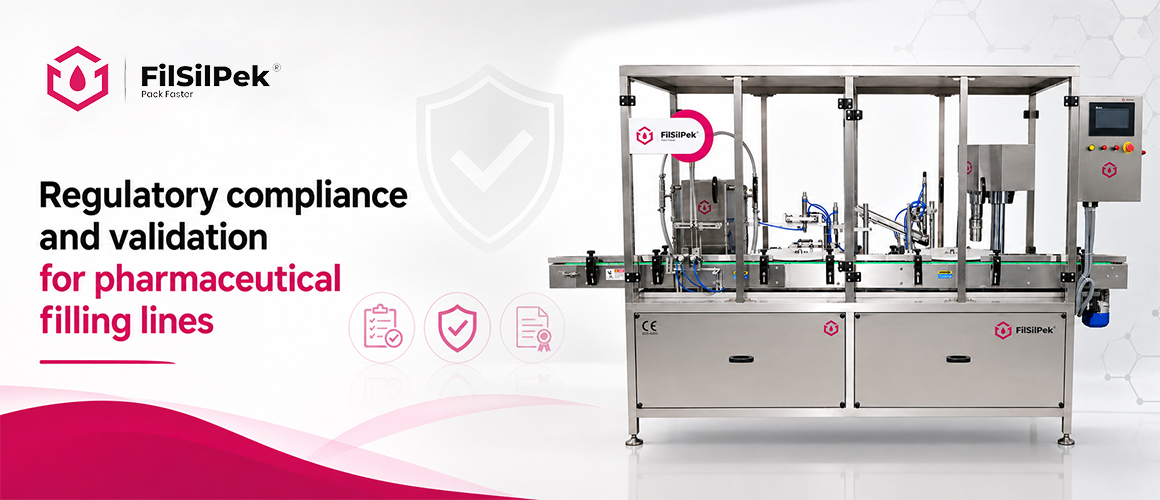
Learn the key regulatory compliance and validation requirements for pharmaceutical filling lines, including GMP, qualification, documentation, process validation and quality control.
Overview of regulatory landscape for pharmaceutical filling lines
You operate in a highly regulated environment where filling lines must consistently deliver sterile, contamination-free products. The major frameworks you must align with include GMP guidelines, EU GMP Annex 1, PIC/S recommendations, and FDA expectations. Compliance rests on validated processes, robust documentation, and ongoing quality oversight. A risk-based approach helps you focus on critical process parameters, installation integrity, and data integrity across the line.
Pharmaceutical manufacturing underpins every step from material intake to finished product, demanding validated processes, rigorous contamination controls, and auditable documentation to sustain GMP status and patient safety.
In many regulated sectors, lessons from food production QA and traceability practices inform how we structure regulatory alignment for filling lines, helping you translate controls and documentation into robust, production-wide reliability.
World Health Organization (WHO) guidance informs global pharmacovigilance, regulatory convergence, and quality standards that harmonize across GMP, aseptic processing, and contamination controls, supporting consistent, patient‑safe filling line operations.
Liquid Filling Machines play a central role in achieving consistent dose accuracy and sterility across bottle, vial, and viscous product lines. Pair them with validated CQV programs, APS planning, and robust cleaning protocols to ensure regulatory alignment, traceability, and reliable line performance.
European Medicines Agency (EMA) roles and expectations are pivotal for aseptic filling line validation, contributing to harmonized guidance on quality, safety, and efficacy across the EU. Align APS planning, contamination controls, and change management with EMA perspectives to streamline approvals and post‑market vigilance.
Regulators expect rigorous validation of sterile and aseptic processes, effective cleanability, environmental monitoring, and disciplined change control. When you design and commission turnkey solutions, equipment design and commissioning activities should already meet these standards. This proactive alignment reduces rework, speeds approvals, and supports consistent batch results across the line.
- Aseptic Process Simulation APS for Filling Lines
Purpose and importance in EU-GMP Annex 1, PIC/S, and FDA context
Aseptic Process Simulation, or APS, is central to proving sterile performance without product exposure. It validates how people, processes, and equipment work together under manufacturing conditions. Regulatory expectations from EU-GMP Annex 1, PIC/S guidelines, and FDA guidance emphasize a comprehensive, GMP-compliant APS as part of aseptic filling validation. An effective APS demonstrates contamination control and process robustness before routine production begins.
Key objectives include confirming sterile containment, ensuring sterilization and aseptic transfer functions perform as intended, and verifying environmental controls stay within defined limits. The results inform risk‑based decisions about facility design, equipment layout, and operator training. A well-run APS program supports audit readiness and minimizes post‑approval change impact.
Risk-based APS planning and execution
Planning starts with a risk assessment to identify worst‑case scenarios. Critical factors include operator variability, equipment interactions, and aseptic closures. Execution uses defined worst‑case media and scenarios to challenge the process while preserving safety margins. Documentation captures assumptions, test conditions, and acceptance criteria.
Outcomes guide CAPAs and process improvements. An APS plan should align with the Master Validation Plan and support ongoing process validation goals. A risk‑based approach helps allocate resources efficiently and focuses on parameters that most influence sterility assurance.
Documentation: APS protocol, risk assessments, and final report
The APS protocol outlines objectives, materials, steps, and acceptance criteria. Risk assessments guide scenario selection and sampling plans. The final APS report consolidates data, deviations, root causes, and corrective actions. This documentation supports traceability and regulatory scrutiny.
Documentation should reference equipment qualification status, environmental data, and operator qualification results. Maintaining complete APS records enhances change control, trend analysis, and preparedness for inspections.
Practical steps to implement APS effectively
Schedule APS runs to mirror peak production conditions, such as late‑shift staffing and high‑load equipment cycles. Use commonly encountered closures and valves in mock runs to reveal weak links before production.
- Define a minimal acceptable sampling plan that captures early indicators without overburdening the program.
- Lock in a clear decision on when to escalate to CAPA based on predefined deviation thresholds.
- Incorporate operator training drills into APS to evaluate how human factors influence sterility outcomes.
Common pitfalls and how to avoid them
Avoid using unrealistic media or non‑representative worst‑case scenarios; results will not translate to actual production. Do not overlook post‑run data review delays, which can hide trends. Ensure cross‑functional review during the final report to prevent gaps in traceability.
Real-world considerations for Filsilpek Solutions clients
Leverage Filsilpek Solutions’ experience to tailor APS plans to your facility footprint, equipment, and staffing. Use practical checklists during site validation, and align APS milestones with your quality system to support smoother inspections and fewer change controls after go-live.
- Master Validation Plan for Filling Lines
Elements of a comprehensive CQV master plan
A solid CQV master plan defines the complete qualification lifecycle for your filling line. It establishes governance, interfaces, and workflows that ensure regulatory alignment and data integrity. The plan should spell out roles, responsibilities, and the documentation hierarchy that supports audit readiness.
- Scope and boundaries for IQ, OQ, PQ, and ongoing verification
- Acceptance criteria aligned to product and process risks
- Test plans, calibration schedules, and maintenance interfaces
- Change control, deviation, and CAPA processes integrated into CQV
Defining scope, acceptance criteria, and qualification strategy
Define what sits within the CQV boundary, including equipment, software, and ancillary systems. Establish measurable acceptance criteria tied to performance targets and regulatory expectations. Choose a qualification strategy that matches risk, complexity, and the intended use of the line.
- Identify critical process parameters and their tolerances
- Specify sampling plans and statistical acceptance methods
- Determine when requalification is warranted after changes
Linking equipment qualification to process validation
Qualification activities verify that equipment performs as designed, while process validation confirms consistent product quality. The master plan should connect IQ/OQ results to the process validation strategy, ensuring process performance is demonstrated under realistic conditions.
- Traceability from instrument accuracy to dose consistency
- Correlation between equipment state and process outcomes
- Clear criteria for transitioning from qualification to ongoing monitoring
- IQ/OQ/PQ for Automated Filling Equipment
Instrument Qualification (IQ) for automated machines
IQ confirms that installation aligns with design specifications and vendor manuals. It verifies that sensors, actuators, PLCs, and safety interlocks are present and properly documented. Trace device IDs to calibration records and installation drawings to ensure clear lineage from components to performance.
- Verify part numbers, wiring, and connections to prevent miswiring or mismatches
- Confirm software versions and documentation alignment with the intended configuration
- Record environmental controls and utilities readiness to support consistent startup
Practical example: in a vial filling line, IQ links each sensor tag to the control room drawing and confirms that a modified valve mapping matches the updated process flow before first run.
Operational Qualification (OQ) for process control and automation
OQ tests ensure the system operates within defined limits under simulated production conditions. It assesses control logic, recipe handling, alarms, and interlocks to prove repeatable performance across typical ranges and worst-case scenarios.
- Test automatic dosing, fill volumes, and transfer sequences to verify accuracy and repeatability
- Validate alarm behavior and operator interfaces for clear escalation paths
- Document deviations and corrective actions during tests to support risk analysis and APS planning
Concrete steps: run back-to-back batches at 80, 100, and 120 percent of nominal speed, then record timing trends in the HMI for root-cause analysis.
Performance Qualification (PQ) and ongoing verification
PQ demonstrates consistent process performance with actual product and conditions. It covers dose accuracy, line speed, and contamination risk checks. Ongoing verification tracks stability and detects drift over time to sustain GMP compliance.
- Implement a 30-day PQ with weekly sampling for critical quality attributes
- Schedule real-time monitoring dashboards to flag drift in dose or temperature
- Include routine maintenance checks and post-change revalidation to prevent unseen regressions
Practical note: attach PQ data to a quarterly management review, using trend charts to illustrate stability and identify when preventive actions are needed.
- Process Validation in Liquid Filling
Validation of filling accuracy, precision, and dose uniformity
Process validation confirms that liquid filling lines consistently meet target dose targets across lots. It emphasizes accuracy, precision, and uniformity so every container receives the intended amount. Link test results to product risk profiles and regulatory expectations to demonstrate a robust, compliant process.
- Define target fill volumes with tolerances based on product, container, and process capabilities.
- Apply statistically designed sampling to assess lot-to-lot variation and detect drift over time.
- Record calibration status and environmental conditions during testing to establish traceability and repeatability.
Aseptic process simulation and contamination control considerations
Aseptic process simulation (APS) is a core element of modern filling line validation. It helps verify that sterile barriers, transfer steps, and exposure controls function under realistic conditions, supporting a contamination-free process compliant with EU GMP Annex 1, PIC/S, and FDA expectations. A risk-based APS approach enables clearer traceability of risks and easier demonstration of compliant, contamination-free operations.
- Incorporate APS planning and APS reports to document worst-case scenarios, exposure times, and interventions.
- Assess environmental monitoring data for critical zones during simulated operations and real runs alike.
- Validate aseptic steps and handling practices, including sterile connects, transfers, and needle changes, with defined acceptance criteria.
Cleaning validation and sanitization programs for filling lines
Cleaning validation proves that residues and microbial threats are removed between batches. Sanitation programs specify validated agents, contact times, and verification methods. Ongoing monitoring maintains cleanliness between campaigns and reduces contamination risk.
- Establish acceptance criteria for surface and equipment residues aligned with product risk and regulatory guidance.
- Define routine swab or rinse testing with documented pass criteria to demonstrate consistent cleanliness.
- Link cleaning cycles to equipment usage patterns and batch schedules for ongoing control.
Risk assessment, documentation, and traceability in validation
Risk-based validation underpins regulatory compliance. Thorough risk analyses identify critical control points, worst-case scenarios, and escalation paths, forming the basis for acceptance criteria and action levels. All activities, deviations, and corrective actions must be traceable through structured documentation to support audits and continuous improvement.
- Conduct process risk analysis early in the validation plan and update APS plans as needed.
- Document deviations with root-cause analysis and implement corrective actions with verified effectiveness.
- Maintain complete traceability through device IDs, calibration records, maintenance logs, and batch records.
Operator training, competency, and ongoing verification
Competent operators are essential for sustained GMP compliance. Training should cover standard operating procedures, aseptic handling, sanitation practices, and validation protocols. Ongoing verification activities confirm continued capability and identify opportunities for improvement.
- Link training to measured performance in calibration and validation tasks.
- Schedule periodic re-qualification of personnel based on process changes and incident history.
- Integrate operator feedback into continuous improvement cycles and APS updates.
- Aseptic Filling Line Qualification & APS Documentation
Aseptic facility design considerations and environmental monitoring
The facility layout should minimize contamination pathways and support robust environmental controls. Focus on cleanroom classification, air handling, and material flow to prevent cross contamination. Ongoing environmental monitoring targets critical zones and uses trend analysis to detect shifts in particulate counts or microbial presence.
- Define zoning and aseptic transfer interfaces
- Implement validated Class 100 or better areas as required
- Establish continuous monitoring for airflow, pressure differentials, and surface cleanliness
Real‑world example: a pharmaceutical fill line redesigned with isolated transfer hatches and positively pressured staging rooms reduced objective errors by 40 percent within six months. Conducted at a regional manufacturing hub with Filsilpek Solutions consulting support.
Practical steps you can take now: map all material paths from receipt to fill, simulate cross flows, and install differential pressure gauges at each transition point. Set alarm thresholds based on historical baselines and update them after each major process change.
Data and perspectives: trend analyses show that small changes in corridor velocity can shift particle counts in critical zones. Engage a validated consultant to review your monitoring plan annually and adjust sampling frequencies accordingly.
Aseptic Process Simulation (APS) planning, worst-case scenarios, and operator selection
Aps planning aligns with risk assessment outcomes and production realities. Consider worst-case scenarios with maximum bioburden risk, longest exposure times, and high-load conditions. Choose operators with proven aseptic handling skills and minimal procedural deviations.
- Develop APS plan targeting the most challenging runs
- Document worst-case assumptions and justification
- Detail operator credentials and training records
simulate a 24-hour multiproduct run using a worst-case bioburden profile to validate facility controls and personnel routing. During a pilot APS, one operator’s frequent glove adjustments were identified as a root cause for writable contamination trails, prompting retraining.
Actionable tips: create operator rosters that pair experienced staff with newer operators, schedule frequent hands-on refreshers, and require three consecutive passes of aseptic handling successfully in mock runs before assignment to sterile batches.
APS results, deviations, root cause analysis, and corrective actions
APS results should capture sterility indicators, fail points, and corrective pathways. Deviations require root cause analysis, immediate containment, and CAPA plans. Tie findings to process risk controls and future prevention measures.
- Record pass/fail outcomes with justification
- Link deviations to specific equipment or procedures
- Close out with validated corrective actions and verification
Example: a deviation during an APS highlighted a wrong setpoint in a backup filtration stage. Immediate containment prevented batch loss; CAPA revised filter change schedules and added redundancy with an automated email alert for drift.
Nuance: always distinguish between transient instrument fluctuation and systemic process drift. If drift persists across shifts, escalate to engineering for a design modification rather than only adjusting controls.
Documentation considerations
APS documentation should include the protocol, risk assessments, and a comprehensive final report. Ensure clear traceability links each result to its equipment, process step, and environmental data.
- Maintain version-controlled APS protocol and report
- Attach relevant SOPs, calibration records, and maintenance logs
- Ensure audit trails capture all protocol amendments
Practical note: integrate APS outputs with the electronic batch record so inspectors can verify every decision against the environmental data stream. Filsilpek Solutions can tailor your traceability schema to fit existing ERP systems and ensure standards alignment.
- Equipment-Specific Regulatory Compliance for Common Filling Line Configurations
Bottle filling machines: compliance, validation approaches, and traceability
You must ensure bottle filling lines, including Bottling machines, deliver validated dosing accuracy, closed transfers, and robust traceability. Regulatory expectations hinge on consistent fill volumes and maintaining container integrity across formats while supporting aseptic compatibility where required.
Capsule filling machines are increasingly integrated into validated filling line ecosystems, with IQ/OQ/PQ, APS-aligned risk planning, and traceable documentation to ensure sterile isolation, dose accuracy, and robust change control across capsule formats.
- Define acceptance criteria for fill accuracy and loss-in-weight analyses to support batch release decisions.
- Apply a risk-based validation strategy for each bottle size, cap style, and closure to cover worst-case scenarios and intervention points.
- Link equipment calibration, maintenance records, and material lots to batch records to enable full traceability during audits and investigations.
Vial filling lines: sterility assurance and containment considerations
Vial lines require rigorous sterility assurance and containment to prevent cross contamination. Environmental controls and aseptic transfer paths are essential to maintaining a contamination-free process aligned with GMP expectations.
- Validate sterile barrier systems and aseptic connections to confirm integrity under routine production and worst-case conditions.
- Assess containment requirements for high-risk products and operators to protect personnel and the product.
- Document environmental monitoring results and intervention actions to demonstrate ongoing control and readiness for audits.
Viscous product filling: cleaning, sanitation, and precision in dosing
Viscous products challenge cleaning regimes and dosing precision. Cleaning validation and sanitizer selection drive reliable performance while protecting equipment surfaces and product quality.
- Establish cleaning validation targets for residue removal and buildup prevention to avoid cross-contamination and carryover.
- Define sanitization cycles compatible with product viscosity and material compatibility to sustain throughput and sanitation effectiveness.
- Monitor dosing accuracy under varying viscosity and fill speeds to ensure consistent container-to-container dosing and regulatory compliance.
- Documentation, Change Control, and Quality Systems
Validation documentation structure (SOPs, protocols, reports)
Documentation should follow a clear, structured hierarchy that ensures traceability from planning to final verification. Each document type has a defined purpose, owner, and approval workflow. Records must be version-controlled, time-stamped, and readily retrievable for audits.
- SOPs that define roles, responsibilities, and step-by-step procedures
- Protocols for IQ, OQ, PQ, and APS, each with explicit acceptance criteria
- Final reports that consolidate results, deviations, and verifications
Practical example: for a new sterile fill line, attach the SOP for operator attire, the IQ protocol for equipment setup, the PQ protocol for fill accuracy, and a final validation report summarizing all data and approvals.
Action steps: create a document index with owner contact, revision history, and approval dates. Use a single repository with role-based access to prevent unauthorized edits.
Change control, deviations, CAPAs, and audit readiness
Change control preserves process integrity. Any modification triggers assessment, impact analysis, and, if needed, requalification. Deviations require root-cause analysis and timely corrective actions with documented verification.
- Structured change request forms and formal impact assessments
- Deviation reports linked to risk assessments and CAPA plans
- Audit-ready records showing complete traceability and closure evidence
Real-world tip: schedule quarterly change impact workshops with process owners to surface potential deviations early and align on CAPA ownership before work starts.
Common pitfall: neglecting to update related SOPs and training records after a change, leaving gaps in retraining documentation.
Quality management system integration for turnkey solutions
A robust QMS ties validation activities to broader quality objectives. It ensures consistent compliance across the entire turnkey filling line project and supports ongoing improvement.
- Alignment with ISO 9001 and ISO 14001 where applicable
- Cross-functional review of procedures, training, and supplier controls
- Regular management reviews and performance metrics for compliance
Practical approach: map validation deliverables to QMS processes, assign a single owner per artifact, and run a monthly dashboard showing status and open actions.
Risk note: misalignment between supplier change notices and site validation plans can create untracked gaps; require integrated supplier qualification updates during audits.
FAQ
Questions commonly arise around regulatory compliance and validation for aseptic filling lines. Here are concise, action-oriented answers to help you plan effectively.
- What is the role of aseptic process simulation in compliance?
Aseptic Process Simulation (APS) demonstrates that your filling line can produce contamination-free products under worst‑case conditions. It is required or strongly recommended by EU GMP Annex 1, PIC/S, and FDA practices. A structured APS plan and a comprehensive APS report provide traceable evidence of process robustness and readiness for audits.
- How does a master validation plan help?
A master validation plan defines scope, acceptance criteria, and qualification strategy. It links equipment qualification to process validation, ensuring traceability across the line lifecycle and alignment with GMP expectations.
- What is IQ, OQ, and PQ in this context?
IQ confirms installation and readiness of equipment. OQ tests process control and automation performance. PQ verifies actual manufacturing performance over time, forming the basis of ongoing verification and long‑term reliability.
- How is contamination risk managed during validation?
A risk‑based approach guides test planning, including worst‑case scenarios, to ensure robust sterility assurance. This reduces unexpected deviations and supports faster clearance for production start‑up and changes.
- What documentation is essential?
Key documents include the APS protocol, risk assessments, final APS report, master validation plan, IQ/OQ/PQ protocols, and corresponding deviation and CAPA records. Clear traceability across these records is essential for audits and regulatory demonstrations.
How Do You Choose Between Semi-Automatic and Fully Automatic Oil Filling Machines?
Oil filling is a critical step in packaging operations across industries…..
What role does PLC play in automatic oil filling machines?
Automatic oil filling machines run many small and complex actions at the same time. Each bottle…..
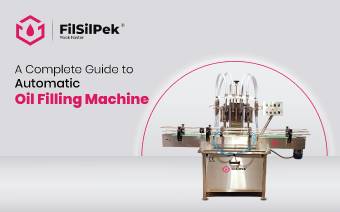
A Complete Guide to Automatic oil filling machines
Oil packaging has changed a lot over the last decade. What once depended heavily on manual labor…..
Contact Us
Address
B-603, SHALIN SQUARE HATHIJAN CIRCLE VATVA G.I.D.C ROAD, VINZOL,AHMEDABAD-382445 GUJARAT
Contact
+91 90542 94961
Inquiry Form
Contact Us
Address
B-603, SHALIN SQUARE HATHIJAN CIRCLE VATVA G.I.D.C ROAD, VINZOL,AHMEDABAD-382445 GUJARAT
Contact
+91 90542 94961
Inquiry Form
Contact Us
Address
B-603, SHALIN SQUARE HATHIJAN CIRCLE VATVA G.I.D.C ROAD, VINZOL,AHMEDABAD-382445 GUJARAT
Contact
+91 90542 94961
Inquiry Form
Contact Us
Address
B-603, SHALIN SQUARE HATHIJAN CIRCLE VATVA G.I.D.C ROAD, VINZOL,AHMEDABAD-382445 GUJARAT
Contact
+91 90542 94961
Inquiry Form
Contact Us
Address
B-603, SHALIN SQUARE HATHIJAN CIRCLE VATVA G.I.D.C ROAD, VINZOL,AHMEDABAD-382445 GUJARAT
Contact
+91 90542 94961
Inquiry Form