Case study: filling machines supporting D2C nutraceutical brands
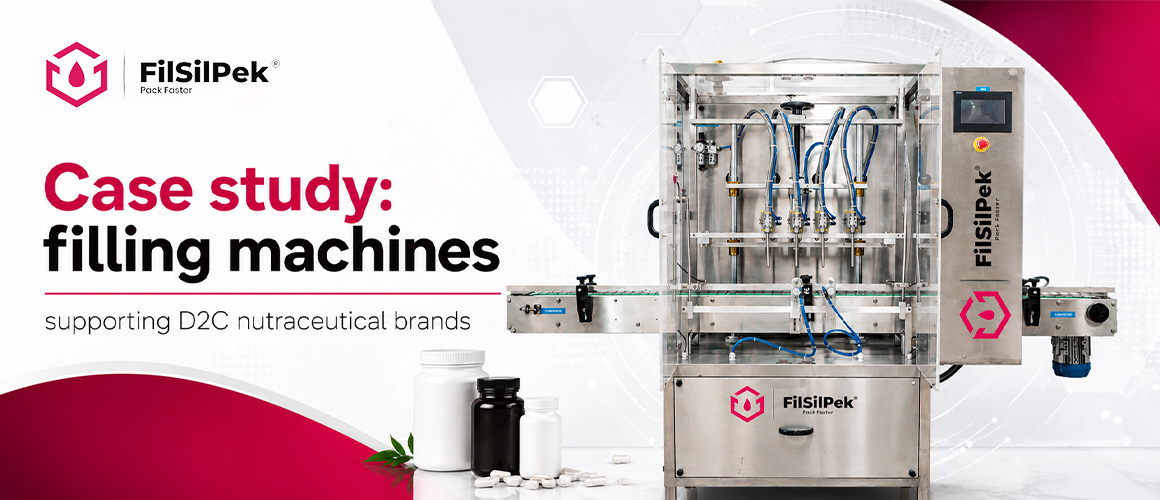
Explore how filling machines help D2C nutraceutical brands improve production speed, filling accuracy, consistency and scalability in supplement manufacturing.
Introduction
Overview of the case study
At Filsilpek Solutions, automated filling lines enable direct-to-consumer brands in this space to scale with control. This case study traces a practical path from concept through validated, high-throughput production that aligns with regulatory expectations. Turnkey solutions help stabilize output and support measurable ROI over time.
You’ll observe outcomes such as improved dosage consistency and reduced manual handling, contributing to quicker value realization for new SKUs. The focus remains on concrete benefits you can apply to solid-dose manufacturing operations in this sector.
The D2C nutraceutical landscape and packaging challenges
Direct-to-consumer brands are expanding across North America and India alike, with growing demand for scalable, automated filling lines that meet strict quality standards and rapid time-to-market in the region. Brazil is also emerging as a key market, driving increasing interest in turnkey and automated solutions to support local production and regional distribution.
Key challenges include:
- Maintaining filling accuracy across high-throughput runs
- Ensuring GMP-aligned traceability and serialization
- Reducing manual handling to minimize contamination risk
- Adapting quickly to multiple SKUs and packaging configurations
Industry benchmarks show D2C nutraceutical programs increasingly targeting large-scale throughput, with many deployments pacing toward a 0MM annual throughput milestone as a signal of scalable growth and ROI legitimacy.
Expert Insight
“In sterile and non-sterile manufacturing, routine, well-documented processes, like media fill simulations, line clearance, and environmental monitoring, are the backbone that translates GMP concepts into reliable, scalable production with consistent dosage forms.”, Industry Analyst
- Turnkey filling solutions for D2C nutraceuticals
Definition and value of turnkey lines
Turnkey filling lines provide an end-to-end solution for D2C nutraceutical manufacturing, covering filling, capping, packaging, and automation through a single integrated setup. They simplify commissioning, reduce vendor dependency, improve production efficiency, and accelerate time to market.
Leading providers such as Syntegon, Harro Höfliger, GEA, Krones, and JBT offer scalable, hygienic, and automation-ready solutions designed for precise dosing, fast changeovers, and reliable uptime. Modular capsule fillers from Index Capsule Fillers and CapsulCN International can also support flexible production from pilot batches to full-scale manufacturing.
With Industry 4.0 connectivity, real-time monitoring, predictive maintenance, and scalable automation, turnkey filling systems help D2C nutraceutical brands optimize throughput and maintain consistent quality while supporting regulatory requirements such as cGMP and serialization where applicable.
Key components: filling, sealing, capping, labeling, and serialization
- Filling: precise dosing mechanisms aligned with solid-dose needs to minimize waste and maximize throughput. A well-tuned line can reduce rejects through inline weight checks and feed-forward control.
- Sealing: protect product integrity with tamper-evident and barrier solutions suitable for nutritional formulations. Proper sealing minimizes moisture ingress and particulate intrusion in multi-layer packaging.
- Capping: secure containers to sustain shelf life and packaging compatibility across formats. Torque monitoring and reliable changeovers cut downtime during SKU shifts.
- Labeling: accurate branding and regulatory text applied at high speed, with integrated print and verify routines. Batch-level labels with serialized codes support recall readiness and traceability.
- Serialization: end-to-end traceability from batch to consumer, supporting GMP, regulatory compliance, and recall readiness. Tie serialization to your ERP so a single scan surfaces batch history and certificates of analysis.
- Adaptable filling architectures for liquids, viscous products, and syrups
Liquid filling: gravity, piston, and pump-based approaches
Different liquid profiles require distinct filling strategies to maintain accuracy and throughput. Gravity-fed systems excel with free-flowing liquids and simple geometries, while piston and pump-based designs handle medium to high viscosity liquids with tighter dose control.
- Gravity filling offers low shear and straightforward setup for thin liquids, supporting quick changeovers.
- Piston fillers provide consistent dosing across a range of viscosities and can manage moderate product returns with reliability.
- Pump-based systems support higher viscosities and foaming challenges, enabling accurate fill volumes at speed while protecting product integrity.
Viscous product handling: cream, paste, and gel formulations
Viscous products demand shear management and sanitary handling to prevent clogging and cross-contamination. Selecting a geometry that minimizes air incorporation while ensuring clean-in-place readiness is essential for rapid SKU changes.
- Viscous creams often benefit from piston or positive-displacement mechanisms with smooth transfer paths to preserve fill accuracy.
- Pastes and gels require anti-drip nozzles and controlled backflow to maintain fill integrity during high-speed production.
- Material compatibility and easy cleaning reduce downtime between SKUs and support regulatory expectations for hygiene in pharmaceutical environments.
Syrups and viscous liquids: viscosity management and accurate dosing
Syrups present viscosity shifts and temperature sensitivity that challenge dosing routines. Robust control strategies adapt to changing flow characteristics without sacrificing accuracy or repeatability.
- Heuristics like heating or cooling can stabilize viscosity for consistent fills across batches.
- Calibration routines ensure dosing accuracy across line speeds and product variants.
- Inline filtering and hygienic design prevent particulates from impacting downstream packaging and quality monitoring.
Practical implementation tips you can apply today include documenting a standard changeover for each SKU, validating fills with gravimetric checks, and scheduling regular CIP cycles. For complex lines, integrate a real-time dose monitor and align with Filsilpek Solutions for a tailored automation upgrade. In regulated settings, maintain traceability records and conduct periodic equipment validation to meet industry standards.
- continuous integration: automation, validation, and quality systems
Automated feeding, dosing, and sealing workflows
Automation links material handling to final packaging, reducing variance and manual touchpoints. Integrated feeders, dozers, and sealers synchronize throughput with line speed while preserving product integrity.
- Inline feeders deliver consistent material flow into each unit, minimizing start-stop variability.
- Closed-loop dosing systems adjust in real time to maintain target fill volumes and ensure dosage accuracy.
- Sealing modules operate in lockstep with dosing to preserve seal integrity and protect product quality.
Practical setup example: a nutraceutical line in the United States leverages a gravity-fed hopper with vibratory feed, a servo-driven Doser for precise milligram control, and a hot-seal head matched to pouch material. Operators tune the delta between fill weight and seal temperature to avoid underfill or mis-seals during shift changes. USA-based facilities increasingly drive regional implementations to meet US FDA expectations and faster time-to-market for D2C brands.
Actionable steps you can take now: map each unit operation, verify tolerances for weight, seal strength, and seal leakage, then implement a simple feedback loop from scale to Doser to adjust on the fly. Consider a compact human, machine interface that flags out-of-spec runs for quick intervention.
Process validation, GMP alignment, and traceability
In nutraceutical manufacturing, compliance extends to data integrity and electronic records; aligning with US FDA 21 CFR Part 11 ensures that electronic signatures, audit trails, and system validations meet regulatory expectations while safeguarding product quality and traceability. This framework supports reliable, auditable changes across filling lines for D2C brands.
- IQ/OQ/PQ protocols establish installation, operational, and performance baselines for dependable performance.
- Documentation supports batch release with clear handling of deviations and CAPA actions.
- Serialization and batch traceability enable end-to-end product lineage from raw material to consumer.
Expert note: include a risk assessment matrix during early commissioning to anticipate variations in raw material with seasonal supply shifts. Use a tiered CAPA system aligned to critical processes to prevent escalation.
Inline quality control and statistical process control
Quality control happens at the line through real-time monitoring and data analytics. Statistical process control flags drift before it affects outcomes, supporting consistent dosage and packaging accuracy for nutraceuticals and dietary supplements.
- Inline sensors verify fill weight, seal integrity, and label placement in real time.
- Control charts detect trends and trigger corrective actions automatically.
- Comprehensive audit trails safeguard compliance and support continuous improvement across SKUs.
Practical data points: track Cp and Cpk values across shifts, aiming for Cpk > 1.33 for stable performance. Use a daily 15-minute review of SPC dashboards to catch drift early and document corrective actions in the CAPA log. Filsilpek Solutions can provide an integrated SPC module that aligns with existing ERP for end-to-end visibility.
- packaging line optimization for D2C brands
Container handling, orientation, and empty-to-full throughput
Efficient handling lowers downtime and accelerates time to market for new SKUs. A well-orchestrated feed system minimizes misfeeds and orientation errors, which is essential for high-throughput nutraceutical manufacturing.
- Automated orienting feeders ensure consistent container presentation at line entry.
- Integrated conveyors align empty and full containers for seamless transfer between stations.
- Throughput optimization lowers cycle times from fill to final packaging while preserving capsule integrity and filling accuracy.
Real-world example: a capsule line reduced misoriented starts by using a dedicated orientation station feeding directly into the filling module, cutting rejects in a single shift.
Practical steps: calibrate sensor thresholds quarterly, run a 30-minute test after every SKU change, and document orientation results in the digital log for traceability.
Labeling, date/lot coding, and packaging integrity
Label accuracy and secure coding are critical for traceability, regulatory compliance, and consumer trust. Packaging integrity protects product quality during distribution and storage.
- Inline labeling modules apply branding with precision at high speeds, reducing rework.
- Date and lot coding systems enable end-to-end traceability and regulatory compliance across the supply chain.
- Seal and seal-check stations verify closure integrity to prevent leakage and ensure product protection.
implement a dual verification step where a vision system cross-checks label data against the ERP before final sealing, reducing recalls by catching mismatches early.
Data point: robust date/lot coding reduces recall scope when integrated with product genealogy software.
Changeover efficiency and line adaptability for SKUs
Fast changeovers minimize downtime when switching between products, flavors, or dosage forms. Adaptability keeps pace with growing D2C demand and supports contract manufacturing needs.
- Modular tooling and quick-change parts shorten SKU transitions and reduce setup times.
- Digital setup sheets guide operators through parameter changes consistently, improving dosing control.
- Robust binning and routing minimize misallocation during SKU shifts and maintain production flow.
Real-world scenario: a contract manufacturer switches from 30 mg to 60 mg capsules using a standardized fixture kit, cutting setup time significantly with no hopper routing mismatch.
Best practice: run a pre-changeover sandbox with a test batch, document parameter deltas, and train teams on the digital setup workflow to prevent drift.
- data-driven operations and service partnerships
Remote monitoring, predictive maintenance, and uptime
Data streams from sensors and PLCs feed a centralized dashboard that highlights performance trends in real time. Track fill accuracy, line speed, and seal integrity to spot issues early and adjust proactively.
- Remote diagnostics reduce on-site visits and shorten response times.
- Predictive maintenance flags wear before failure, sustaining uptime and protecting production schedules.
- Alarms and automated alerts trigger preventive actions to minimize unplanned downtime.
Spare parts logistics and service certifications
Efficient parts supply and qualified technicians are essential for rapid recovery after faults. A robust service ecosystem keeps lines moving across regions with minimal disruption.
- Regional warehouses shorten lead times for critical components and reduce downtime.
- Certified technicians ensure proper installation, parameter validation, and compliant operation.
- Maintenance schedules align with GMP practices to maintain documentation integrity and traceability.
Training and customer success for fast time-to-value
Structured knowledge transfer accelerates value realization. Training builds operator confidence, reduces changeover time, and minimizes setup errors across SKUs.
- Hands-on modules cover routine maintenance, changeovers, and quality checks for capsule filling lines and related equipment.
- Knowledge bases and guided workflows support continuous improvement and faster issue resolution.
- Customer success programs track milestones and quantify uptime gains, supporting ongoing optimization.
FAQ
- What are capsule filling machines and why are they relevant to D2C nutraceutical brands?
Capsule filling machines automate the placement of powder or pellets into capsules, enabling scalable production, improved dosage consistency, and reduced manual handling in regulated settings. For a D2C brand, this means you can grow from pilot batches to full monthly runs without sacrificing accuracy or compliance.
- Which machine types are common in the capsule filling market?
You’ll find automatic capsule filling machines, semi-automatic options, and low-capacity manual lines. Automatic units deliver high throughput and precision, while semi-automatic and manual models suit smaller SKUs or pilot runs. Consider a modular system that lets you start small and add modules as demand grows.
- What should you consider when selecting a filling line for D2C nutraceuticals?
Look at throughput needs, dosage accuracy, cleaning and validation requirements, line adaptability for different capsules, and integration with packaging and serialization systems. Evaluate vendor support, ease of cleaning, and the availability of stainless-steel components that meet food-grade standards.
- How do automation upgrades impact filling accuracy and compliance?
Upgrades reduce manual variability, support real-time monitoring, and align with GMP practices. They also improve traceability and batch integrity through robust data capture. Plan for IQ/OQ validation, and set up dashboards that flag deviations within minutes of occurrence.
- throughput aligned to demand
- dosage control and repeatability
- ease of changeovers for SKUs
- integration with labeling and serialization
Conclusion
End-to-end filling lines have proven to be a practical driver of scale, control, and consistency for D2C nutraceutical brands. A well-designed turnkey setup delivers reliable output, solid traceability, and support for rapid SKU expansion without compromising quality.
- Turnkey lines integrate filling, sealing, capping, labeling, and serialization into a cohesive workflow suitable for solid-dose manufacturing and contract work.
- Adaptive architectures accommodate liquids, viscous products, and syrups with dependable dosing and minimal changeover times, aligning with high throughput targets.
- Data driven operations and service partnerships improve uptime, governance, and long-term value across regional markets.
When evaluating procurement targets, focus on total cost of ownership, validated GMP performance, and supplier resilience across service networks. Pair comprehensive training with remote monitoring to sustain first-time throughput and ongoing quality control.
Smart labelling: QR codes, NFC and customer engagement
Smart labeling technology overview and….
Human-Robot Collaboration: How Cobots Are Transforming Material Handling & Palletizing
A practical guide to deploying collaborative robots for loading….
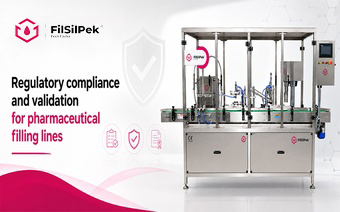
Regulatory compliance and validation for pharmaceutical filling lines
You operate in a highly regulated environment where….
Contact Us
Address
B-603, SHALIN SQUARE HATHIJAN CIRCLE VATVA G.I.D.C ROAD, VINZOL,AHMEDABAD-382445 GUJARAT
Contact
+91 90542 94961
Inquiry Form
Contact Us
Address
B-603, SHALIN SQUARE HATHIJAN CIRCLE VATVA G.I.D.C ROAD, VINZOL,AHMEDABAD-382445 GUJARAT
Contact
+91 90542 94961
Inquiry Form
Contact Us
Address
B-603, SHALIN SQUARE HATHIJAN CIRCLE VATVA G.I.D.C ROAD, VINZOL,AHMEDABAD-382445 GUJARAT
Contact
+91 90542 94961
Inquiry Form
Contact Us
Address
B-603, SHALIN SQUARE HATHIJAN CIRCLE VATVA G.I.D.C ROAD, VINZOL,AHMEDABAD-382445 GUJARAT
Contact
+91 90542 94961
Inquiry Form
Contact Us
Address
B-603, SHALIN SQUARE HATHIJAN CIRCLE VATVA G.I.D.C ROAD, VINZOL,AHMEDABAD-382445 GUJARAT
Contact
+91 90542 94961
Inquiry Form