Digitalization & Industry 4.0 integration for real time data monitoring
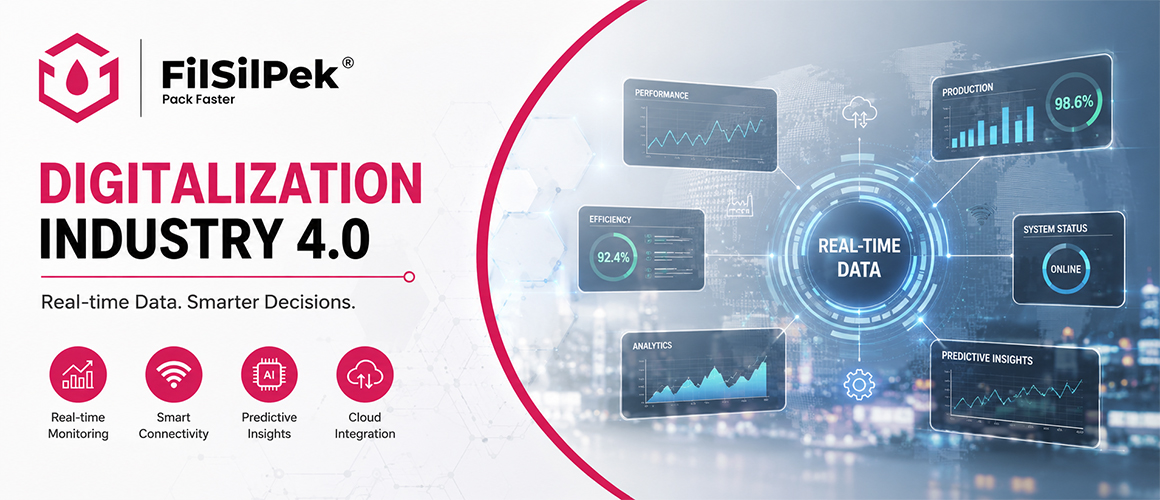
Digitalization and Industry 4.0 integration are fundamentally changing how we monitor data in real-time by connecting physical and digital worlds. This allows businesses to make quicker, more informed decisions, moving beyond looking at historical data to acting on live insights.
Why Real-Time Data Monitoring Matters Now More Than Ever
In today’s fast-paced operational environment, waiting for daily, weekly, or even hourly reports just doesn’t cut it anymore. Real-time data monitoring offers an immediate window into what’s happening, allowing for proactive adjustments rather than reactive responses.
From Lagging Indicators to Leading Insights
Traditionally, many businesses relied on lagging indicators – data that tells you what already happened. Think about financial reports that come out a month after the quarter ends. With real-time monitoring, we’re shifting towards leading indicators, which provide signals about future performance. This means catching potential equipment failures before they occur, identifying customer trends as they emerge, or optimizing production processes an instant they start to drift off course. This proactive stance significantly reduces waste, improves efficiency, and enhances overall responsiveness.
The Cost of Waiting
Every moment spent waiting for data can translate into missed opportunities and increased costs. A slight deviation in a manufacturing process, if not caught immediately, could lead to an entire batch of defective products. A sudden spike in website traffic, if not scaled for in real-time, could result in frustrated customers and lost sales. The cost of not having real-time data is increasingly outweighing the investment in acquiring the technology to achieve it. It’s about minimizing risks and maximizing potential at the speed of operations.
The Digitalization Backbone for Real-Time Insights
Digitalization is the crucial first step. It’s the process of converting analogy information into a digital format, but more broadly, it’s about embedding digital technology into all aspects of business operations. Without this foundational shift, real-time monitoring remains a distant dream.
Sensory Overload: More Data Than Ever Before
At the heart of digitalization for real-time monitoring are sensors. These often tiny, unassuming devices are embedded everywhere – on factory floors, within vehicles, in smart buildings, and even on individual products. They collect a continuous stream of data: temperature, pressure, vibration, location, operational status, and countless other metrics. The sheer volume of data generated by these connected sensors is unprecedented, creating a rich tapestry of information from which real-time insights can be woven. It’s not just about collecting data; it’s about the pervasive nature of this collection that transforms observational capabilities.
The Internet of Things (IoT) as the Data Highway
The Internet of Things, or IoT, is the network that connects all these sensors and devices. It’s the infrastructure that allows them to communicate and share their data. Think of it as a vast digital highway were information from countless sources travels instantly. Without robust IoT infrastructure, the data gathered by sensors would remain isolated and unusable. IoT platforms manage this explosion of connectivity, ensuring data flows efficiently and securely from the edge (where the data is generated) to the central systems where it can be processed and analyzed. This seamless flow is non-negotiable for real-time monitoring to function effectively.
Industry 4.0 isn’t just about digitalization; it’s about using advanced digital technologies to integrate and optimize processes across the entire value chain. This means applying sophisticated tools to the raw data stream enabled by digitalization.
AI and Machine Learning for Predictive Analytics
Simply having a lot of real-time data is not enough; you need to make sense of it. This is where Artificial Intelligence (AI) and Machine Learning (ML) become indispensable. These technologies can process vast quantities of real-time incoming data, identify patterns that humans might miss, and even predict future events. For instance, ML algorithms can analyze the vibration and temperature data from a machine in real-time and predict a potential failure day or weeks before it happens, allowing for proactive maintenance. They can also sift through customer interaction data to identify emerging trends or sentiment shifts the moment they occur, enabling dynamic marketing adjustments or customer service interventions.
Edge Computing: Processing Data Closer to the Source
While cloud computing has revolutionized data storage and processing, sending every single piece of real-time data to a central cloud server can introduce latency, which is the enemy of real-time monitoring. Edge computing addresses this by processing data closer to its source, at the “edge” of the network. Imagine a smart factory where sensor data is analyzed on-site by powerful industrial computers before being sent to the cloud. This significantly reduces the time it takes to get actionable insights, especially in critical applications where milliseconds matter. It’s about making immediate decisions where the action is happening, rather than waiting for a round trip to a distant data center.
Digital Twins for Virtual Real-Time Replication
A digital twin is a virtual replica of a physical asset, process, or system. It’s continuously updated with real-time data from its physical counterpart. This means you can monitor the real-time performance, condition, and behavior of a physical object (like a jet engine or an entire factory) in a virtual environment. You can then run simulations, test scenarios, and predict outcomes without impacting the actual physical system. For real-time monitoring, digital twins offer an unparalleled capability to visualize complex data, understand intricate interdependencies, and even troubleshoot problems remotely, all based on the most current data available. It’s like having a living, breathing blueprint that continuously reflects the current state of a real-world entity.
Practical Applications of Real-Time Data Monitoring
The theoretical benefits of digitalization and Industry 4.0 for real-time data monitoring translate into tangible improvements across various sectors.
Manufacturing Efficiency and Predictive Maintenance
In manufacturing, real-time data monitoring is a game-changer. Sensors on production lines collect data on machine performance, environmental conditions, and product quality. This data, fed into AI algorithms, can identify bottlenecks, optimize throughput, and famously power predictive maintenance. Instead of costly scheduled maintenance or reactive repairs after a breakdown, factories can perform maintenance precisely when it’s needed, preventing failures and extending equipment lifespan. This minimizes downtime, reduces operational costs, and ensures consistent product quality. An assembly line manager can see the exact cause of a slowdown an instant it happens, allowing for immediate intervention.
Supply Chain Optimization and Logistics
The supply chain is inherently complex, with numerous moving parts. Real-time data monitoring provides end-to-end visibility. GPS trackers, IoT sensors, and RFID tags on shipments give real-time location, temperature, and condition data. This allows for proactive re-routing in case of unexpected delays, optimization of delivery paths, and early detection of spoilage for temperature-sensitive goods. Retailers can track inventory levels in real-time, reducing stockouts and overstocking. For logistics, this means a significant reduction in waste, improved delivery times, and greater responsiveness to disruptions, moving from a reactive “where is it?” to a proactive “I know exactly where it is and what’s happening to it.”
Enhanced Customer Experience and Personalization
Real-time data monitoring extends beyond internal operations to customer interactions. Websites and mobile applications collect data on user behavior, preferences, and engagement in real-time. This allows businesses to personalize experiences instantly – suggesting relevant products, offering targeted promotions, or adapting content based on current user activity. Customer service centers can access a customer’s entire interaction history and current activity data the moment they call, leading to faster, more effective resolutions. The ability to understand and respond to customer needs instantaneously is a significant differentiator in today’s competitive landscape. It’s about making every interaction feel tailored and relevant, reflecting an understanding that’s always up-to-date.
Smart Cities and Infrastructure Management
Cities are becoming increasingly digitalized with networks of sensors monitoring everything from traffic flow and air quality to waste management and public safety. Real-time monitoring allows urban planners to manage resources more effectively. Smart traffic lights can adjust timing based on live traffic conditions, reducing congestion. Environmental sensors can identify pollution hotspots for immediate mitigation. Utility companies can monitor infrastructure health in real-time, preventing outages and responding quickly to emergencies. This makes urban environments more efficient, sustainable, and responsive to the needs of their inhabitants, offering a dynamic and evolving platform for urban living.
Overcoming Challenges in Integration
|
Challenges |
Metrics |
|
Technical Compatibility |
Number of systems integrated successfully |
|
Data Security |
Number of security breaches |
|
Resource Allocation |
Percentage of project budget allocated to integration |
|
Communication Breakdown |
Number of communication errors during integration |
While the benefits are clear, integrating digitalization and Industry 4.0 for real-time data monitoring isn’t without its hurdles.
Data Silos and Interoperability
One of the biggest challenges is breaking down data silos. Many organizations have legacy systems that were not designed to communicate with each other. Different departments might use different software and data formats, making it difficult to achieve a unified, real-time view. Achieving interoperability, where diverse systems can seamlessly exchange and understand data, requires significant investment in integration platforms and standardized protocols. It’s about building bridges between disconnected islands of information.
Cybersecurity and Data Privacy
With an exponential increase in connected devices and real-time data flow, the attack surface for cyber threats expands dramatically. Protecting sensitive operational data and ensuring compliance with data privacy regulations (like GDPR or CCPA) becomes paramount. Robust cybersecurity frameworks, encryption, access controls, and continuous monitoring are essential to prevent breaches and maintain trust. The more intertwined our digital and physical worlds become, the more critical it is to safeguard the data traveling between them.
Talent Gap and Skilled Workforce
Implementing and managing these sophisticated real-time monitoring systems requires a workforce with specialized skills. There’s a growing demand for data scientists, AI engineers, IoT specialists, and cybersecurity experts. Many organizations face a talent gap, struggling to find and retain individuals with the necessary expertise to leverage these technologies effectively. Investing in training and upskilling existing employees, as well as attracting new talent, is crucial for successful integration.
The Future is Always On
The journey towards fully integrated digitalization and Industry 4.0 for real-time data monitoring is ongoing. As technologies mature and become more accessible, we’ll see even more sophisticated applications emerging. The ability to not just react to events but to predict and even prevent them will become the norm. This isn’t just about efficiency; it’s about creating more resilient, responsive, and ultimately, more intelligent systems and organizations that can thrive in an increasingly dynamic world. Real-time data will move from being a valuable asset to an indispensable operational heartbeat.
FAQs
What is digitalization and Industry 4.0 integration for real time data monitoring?
Digitalization and Industry 4.0 integration for real time data monitoring refers to the use of advanced technologies such as IoT, big data analytics, and automation to collect, analyze, and monitor real time data in industrial settings. This integration allows for improved efficiency, predictive maintenance, and better decision-making.
What is the impact of digitalization on real time data monitoring?
The impact of digitalization on real time data monitoring is significant, as it allows for faster and more accurate data collection, analysis, and visualization. This leads to improved operational efficiency, reduced downtime, and better resource utilization in industrial processes.
How can industry 4.0 technologies be leveraged for real time data monitoring?
Industry 4.0 technologies such as AI, machine learning, and advanced sensors can be leveraged for real time data monitoring by enabling predictive maintenance, remote monitoring, and real-time insights into equipment performance and production processes.
What are the benefits of real time data monitoring in the age of digitalization?
In the age of digitalization, real time data monitoring offers benefits such as improved operational efficiency, cost savings through predictive maintenance, better decision-making based on real-time insights, and the ability to quickly adapt to changing market demands.
How does digitalization and Industry 4.0 integration enhance real time data monitoring?
Digitalization and Industry 4.0 integration enhance real time data monitoring by providing seamless connectivity, real-time analytics, and the ability to automate data collection and analysis processes. This leads to improved visibility, control, and optimization of industrial operations.
Modular Multi-Head Capping Systems for Line Flexibility
The modern packaging landscape demands an agility that…..

Material Compatibility: Managing Corrosive or Volatile Liquids Safely
Material compatibility stands as a cornerstone…..
Using Digital Twins to Design Powder & Granule Filling Lines Context
The modern manufacturing landscape is characterized…..
Contact Us
Address
B-603, SHALIN SQUARE HATHIJAN CIRCLE VATVA G.I.D.C ROAD, VINZOL,AHMEDABAD-382445 GUJARAT
Contact
+91 90542 94961
Inquiry Form
Contact Us
Address
B-603, SHALIN SQUARE HATHIJAN CIRCLE VATVA G.I.D.C ROAD, VINZOL,AHMEDABAD-382445 GUJARAT
Contact
+91 90542 94961
Inquiry Form
Contact Us
Address
B-603, SHALIN SQUARE HATHIJAN CIRCLE VATVA G.I.D.C ROAD, VINZOL,AHMEDABAD-382445 GUJARAT
Contact
+91 90542 94961
Inquiry Form