Dynamic viscosity adjustment: handling low and high viscous liquids in one line
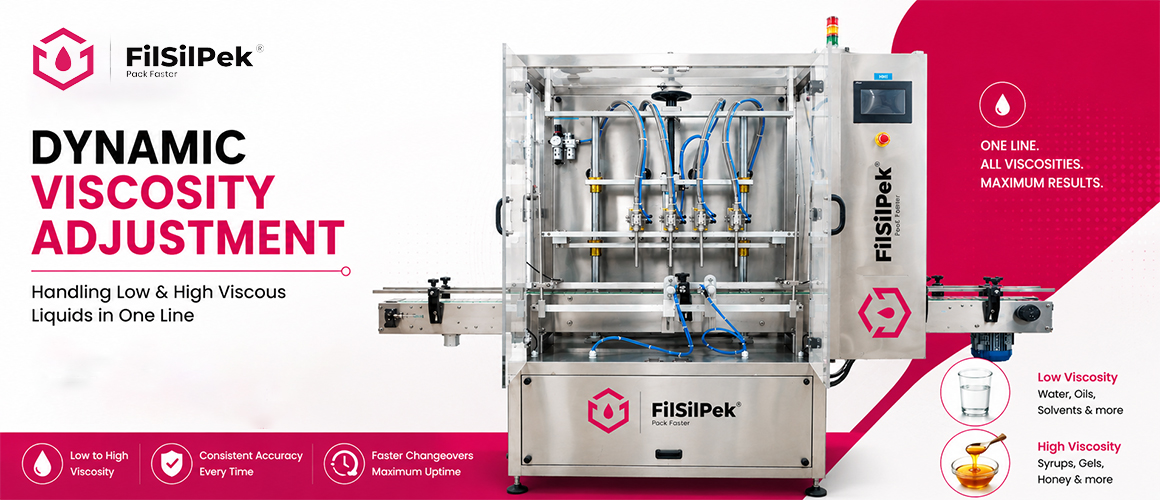
Dealing with liquids of wildly different thicknesses on the same production line might seem like a headache, but it’s entirely doable. The key is in understanding and implementing “dynamic viscosity adjustment.” Simply put, this means your filling equipment can adapt on the fly to handle both thin, watery liquids and thick, syrupy ones without significant downtime or equipment changes. This flexibility is crucial for efficiency, profitability, and keeping your production flowing smoothly.
Why Viscosity Matters So Much in Filling
Imagine trying to pour honey through a straw versus water. That’s essentially the challenge you’re up against when your production line encounters liquids with different viscosities. Viscosity is a fluid’s resistance to flow. Low viscosity liquids (like water or alcohol) flow easily; high viscosity liquids (like shampoo, honey, or pharmaceutical gels) flow slowly.
If your filling machine is optimized for low-viscosity liquids and you try to run a high-viscosity product without adjustment, you’ll likely face slow fill times, inaccurate volumes, and potentially damaged equipment due to excessive pressure buildup. Conversely, using settings for high-viscosity liquids on a low-viscosity product can lead to splashing, foaming, excessive drip, and underfilling. Getting this right isn’t just about speed; it’s about product quality and avoiding waste.
The Impact of Incorrect Settings
Using the wrong settings for a liquid’s viscosity can lead to a host of problems. At best, you’re looking at slower production and minor product loss. At worst, you could be dealing with significant downtime, product recalls due to inconsistent fill levels, and costly maintenance on overworked pumps or valves. Think about the implications for regulatory compliance, especially in industries like pharmaceuticals or food and beverage, where precise fills are non-negotiable.
Beyond the Obvious: Shear Thinning and Thickening
It’s also worth remembering that not all liquids behave predictably. Some, known as shear-thinning fluids (like paint or ketchup), become less viscous when agitated or sheared, and then return to their original thickness when at rest. Others, less common but still relevant, are shear-thickening (like cornstarch and water mixtures), becoming more viscous under stress. Your dynamic viscosity adjustment strategy needs to account for these non-Newtonian behaviors to truly optimize your process.
Essential Techniques for Handling Varying Viscosities
Successfully handling a wide range of viscosities on one line requires a multi-faceted approach. There’s no single magic bullet; instead, it’s about combining appropriate equipment, smart control systems, and process understanding.
Choosing the Right Pumping Mechanisms
The pump is the heart of your liquid handling system, and its type greatly influences its ability to handle different viscosities.
Positive Displacement Pumps for Versatility
For handling a broad spectrum of viscosities, positive displacement (PD) pumps are often the go-to. Unlike centrifugal pumps, which rely on centrifugal force and are less efficient with thicker liquids, PD pumps move a fixed volume of fluid with each rotation or cycle. This makes them excellent for both thin and thick products. Gear pumps, lobe pumps, and piston pumps are all types of PD pumps commonly used in filling applications. They provide consistent flow rates even as viscosity changes, making volumetric filling much more reliable.
Peristaltic Pumps for Sensitive and Variable Products
Peristaltic pumps shine when dealing with very sensitive, abrasive, or highly viscous fluids, often found in pharmaceutical or cosmetic production. They work by compressing a flexible tube, pushing the fluid forward. This design means the pump only contacts the exterior of the tubing, preventing contamination and making them very easy to clean. They offer excellent volumetric accuracy and can handle a surprising range of viscosities effectively, though flow rates can be lower compared to other PD pumps.
Utilizing Smart Filling Nozzles
The nozzle is the final point of contact with your product, and its design has a huge impact on fill quality.
Diving Nozzles for Foaming and Splashing Control
For low viscosity liquids, especially those prone to foaming, diving nozzles are invaluable. These nozzles plunge into the container and fill from the bottom up, minimizing splashing and air entrapment. As the container fills, the nozzle slowly retracts. For higher viscosity liquids, slower filling speeds or larger nozzle openings might be needed to prevent pressure buildup.
Cut-Off Nozzles to Prevent Dripping
Residual drips are a major headache, leading to messy containers, wasted product, and potentially sticky situations on the line. Cut-off nozzles, often equipped with suck-back or positive shut-off mechanisms, are essential for clean fills. These mechanisms effectively stop the flow as soon as the filling cycle is complete, regardless of the liquid’s viscosity. For very thick liquids, heated cut-off nozzles can sometimes be employed to reduce surface tension and facilitate a cleaner break.
Temperature Control as a Viscosity Modifier
Sometimes, the simplest solution is to change the liquid’s viscosity directly. Temperature is a huge factor here.
Heating for Thicker Liquids
Many high viscosity liquids, like honey, syrups, or certain oils, become significantly thinner when heated. Incorporating jacketed tanks or heated lines can reduce the product’s viscosity to a more manageable level for filling. This can result in faster fill times and less strain on pumping equipment. However, care must be taken not to overheat temperature-sensitive products, as this could degrade their quality or alter their properties.
Cooling for Thinner Liquids
Less common, but sometimes necessary, is cooling low viscosity liquids to increase their viscosity slightly. This can be beneficial for very volatile or exceptionally thin products where splashing or evaporation is an issue. Again, product integrity must be the priority.
Advanced Control and Automation for Dynamic Adjustment
The “dynamic” part of dynamic viscosity adjustment usually comes down to sophisticated control systems. These aren’t static settings but rather responsive systems that adapt to real-time conditions.
Feedback Loop Systems
Modern filling machines can incorporate sensors that monitor fill levels, flow rates, and even pressure within the product lines. This data feeds back to a central control unit, which can then automatically adjust pump speeds, nozzle opening times, or even cycle parameters to maintain optimal performance.
Weight-Based Filling for Ultimate Accuracy
Gravimetric filling (filling by weight) is one of the most accurate methods, especially when dealing with wildly varying viscosities. Since weight isn’t affected by viscosity, the machine simply fills until the target weight is reached. This automatically accounts for changes in density (which often correlates with viscosity) and ensures consistent product delivery. Integrating weigh cells under each container allows for precise, real-time adjustments.
Flow Meter Integration
Coriolis or magnetic flow meters can provide highly accurate flow rate measurements. When integrated into a dynamic adjustment system, they allow the machine to monitor the actual volume or mass of liquid being dispensed and make instantaneous corrections to pump speeds or valve timings to compensate for viscosity changes. This is particularly effective for volumetric filling systems looking for enhanced accuracy.
Recipe Management Systems
To truly minimize changeover times and maximize efficiency, modern filling lines employ sophisticated recipe management systems. Instead of manually adjusting settings for each product, operators can simply select a pre-programmed recipe for a specific SKU.
Storing Product-Specific Parameters
Each recipe contains all the necessary parameters for that particular liquid: pump speeds, fill times, nozzle settings, temperature setpoints, and even agitation requirements. When a new product runs, the system automatically loads and applies these settings. This dramatically reduces human error and speeds up product changeovers, critical for lines producing a diverse range of items.
Automated Calibration and Adjustment
Beyond just loading settings, advanced systems can also include automated calibration routines. For instance, after a product changeover, the system can run a small batch, analyze the fill accuracy, and then fine-tune parameters automatically until optimal performance is achieved. This self-optimizing capability is a game-changer for maintaining high accuracy across diverse product portfolios.
Overcoming Specific Challenges
|
Challenges |
Strategies |
Success Metrics |
|
Communication barriers |
Regular team meetings, clear communication channels |
Improved team collaboration, reduced misunderstandings |
|
Technical difficulties |
Training sessions, technical support |
Reduced downtime, increased proficiency |
|
Resistance to change |
Change management workshops, involving employees in decision-making |
Increased acceptance of new processes, improved morale |
While the techniques above provide a strong foundation, particular challenges often arise with extreme viscosities.
Dealing with Highly Viscous, Stringy Liquids
Very thick, stringy liquids, like certain adhesives or thick gels, pose unique problems. They can be hard to pump, causing cavitation or pressure surges, and tend to string from the nozzle, making a mess.
Positive Cut-Off Mechanisms
Beyond basic shut-off, some nozzles employ positive displacement cut-off mechanisms where a piston or blade physically severs the liquid stream at the precise moment the fill is complete. This prevents stringing and ensures a clean break. Vacuum suck-back systems can also be employed to retract the liquid slightly into the nozzle after fill, breaking any residual string.
Increased Orifice Sizes and Lower Pressures
Sometimes, simply increasing the diameter of the nozzle orifice and reducing the back pressure can help. While this might slightly reduce fill speed, it can prevent blockages and reduce stress on the product, which is particularly important for shear-sensitive materials.
Handling Foaming or Aerated Products
Low viscosity liquids, especially those with surfactants or those filled at high speeds, can easily foam. This makes accurate volumetric filling incredibly difficult, as foam takes up space but contains little product.
Bottom-Up Filling and Slow Fill Speeds
As mentioned earlier, diving nozzles that fill from the bottom up are crucial. Additionally, a two-stage filling process can be beneficial: an initial slow fill to establish a liquid base, followed by a faster fill for the bulk, and then a final slow top-off. This minimizes agitation and reduces air entrainment.
Vacuum Filling
For extremely foamy products, vacuum filling might be the answer. In this process, a vacuum is created in the container, drawing the liquid in smoothly without agitation, significantly reducing foam formation. This is often used for delicate or volatile products.
The Payoff: Efficiency, Accuracy, and Cost Savings
Investing in the technology and understanding required for dynamic viscosity adjustment isn’t just about making your life easier; it’s about making your operation more profitable and resilient. The ability to switch between products with minimal adjustments translates directly into higher uptime, reduced labour costs, and less product waste.
Furthermore, consistent fill accuracy protects your brand reputation and ensures compliance with regulatory standards. When your system can adapt, you unlock newfound flexibility in your production schedule, allowing you to respond quicker to market demands without needing to purchase dedicated lines for each product type. This strategic capability turns what could be a manufacturing bottleneck into a competitive advantage.
FAQs
What is dynamic viscosity adjustment?
Dynamic viscosity adjustment refers to the process of modifying the viscosity of a liquid to ensure efficient handling in filling processes. It involves altering the flow properties of the liquid to accommodate varying viscosities.
Why is dynamic viscosity adjustment important in liquid handling?
Dynamic viscosity adjustment is crucial in liquid handling as it allows for the efficient management of both low and high viscous liquids in filling operations. It helps optimize liquid filling systems, enhance accuracy, and improve overall efficiency.
What are the challenges associated with handling low and high viscosity liquids in filling processes?
Challenges in handling low and high viscosity liquids include issues with flow control, filling accuracy, equipment compatibility, and potential product wastage. These challenges can impact the overall efficiency of liquid filling operations.
What are some techniques for adjusting dynamic viscosity in liquid handling?
Techniques for adjusting dynamic viscosity include temperature control, shear rate adjustment, use of viscosity modifiers, and equipment customization. These techniques help ensure that liquids of varying viscosities can be handled effectively.
How can dynamic viscosity adjustment enhance efficiency in liquid filling processes?
Dynamic viscosity adjustment can enhance efficiency in liquid filling processes by allowing for the smooth handling of liquids with different viscosities. This leads to improved filling accuracy, reduced downtime, and overall optimization of the filling system.
Human-Robot Collaboration: How Cobots Are Transforming Material Handling & Palletizing
A practical guide to deploying collaborative robots for loading….
Regulatory compliance and validation for pharmaceutical filling lines
You operate in a highly regulated environment where….
Case Study: Sustainable Packaging in Dairy & Plant-Based Milk Processing
The dairy and plant-based beverage industries….
Contact Us
Address
B-603, SHALIN SQUARE HATHIJAN CIRCLE VATVA G.I.D.C ROAD, VINZOL,AHMEDABAD-382445 GUJARAT
Contact
+91 90542 94961
Inquiry Form
Contact Us
Address
B-603, SHALIN SQUARE HATHIJAN CIRCLE VATVA G.I.D.C ROAD, VINZOL,AHMEDABAD-382445 GUJARAT
Contact
+91 90542 94961
Inquiry Form
Contact Us
Address
B-603, SHALIN SQUARE HATHIJAN CIRCLE VATVA G.I.D.C ROAD, VINZOL,AHMEDABAD-382445 GUJARAT
Contact
+91 90542 94961
Inquiry Form
Contact Us
Address
B-603, SHALIN SQUARE HATHIJAN CIRCLE VATVA G.I.D.C ROAD, VINZOL,AHMEDABAD-382445 GUJARAT
Contact
+91 90542 94961
Inquiry Form