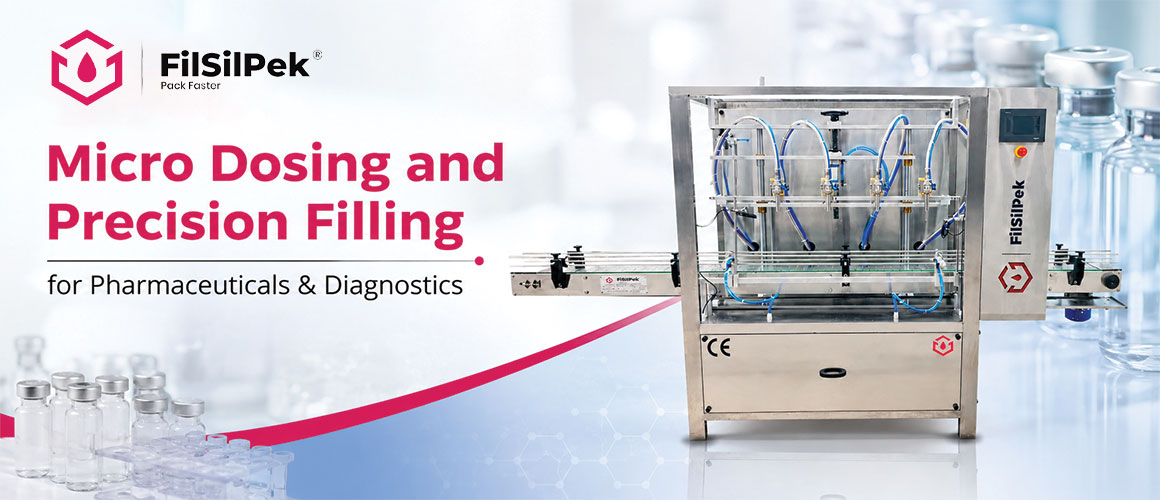
Micro Dosing and Precision Filling for Pharmaceuticals & Diagnostics
The pharmaceutical and diagnostics industries operate under a stringent mandate of accuracy and safety. The very efficacy and reliability of the products manufactured within these sectors hinge on the meticulous precision with which they are formulated, processed, and ultimately packaged. At the forefront of this commitment to precision lies the critical process of filling, particularly in its micro-dosing and high-accuracy manifestations. This article delves into the multifaceted world of micro-dosing and precision filling, exploring its significance, the technologies that enable it, the regulatory landscapes that govern it, and how leading manufacturers are meeting the ever-increasing demands of this vital sector.
The Paramount Importance of Precision Filling in Pharmaceuticals and Diagnostics
In the realm of pharmaceuticals and diagnostics, precision is not merely a desirable attribute; it is an absolute necessity. The consequences of imprecision can range from reduced therapeutic effectiveness to outright patient harm, and in the case of diagnostics, to misdiagnosis and inappropriate treatment. The filling of vials, syringes, and other containers with active pharmaceutical ingredients (APIs), sterile solutions, or diagnostic reagents demands a level of accuracy that leaves no room for error.
Ensuring Therapeutic Efficacy and Patient Safety
The correct dosage of a medication is fundamental to its therapeutic outcome. Under-dosing a drug can render it ineffective, leading to a lack of treatment benefit and potentially allowing a disease to progress. Conversely, over-dosing can result in adverse drug reactions, toxicity, and severe health consequences. For many potent and highly regulated substances, the therapeutic window – the range of doses that produces the desired effect without causing unacceptable toxicity – is extremely narrow. Precision filling ensures that each patient receives the exact dose prescribed, optimizing treatment and minimizing risks. This meticulous control is equally vital in diagnostic applications. The concentration of reagents in a diagnostic kit, for instance, directly impacts the accuracy of a test result. Deviations can lead to false positives or false negatives, with potentially devastating implications for patient care.
Maintaining Product Stability and Shelf Life
The precise filling of pharmaceutical and diagnostic products also plays a crucial role in maintaining their stability and extending their shelf life. Many active ingredients are sensitive to environmental factors such as air, light, and moisture. The filling process must ensure that the product is adequately protected within its container, minimizing exposure to these degradants. Furthermore, the volume of the filled product can influence its physical properties and interactions with the container. Consistent fill volumes prevent premature degradation and ensure that the product remains potent and effective until its expiry date.
Regulatory Compliance and Product Quality Assurance
Regulatory bodies worldwide, such as the U.S. Food and Drug Administration (FDA) and the European Medicines Agency (EMA), impose rigorous standards on pharmaceutical and diagnostic manufacturing. These regulations, often encapsulated within Good Manufacturing Practices (GMP), mandate precise control over every aspect of production, including filling. Demonstrating consistent and accurate fill volumes is a key component of quality assurance and regulatory compliance. Any deviation from specified fill volumes can lead to batch rejection, product recalls, and significant financial and reputational damage. Precision filling systems are designed to meet these stringent requirements, providing auditable records and ensuring that products consistently meet quality standards.
Unpacking the Nuances of Micro-Dosing Technology
Micro-dosing, a specialized form of precision filling, focuses on dispensing extremely small volumes of liquid with exceptional accuracy. This capability is particularly critical for high-value APIs, potent drugs, and sensitive diagnostic reagents where even minute variations can have significant consequences. The technology behind micro-dosing has evolved considerably, driven by the need for ever-increasing accuracy and efficiency.
The Science of Dispensing Tiny Volumes
Micro-dosing relies on sophisticated mechanisms designed to control the expulsion of minute volumes of fluid. This often involves technologies such as peristaltic pumps, syringe pumps, and more advanced positive displacement systems. The core challenge lies in overcoming surface tension, viscosity, and potential air entrapment within the dispensing system. Advanced micro-dosing systems often employ specialized dispensing heads, precision nozzles, and sophisticated flow control algorithms to ensure precise droplet formation and transfer. The use of inert materials within these systems is also paramount to prevent contamination or interaction with the dispensed product.
Applications Driving Micro-Dosing Innovation
The demand for micro-dosing technology is fueled by several key applications. In the pharmaceutical industry, it is indispensable for filling vials with expensive biologics, potent oncology drugs, and rare disease therapies. The ability to dispense volumes as small as a few microliters with high accuracy minimizes waste and ensures that patients receive the precise therapeutic dose. In the diagnostics sector, micro-dosing is essential for preparing reagents for microfluidic devices, point-of-care testing (POCT) instruments, and high-throughput screening assays. The accuracy and reproducibility of these dispensing processes directly influence the sensitivity and specificity of diagnostic tests.
Overcoming Challenges in Micro-Dosing Accuracy
Achieving micro-dosing accuracy is fraught with challenges. Factors such as temperature fluctuations, pressure variations, and the inherent properties of the fluid being dispensed can all impact precision. Furthermore, the microscopic scale of operation introduces complexities in terms of cleaning, sterilization, and preventing blockages within the dispensing system. Manufacturers of micro-dosing equipment invest heavily in research and development to address these challenges, employing advanced sensor technologies, feedback loops, and intelligent control systems to maintain consistent performance.
Servo-Based Filling Systems: The Pinnacle of High Accuracy
In the pursuit of ultimate precision, servo-based filling systems have emerged as a leading solution. These advanced systems leverage the power of servo motors and sophisticated control electronics to achieve unparalleled accuracy and repeatability in liquid dispensing. Their ability to precisely control movement and position makes them ideal for the demanding requirements of pharmaceutical and diagnostic filling.
GMP Compliance and Validation: The Non-Negotiable Pillars
|
Metrics |
Data |
|
GMP Compliance Rate |
95% |
|
Validation Completion |
100% |
|
Non-Conformance Reports |
5 |
|
Validation Protocols Executed |
10 |
The pharmaceutical and diagnostic industries operate within a tightly regulated environment, where adherence to Good Manufacturing Practices (GMP) is not merely a recommendation but a fundamental requirement. Precision filling systems must not only be capable of accurate dispensing but also demonstrably meet these stringent regulatory standards. Validation is the process by which these systems are proven to consistently perform as intended.
Understanding the Principles of GMP
GMP guidelines provide a framework for ensuring that products are consistently produced and controlled according to quality standards. For filling operations, GMP mandates meticulous control over the entire process, including equipment calibration, personnel training, material handling, environmental monitoring, and documentation. The focus is on preventing contamination, errors, and deviations that could compromise product quality and patient safety. Precision filling systems must be designed, operated, and maintained in a manner that fully aligns with these GMP principles.
The Crucial Role of Validation
Validation is a documented process that provides a high degree of assurance that a specific process, method, or system will consistently produce a result meeting pre-determined specifications and quality attributes. For filling equipment, this involves several stages:
Installation Qualification (IQ)
IQ verifies that the filling system has been installed correctly and in accordance with the manufacturer’s specifications and the user’s requirements. This includes checking the physical installation, electrical connections, and environmental conditions.
Operational Qualification (OQ)
OQ demonstrates that the filling system operates consistently within its defined operating parameters. This involves testing the system’s functions across its entire range of operation, such as verifying fill volume accuracy, dispensing speed, and alarms.
Performance Qualification (PQ)
PQ confirms that the filling system performs reliably and reproducibly under actual production conditions. This is the most critical phase, where the system is used to fill actual product batches, and the results are meticulously documented and analyzed to ensure it meets all quality and regulatory requirements. This often involves demonstrating the accuracy and consistency of fill volumes over an extended period and across multiple batches.
Routine Monitoring and Revalidation
Once validated, filling systems require ongoing monitoring to ensure continued performance. Calibration of critical components, such as load cells or flow meters, must be performed regularly. Furthermore, revalidation is required when significant changes are made to the equipment, process, or materials, or when performance issues are detected, to ensure that the system continues to meet its validated state.
Best Practices for Pharmaceutical and Diagnostic Filling Lines
Beyond the sophisticated technology and regulatory compliance, establishing and adhering to best practices is essential for optimizing the performance and reliability of pharmaceutical and diagnostic filling lines. These practices encompass a holistic approach to equipment selection, operation, maintenance, and personnel management.
Meticulous Equipment Selection and Design Considerations
The initial selection of filling equipment is a critical step. Manufacturers must consider the specific characteristics of the products being filled, including viscosity, corrosiveness, temperature sensitivity, and potential for foaming. The volume range for filling, the desired speed, and the level of containment required (e.g., for aseptic filling or handling potent compounds) are also key factors. The design of the filling line should also consider ease of cleaning and sterilization, material compatibility, and ergonomic considerations for operators. Modular designs can offer flexibility for future upgrades or changes in product lines.
Rigorous Cleaning and Sterilization Protocols
For aseptic filling and products requiring sterility, rigorous cleaning and sterilization protocols are paramount. This includes validated cleaning procedures that effectively remove product residues and cleaning agents, and validated sterilization methods for equipment that comes into contact with the product. The frequency and validation of these processes must be meticulously documented to ensure product integrity and prevent microbial contamination. For non-sterile but high-purity products, cleaning protocols must still prevent cross-contamination and ensure the absence of particulate matter.
Comprehensive Operator Training and Competency
Human error remains a significant factor in manufacturing processes. Comprehensive training programs for all personnel involved in operating and maintaining filling lines are therefore essential. This training should cover equipment operation, understanding of GMP principles, standard operating procedures (SOPs), emergency protocols, and the importance of meticulous record-keeping. Regular competency assessments help to ensure that operators maintain the necessary skills and knowledge. Fostering a culture of quality awareness among the team is crucial.
Proactive Maintenance and Calibration Strategies
A robust preventative maintenance program is key to minimizing downtime and ensuring consistent performance. This involves scheduled inspections, lubrication, and replacement of wear-and-tear components. Regular calibration of all measuring instruments and critical system components, such as load cells, sensors, and flow meters, is essential to guarantee the accuracy of the filling process. These maintenance and calibration activities must be meticulously documented as part of the overall quality system.
Effective Changeover Procedures
For multi-product facilities, efficient and validated changeover procedures are vital. These procedures should detail the steps required to switch from one product to another, including thorough cleaning, inspection, and re-testing of the equipment. Validated changeover procedures ensure that there is no risk of cross-contamination between products and that the filling system is ready for the next production run. This minimizes the risk of batch contamination and reduces the time and cost associated with product changeovers.
How FILSILPEK Delivers Precision Filling Solutions
In the competitive landscape of pharmaceutical and diagnostic manufacturing, companies like FILSILPEK stand out by offering specialized solutions that address the demanding requirements for precision filling. Their commitment to innovation, quality, and customer-centric design enables them to provide equipment that meets the highest standards of accuracy, reliability, and regulatory compliance.
A Focus on Advanced Filling Technologies
FILSILPEK distinguishes itself through its expertise in developing and manufacturing advanced filling systems. This often includes a strong emphasis on servo-based technologies, recognizing their superior accuracy and control capabilities for micro-dosing and high-volume applications. Their engineers are adept at designing custom dispensing heads and fluid handling systems tailored to the specific properties of pharmaceutical and diagnostic products, ensuring optimal performance and minimizing product loss. The company invests in research and development to stay at the forefront of filling technology, incorporating the latest advancements in sensor technology, control systems, and automation.
Tailored Solutions for Diverse Applications
Understanding that a one-size-fits-all approach is rarely effective in specialized industries, FILSILPEK focuses on delivering tailored solutions. They work closely with clients to understand their unique product requirements, production volumes, and regulatory environments. This collaborative approach allows them to design and configure filling lines that are precisely matched to the customer’s needs, whether it’s for high-speed, high-volume production of generic drugs or for the delicate micro-dosing of highly potent biologics. Their portfolio often includes modular systems that can be adapted to evolving production demands.
Commitment to GMP Compliance and Validation Support
FILSILPEK places a strong emphasis on ensuring that their filling solutions are designed and manufactured to meet stringent GMP requirements. They understand the critical importance of validation in the pharmaceutical and diagnostic sectors and actively support their clients throughout the validation process. This can include providing comprehensive documentation, offering IQ, OQ, and PQ support, and designing equipment that facilitates ease of cleaning, sterilization, and maintenance, all of which are key aspects of GMP compliance. Their equipment is designed with traceability and data integrity in mind, facilitating regulatory audits.
Innovation in Micro-Dosing and High-Accuracy Dispensing
For applications demanding extreme precision, FILSILPEK offers specialized micro-dosing capabilities. They leverage cutting-edge technologies to achieve highly accurate dispensing of sub-milliliter volumes, essential for many advanced pharmaceutical and diagnostic products. Their solutions are engineered to minimize dead volumes, prevent air entrapment, and ensure the highest level of reproducibility, even when dealing with challenging formulations. This focus on micro-precision empowers their clients to develop and manufacture next-generation therapeutics and diagnostics.
In conclusion, the meticulous art and science of micro-dosing and precision filling are fundamental to the success of the pharmaceutical and diagnostics industries. The unwavering commitment to accuracy, driven by regulatory imperatives and the pursuit of patient well-being, has propelled the development of sophisticated technologies like servo-based filling systems. By embracing best practices, adhering to rigorous GMP compliance and validation protocols, and partnering with manufacturers like FILSILPEK who are dedicated to delivering innovative and tailored solutions, the industry can continue to ensure the safety, efficacy, and reliability of the life-changing products it brings to the world.
FAQs
What is micro dosing and precision filling in the context of pharmaceuticals and diagnostics?
Micro dosing refers to the precise and accurate dispensing of very small amounts of pharmaceutical or diagnostic substances. Precision filling involves the exact measurement and filling of pharmaceuticals or diagnostic materials into containers, ensuring consistent dosing and accuracy.
Why is precision filling critical in pharmaceuticals and diagnostics?
Precision filling is critical in pharmaceuticals and diagnostics to ensure accurate dosing of medications and diagnostic substances. It helps to maintain product efficacy, patient safety, and regulatory compliance.
What is servo-based filling technology and how does it contribute to high accuracy in pharmaceutical filling systems?
Servo-based filling technology utilizes servo motors to control the filling process, resulting in high accuracy and precision. This technology allows for precise control of filling volumes, minimizing errors and ensuring consistent dosing.
What are the GMP compliance and validation requirements for pharmaceutical filling processes?
Good Manufacturing Practice (GMP) compliance and validation requirements for pharmaceutical filling processes include adherence to strict quality control measures, documentation of processes, equipment validation, and regular audits to ensure compliance with regulatory standards.
How does FILSILPEK deliver precision filling solutions for pharmaceuticals and diagnostics?
FILSILPEK delivers precision filling solutions through the use of advanced servo-based filling technology, adherence to GMP compliance and validation requirements, and implementation of best practices for pharmaceutical filling lines. Their expertise and commitment to accuracy ensure the delivery of high-quality pharmaceutical and diagnostic products.
Using Digital Twins to Design Powder & Granule Filling Lines Context
The modern manufacturing landscape is characterized…..
How predictive analytics improves inventory management of packaging materials
So, you’re wondering how predictive analytics can actually help…..
Reducing water usage in cleaning and CIP systems
Water is a precious resource, and using less of it in our cleaning and Clean-in-Place (CIP) systems isn’t just “nice to have”—it’s becoming essential…..
Contact Us
Address
B-603, SHALIN SQUARE HATHIJAN CIRCLE VATVA G.I.D.C ROAD, VINZOL,AHMEDABAD-382445 GUJARAT
Contact
+91 90542 94961
Inquiry Form
Contact Us
Address
B-603, SHALIN SQUARE HATHIJAN CIRCLE VATVA G.I.D.C ROAD, VINZOL,AHMEDABAD-382445 GUJARAT
Contact
+91 90542 94961
Inquiry Form
Contact Us
Address
B-603, SHALIN SQUARE HATHIJAN CIRCLE VATVA G.I.D.C ROAD, VINZOL,AHMEDABAD-382445 GUJARAT
Contact
+91 90542 94961
Inquiry Form
Contact Us
Address
B-603, SHALIN SQUARE HATHIJAN CIRCLE VATVA G.I.D.C ROAD, VINZOL,AHMEDABAD-382445 GUJARAT
Contact
+91 90542 94961
Inquiry Form