
Cybersecurity in Connected Packaging Equipment
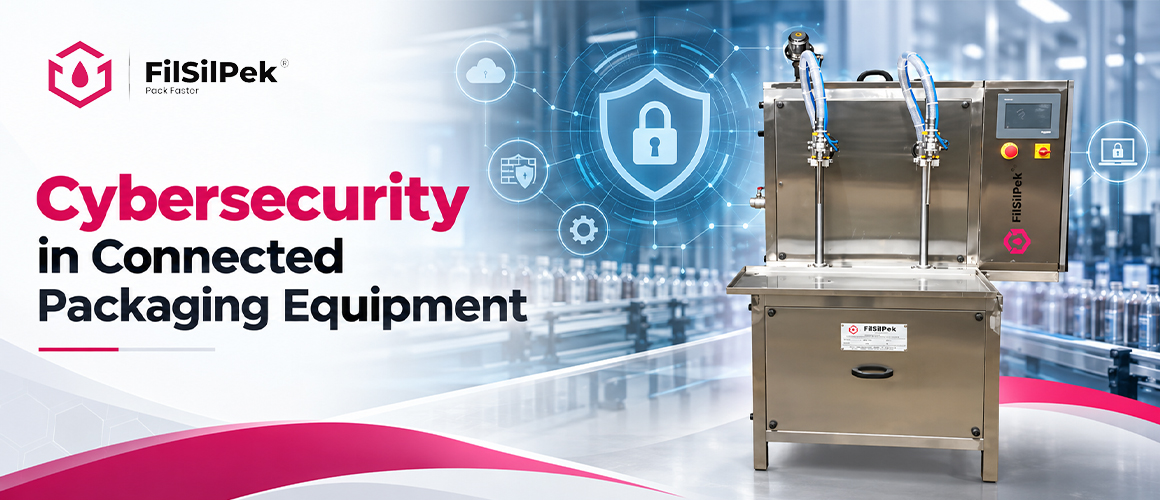
Explore packaging equipment cybersecurity risks and ways to protect connected machines, secure remote access and reduce threats to manufacturing operations.
TL; DR Summary
- The content outlines a practical, defense-in-depth framework for securing connected packaging equipment and IIoT, covering remote maintenance, device hardening, network segmentation, threat detection, incident response, data protection, and third-party risk.
- Key practices include zero-trust and least privilege in OT, firmware integrity and regular patching, encryption in transit and at rest, and strict segmentation with secure communications.
- It emphasizes proactive monitoring, predefined incident playbooks, and robust governance with suppliers to maintain production continuity in a connected packaging environment.
Introduction
The rising connected packaging landscape
Packaging equipment now often connects to digital networks. IIoT-enabled components, smart sensors, and cloud storage are common in modern lines. This connectivity improves efficiency but also widens the attack surface.
Industry players like Robopac USA and Aetna Group illustrate the shift toward automation and remote monitoring. As packaging systems grow more automated, reliable data flows become essential, bringing both opportunities and cyber risk that must be managed thoughtfully.
Why cybersecurity matters for packaging operations
Cyber threats targeting packaging can disrupt production and compromise data. Securing equipment supports continuity and protects sensitive information. A strong cybersecurity posture helps prevent tampering and unauthorized access.
ISO/IEC 27001 provides a formal framework for information security management, helping packaging operations demonstrate ongoing risk management, data protection, and supplier assurance within connected lines. HMC Products provides packaging automation solutions that align with these security goals, offering equipment with built-in security features and transparent firmware updates to reduce risk across the line. Informa connects packaging security insights, including market intelligence and events, to help you align governance and supplier risk programs with industry best practices.
Practical steps can yield meaningful protection. Grounding your approach in people, processes, and technology creates a balanced defense. Treat cybersecurity as part of digital transformation, not an afterthought.
Secure Remote Access and Maintenance for Packaging Equipment
Best practices for remote maintenance access
You enable remote maintenance to keep lines running without compromising security. Start with a formal access policy that defines who can reach equipment, when, and for what purpose. Use multi factor authentication to verify identities before any session begins.
Isolate remote sessions from the production network. Favor jump hosts or secure gateways that centralize control and auditing. Record session activity to support forensics and compliance reviews. Establish clear approval workflows for maintenance windows and changes to equipment.
- Use role-based access control to limit what each technician can do on a device.
- Require unique credentials for every technician and avoid shared accounts.
- Implement session hardening to prevent command history leakage and screen capture.
- Deploy network access controls that restrict connections to approved endpoints only.
Zero trust and least privilege in OT environments
Adopt zero trust to verify every access attempt, regardless of origin. Continuous authentication and device posture checks reduce risk from compromised credentials.
Apply least privilege by limiting user actions to only those necessary for the task. Regularly review permissions as roles evolve with maintenance needs.
- Segment remote access by device class (packers, palletizers, casers) to constrain blast radii.
- Enforce time bound and scope restricted sessions tied to specific maintenance tasks.
- Monitor ongoing sessions for unusual commands or anomalous data transfers.
Endpoint and Device Hardening for IoT Packaging Components
Firmware integrity and secure boot
Endpoint security starts with trustworthy firmware. Verified boot ensures the device only runs code that is signed by the manufacturer, preventing tampered firmware from taking control.
Implement measures that include firmware signing, secure boot chains, and runtime integrity checks that alert you to any unexpected changes during operation.
- Verify firmware signatures at each update before installation
- Enforce hardware backed key protection to prevent key extraction
- Use tamper evident logs to track firmware events across endpoints
Regular patching and vulnerability management
Maintenance cycles must address known weaknesses without disrupting production. A disciplined patching approach reduces exposure while preserving line uptime.
Establish a routine for monitoring, testing, and deploying updates across all connected packaging components to close gaps promptly.
- Schedule non disruptive patch windows aligned to maintenance cycles
- Prioritize high risk CVEs that affect OT protocols and device firmware
- Maintain an asset inventory to track affected endpoints and verify remediation
Network Segmentation and Secure Communications in Packaging Plants
Segmentation to limit lateral movement
Segmentation confines access so a breach in one area cannot easily spread. Model the plant as distinct zones to enforce clear data flows and access boundaries between packaging equipment, controls, and enterprise IT.
Perimeter controls should shield critical assets such as palletizers, depalletizes, packers, and CI systems. Use firewalls, access controls, and network policies to restrict traffic between zones to what is necessary for operation and maintenance.
- Define device classes and assign them to dedicated segments
- Apply micro-segmentation to control east west traffic at the device level
- Regularly audit inter-zone communications for deviations
Encryption in transit and secure protocols for Industrial IoT
Protect data as it moves across the production floor and toward cloud or on-premise analytics. Encryption in transit reduces the risk of eavesdropping, tampering, and impersonation.
Adopt secure OT appropriate protocols and ensure protocol hardening across IIoT components. Centralized key management and rotation help maintain trust across the network.
|
Aspect |
Guidance |
|
Segmentation scope |
Zone by zone design for critical packaging equipment |
|
Traffic controls |
Least privilege access and explicit allowlists between zones |
|
Encryption |
TLS for device communications; strong cipher suites |
Threat Detection and Incident Response for Connected Packaging
Monitoring and anomaly detection in OT
Maintain real time visibility across packaging lines to detect deviations early. Focus on unusual device behavior, throughput shifts, and configuration changes that diverge from established baselines.
Adopt a layered detection approach that blends signature-based alerts with behavior analytics. Correlate data from sensors, PLCs, HMI, and IIoT devices to spot subtle indicators of compromise before they escalate.
- Centralized dashboards that map equipment health to security events
- Automated alerting for deviations in cycle times, tolerances, and command sequences
- Baseline models updated to reflect seasonal production changes and maintenance windows
Incident response playbooks tailored to packaging environments
Design playbooks around the rhythms of packaging operations, including shift changes and planned maintenance. Define clear roles, communication paths, and predefined recovery steps.
Structure playbooks to address common incident types such as unauthorized remote access, firmware tampering, and service disruption. Include containment, eradication, and recovery steps that minimize downtime.
- Containment steps that isolate affected zones without stopping entire lines
- Eradication goals that remove footholds and verify device integrity
- Recovery actions with verified restoration of production continuity and data integrity
|
Aspect |
Guidance |
|
Detection sources |
OT telemetry, device logs, network flow data |
|
Response targets |
Quick containment, minimal downtime, verifiable restoration |
|
Communication |
Predefined escalation paths and incident status updates |
Data Protection, Privacy, and Supply Chain Security
Encrypting sensitive production and customer data
Protecting sensitive information is essential to maintain trust and compliance. Encryption at rest and in transit helps ensure that data remains unreadable to unauthorized parties across the packaging workflow.
Apply standardized encryption approaches across the IIoT network and cloud connections. This includes protecting customer data, production metrics, and configuration logs from exposure or tampering.
- Implement AES-256 or equivalent strong encryption for stored data
- Use encryption for data in transit between devices, gateways, and cloud services
- Centralize key management with rotation policies and access controls
Third-party risk management for packaging partners
Suppliers and service providers expand the security surface. A formal third-party risk program helps identify, assess, and mitigate potential weak points in the supply chain.
Adopt a structured approach to evaluate vendor cybersecurity postures, incident history, and data handling practices before integration with packaging equipment or automation stacks.
- Require security questionnaires and routine audits for critical partners
- Mandate secure software supply chain practices, including verified firmware sources
- Integrate partner risk findings into your risk register and remediation plans
|
Aspect |
Guidance |
|
Data protection |
Encrypt sensitive data at rest and in transit; manage keys securely |
|
Privacy compliance |
Align with applicable data protection regulations and retention policies |
|
Supply chain |
Assess and document vendor security postures; enforce secure software practices |
FAQ
- What are the common cyber threats to packaging equipment?
You may encounter malware on control devices, unauthorized remote access, ransomware, and data exfiltration attempts targeting production data and configurations.
- How does IIoT impact packaging cybersecurity?
IIoT expands the attack surface by linking sensors, controllers, and cloud services. This requires stronger authentication, updated firmware, and secure communication channels to protect production continuity.
- What is the role of network segmentation?
Segmentation limits the spread of an incident by isolating critical packaging zones from less secure segments. It helps maintain uptime even when an individual component is compromised.
- Which practices improve remote maintenance security?
Use multi factor authentication, secure gateways, and access logging. Encrypt sessions and enforce least privilege for technicians and integrators.
- How should data be protected across the supply chain?
Encrypt sensitive data at rest and in transit, manage keys centrally, and require security controls from third party partners before integration with packaging equipment.
- What is a practical incident response approach for packaging plants?
Develop playbooks that cover containment, eradication, and recovery specific to packaging lines. Include roles, escalation paths, and predefined recovery steps to minimize downtime.
Conclusion
You now have a practical framework for safeguarding packaging equipment in a connected world. Security is ongoing work that spans people, processes, and technology.
- Adopt an integrated security posture that spans remote access, device hardening, and network design.
- Prioritize proactive monitoring, defined incident playbooks, and rapid containment to protect production continuity.
- Engage packaging partners through strict third-party risk management and verified software practices.
In practical terms, you can reduce cyber risk without sacrificing efficiency. With IIoT deployments in packaging lines, strong encryption, thoughtful segmentation, and governance turn connected equipment into a resilient asset rather than a vulnerability.
Regulatory compliance and validation for pharmaceutical filling lines
You operate in a highly regulated environment where….

Case Study: Sustainable Packaging in Dairy & Plant-Based Milk Processing
The dairy and plant-based beverage industries….

Modular Multi-Head Capping Systems for Line Flexibility
The modern packaging landscape demands an agility that…..
Contact Us
Address
B-603, SHALIN SQUARE HATHIJAN CIRCLE VATVA G.I.D.C ROAD, VINZOL,AHMEDABAD-382445 GUJARAT
Contact
+91 90542 94961
Inquiry Form
Contact Us
Address
B-603, SHALIN SQUARE HATHIJAN CIRCLE VATVA G.I.D.C ROAD, VINZOL,AHMEDABAD-382445 GUJARAT
Contact
+91 90542 94961
Inquiry Form
Contact Us
Address
B-603, SHALIN SQUARE HATHIJAN CIRCLE VATVA G.I.D.C ROAD, VINZOL,AHMEDABAD-382445 GUJARAT
Contact
+91 90542 94961
Inquiry Form
Contact Us
Address
B-603, SHALIN SQUARE HATHIJAN CIRCLE VATVA G.I.D.C ROAD, VINZOL,AHMEDABAD-382445 GUJARAT
Contact
+91 90542 94961
Inquiry Form
Contact Us
Address
B-603, SHALIN SQUARE HATHIJAN CIRCLE VATVA G.I.D.C ROAD, VINZOL,AHMEDABAD-382445 GUJARAT
Contact
+91 90542 94961
Inquiry Form