
Reducing Changeover Time for Multi SKU Production
Manufacturers producing multiple products on the same line often face one major challenge frequent changeovers. Every time production switches from one SKU to another, machines stop, operators reset equipment, tools are changed, materials are replaced, and quality checks are performed. During this period, production output stops while operating costs continue. That is why reducing changeover time for multi-SKU production is one of the most effective ways to improve manufacturing efficiency, increase capacity, lower waste, and respond faster to customer demand.
In industries such as food processing, packaging, pharmaceuticals, cosmetics, FMCG, and consumer goods, faster changeovers create a major competitive advantage. This guide explains practical strategies, proven systems, and best practices to reduce downtime and improve flexibility in multi-SKU manufacturing environments.
What Is Changeover Time in Multi SKU Production?
Changeover time is the total time required to stop production of one product and prepare the production line to start the next product. In multi-SKU production, this happens frequently because several products, sizes, Flavors, colors, or packaging formats are manufactured on the same machines.
Changeover time may include removing previous tooling, cleaning equipment, adjusting machine settings, loading new raw materials, changing labels or packaging, calibrating the line, testing samples, and approving the first good product.
The longer the changeover takes, the more production capacity is lost. Shorter changeovers mean higher machine utilization and better daily output.
Why Is Reducing Changeover Time Important?
Reducing changeover time creates direct and measurable business benefits. Every minute spent in changeover is a minute where machines are not producing saleable products.
Increased Production Capacity
When changeovers become faster, the same machine can run more hours productively each day. This increases output without buying new machinery.
Lower Manufacturing Cost
Downtime still consumes labour, electricity, supervision, and overhead expenses. Reducing setup time lowers cost per unit produced.
Better Production Flexibility
Shorter changeovers allow manufacturers to run smaller batches more efficiently. This helps respond quickly to market demand, urgent orders, and seasonal products.
Reduced Inventory Levels
Long setup times often force businesses to produce large batches. Faster changeovers allow smaller production runs, reducing excess inventory and storage costs.
Improved Customer Service
When production becomes more flexible, lead times reduce and businesses can fulfil customer orders faster.
What Are the Hidden Costs of Long Changeovers?
Many businesses only see the visible downtime cost, but long changeovers create several hidden losses.
Large batch production ties up working capital in finished goods inventory. Products may become outdated, damaged, or expire before sale. Slow changeovers reduce the ability to launch new SKUs quickly. Customer demand changes may not be met on time. Production schedules become rigid, and urgent orders create disruption.
Long changeovers also increase operator frustration, overtime pressure, and scheduling complexity.
What Is SMED and How Does It Help Reduce Changeover Time?
One of the most effective methods for reducing setup time is SMED, which stands for Single-Minute Exchange of Die. It is a proven lean manufacturing system designed to reduce changeovers to under ten minutes wherever possible.
Although not every line can achieve single-digit minutes, the principles of SMED are highly effective in any industry.
Separating Internal and External Activities
Internal activities are tasks that can only be done when the machine is stopped. External activities are tasks that can be completed while the machine is still running.
For example, gathering tools, preparing materials, checking documentation, and staging packaging material can all be done before stopping the line.
By shifting more work into external activities, actual machine downtime decreases.
Converting Internal Tasks to External Tasks
Many companies unknowingly perform tasks during stoppage that could be done earlier. Tool pre-assembly, preheating Molds, staging labels, cleaning spare parts, or preparing machine settings in advance can all reduce shutdown time.
Streamlining Internal Tasks
Tasks that must happen during stoppage should be simplified. Quick-release clamps, standardized fittings, digital settings, and easy alignment systems help shorten critical downtime.
How Can Standardization Reduce Changeover Time?
Lack of standardization is one of the biggest causes of slow setups.
Standardized Tooling and Fixtures
If every product requires different bolts, tools, or fittings, operators waste time searching and adjusting. Standardizing clamps, fasteners, and connection points makes changeovers faster and more reliable.
Standard Operating Procedures
Written step-by-step procedures help every operator follow the best method. Without standards, each person uses a different process, leading to inconsistency and delays.
Detailed SOPs with photos, diagrams, and checklists improve training and execution.
Standard Machine Settings
Digital recipe management allows operators to load predefined settings for each SKU rather than manually adjusting speed, fill volume, sealing temperature, or positioning every time.
How Does Visual Management Improve Setup Speed?
Visual management helps operators find what they need quickly and perform tasks accurately.
Shadow boards for tools, labelled storage areas, color-coded change parts, marked machine settings, and visual setup guides reduce confusion and wasted motion.
When every tool and component have a fixed location, setup becomes faster and more repeatable.
Visual controls also help identify missing parts immediately before a changeover begins.
What Equipment Investments Help Faster Changeovers?
Sometimes the biggest gains come from better equipment and smarter technology.
Quick-Release Clamping Systems
Replacing traditional bolts with quick-release clamps or lever locks can save significant time during tooling changes.
Modular Machine Design
Machines designed with modular components allow operators to swap pre-set assemblies rather than adjusting many parts manually.
PLC and Recipe Automation
Modern production lines often use PLC systems with stored product recipes. Operators simply select the next SKU and machine parameters adjust automatically.
This reduces setup error and saves time.
Servo Motor Positioning Systems
Servo-controlled adjustments allow faster and more accurate positioning of guides, fillers, conveyors, and packaging components.
How Important Are Operators in Reducing Changeover Time?
Technology helps, but people drive results. Operators often know the real causes of delays better than management.
Cross-Training Employees
If only one person knows changeover procedures, production becomes vulnerable. Cross-training multiple employees improves flexibility and avoids dependency.
Operator Involvement
Operators should be encouraged to suggest improvements. They often identify wasted movement, missing tools, poor layout, or unnecessary steps that management may overlook.
Ownership Culture
When teams are measured and rewarded for faster, safer, quality-focused changeovers, performance improves significantly.
How Should Companies Measure Changeover Performance?
You cannot improve what you do not measure. Accurate tracking is essential.
|
Metric |
Example Data |
|
Average Changeover Time |
28 Minutes |
|
Best Changeover Time |
18 Minutes |
|
Production Availability |
87% |
|
Machine Utilization |
82% |
|
First Pass Quality After Setup |
96% |
Track Start and End Time
Measure when the last good unit of previous SKU is produced and when the first approved unit of next SKU is completed.
Break Down Setup Steps
Measure cleaning time, tooling change time, adjustment time, material loading time, and testing time separately.
This identifies bottlenecks clearly.
Use Visual Dashboards
Display performance boards in production areas. Visible data creates awareness and accountability.
What Are the Best Strategies for Multi SKU Production Lines?
Multi SKU environments require extra planning because changeovers happen frequently.
Sequence Similar Products Together
Run similar SKUs consecutively to reduce setup effort. For example, produce 500ml bottles before changing to 1L bottles, or run similar Flavors together.
Reduce Packaging Variations
Too many packaging differences increase setup complexity. Standardizing caps, labels, trays, or cartons can reduce changeover effort.
Prepare Materials in Advance
Before the line stops, ensure the next SKU’s raw materials, labels, cartons, tools, and documents are ready.
Use Smaller Dedicated Teams
Assign trained quick-change teams responsible for setup speed and standardization.
How Does Faster Changeover Improve Business Competitiveness?
Reducing changeover time is not only an internal efficiency project. It improves market competitiveness.
Faster setups allow more SKU variety without excessive cost. Businesses can accept smaller custom orders profitably. Seasonal products can launch quickly. Inventory carrying cost decreases. Customer delivery speed improves. Capacity increases without capital expansion.
In competitive markets, these advantages directly impact profitability and growth.
What Common Mistakes Increase Changeover Time?
Many companies unintentionally slow down setups due to poor practices.
Starting changeovers without tools ready creates delays. Missing packaging materials wastes time. No written SOP leads to confusion. Too many manual adjustments increase error. Lack of training causes slow execution. Not measuring performance prevents improvement.
Ignoring operator feedback is another major mistake because frontline teams usually know the best solutions.
How Can Continuous Improvement Sustain Faster Changeovers?
Reducing changeover time is not a one-time event. It should become part of continuous improvement culture.
Review each setup regularly. Ask what delayed the process. Update SOPs after improvements. Replace repeated pain points with better fixtures or automation. Reward teams for measurable gains.
Small improvements repeated consistently can cut setup times dramatically over months.
Reducing Changeover Time for Multi SKU Production: Final Thoughts
In modern manufacturing, especially in multi-SKU production environments, changeover speed directly impacts profitability, flexibility, and customer satisfaction. Long setup times waste capacity, increase costs, and limit responsiveness. Faster changeovers allow smaller batches, better planning, quicker delivery, and higher equipment utilization.
By applying SMED principles, standardizing procedures, improving tooling, training operators, and measuring results, manufacturers can transform setup time from a daily problem into a competitive advantage.
Reducing changeover time is not just about saving minutes—it is about unlocking production growth.
FAQs
- What is multi-SKU production and why is reducing changeover time important?
Multi SKU production means manufacturing multiple products on the same line. Reducing changeover time is important because it increases uptime, lowers cost, and improves flexibility.
- What are quick changeover systems and how do they streamline production?
Quick changeover systems use lean methods such as SMED, standardization, modular tooling, and preparation systems to reduce setup time and improve flow.
- What are the benefits of implementing faster changeovers in manufacturing?
Benefits include higher output, lower inventory, faster deliveries, smaller batch production, lower downtime cost, and improved competitiveness.
- What strategies help optimize changeover time in multi-SKU production?
Best strategies include external task preparation, standardized tooling, operator training, visual management, recipe automation, and performance tracking.
- How can companies improve efficiency and flexibility with quick changeover systems?
Companies can improve by reducing setup delays, increasing machine availability, responding faster to orders, and producing multiple SKUs efficiently.
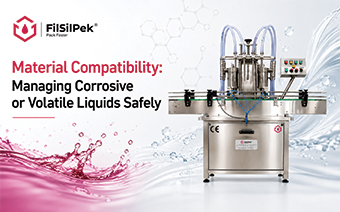
Material Compatibility: Managing Corrosive or Volatile Liquids Safely
Material compatibility stands as a cornerstone…..
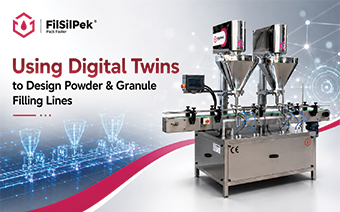
Using Digital Twins to Design Powder & Granule Filling Lines Context
The modern manufacturing landscape is characterized…..
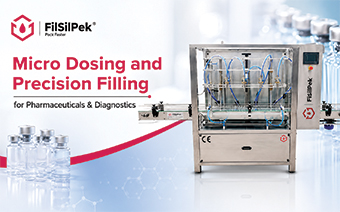
Micro Dosing and Precision Filling for Pharmaceuticals & Diagnostics
The pharmaceutical and diagnostics industries operate under…..