Enhancing operator training with augmented reality support
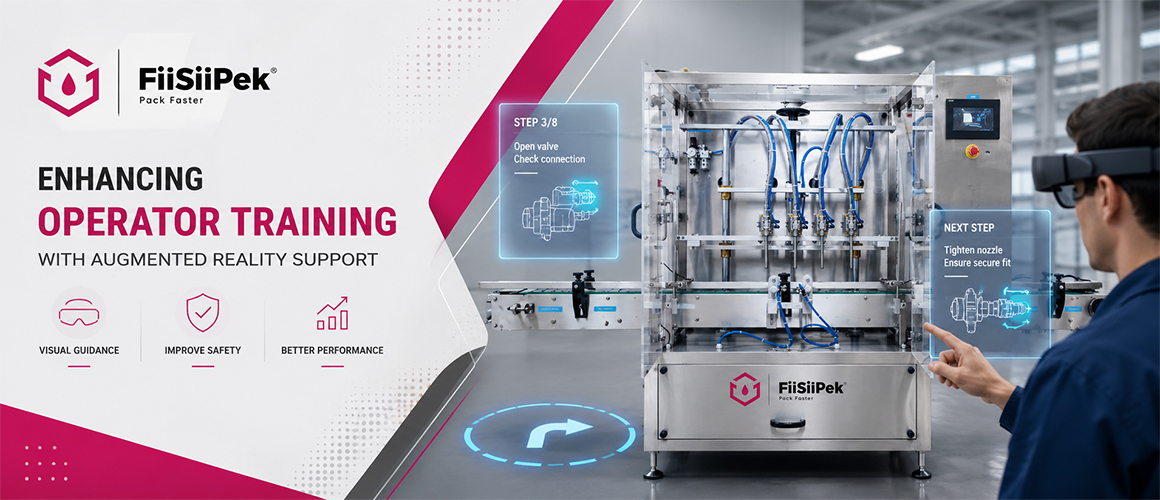
So, can augmented reality actually make operator training better? The short answer is a resounding yes. AR isn’t just a flashy new tech trend; it’s proving to be a real game-changer for how we train people on complex industrial equipment and tasks, making learning more effective, safer, and ultimately, more efficient.
Why AR is a Game Changer for Operator Training
Think about traditional training for a moment. It often involves bulky manuals, lengthy classroom sessions, and hands-on practice that can be risky or expensive to set up. AR offers a way to overlay digital information directly onto the real world, giving trainees a much more intuitive and immediate learning experience. Instead of just reading about a procedure, they can see it demonstrated right in front of them, overlaid onto the actual machinery they’ll be working with. This kind of contextual learning is incredibly powerful. It helps bridge the gap between theoretical knowledge and practical application, leading to faster skill acquisition and better retention.
Seeing is Believing: The Visual Learning Advantage
The human brain is wired for visual information. AR taps into this by presenting instructions, diagrams, and even step-by-step animations directly in the trainee’s field of view. This means less time spent flipping through pages or trying to decipher abstract schematics. It’s like having an expert guide standing right next to you, pointing out exactly what you need to do and how to do it, in real-time. This visual reinforcement makes complex processes much easier to grasp and remember.
Reducing Errors and Boosting Safety
One of the biggest advantages of AR in training is its ability to drastically reduce the chance of errors. When a trainee can see the correct steps clearly displayed, and perhaps even receive warnings about potential hazards, they are far less likely to make mistakes. This is crucial in industrial settings where errors can lead to costly damage, downtime, or even serious injuries. AR can simulate dangerous scenarios in a safe virtual environment, allowing operators to practice under pressure without any real-world risk.
The Hands-On Experience Reimagined
AR doesn’t replace hands-on practice; it enhances it. Imagine a junior technician who needs to learn how to maintain a specific piece of machinery. Instead of a senior engineer spending hours walking them through it, an AR headset can provide visual cues and instructions directly on the equipment. The trainee sees exactly which bolt to loosen, which wire to connect, and in what order. This frees up the experienced personnel for more critical tasks and allows trainees to gain proficiency much more quickly.
Guided Procedures, Step-by-Step
AR excels at breaking down complex procedures into manageable steps. For intricate tasks like assembling a component or performing a diagnostic check, AR can guide the operator through each action. Visual overlays can highlight the correct tools to use, the specific parts to interact with, and the expected outcomes at each stage. This structured approach ensures that nothing is overlooked and that even the most complex tasks can be learned effectively.
Interactive Troubleshooting and Diagnostics
Troubleshooting is a critical skill for any operator. With AR, trainees can learn to identify issues by seeing virtual faults overlaid onto real equipment. For example, an AR application could simulate a specific error code and then guide the operator through the diagnostic process, showing them which sensors to check and what readings to expect. This hands-on, albeit simulated, troubleshooting experience is far more effective than simply reading about potential problems.
Boosting Skill Retention and On-the-Job Performance
The real test of any training program is how well the learned skills translate to the actual job. AR training offers a significant advantage here because it’s so contextually relevant. When trainees learn by “doing” with AR support, the muscle memory and understanding are far more ingrained. This means they’re more likely to perform tasks correctly and efficiently when they’re on the floor, leading to improved productivity and reduced rework.
Real-World Context for Faster Learning
By overlaying digital information onto the actual equipment, AR provides a learning environment that mirrors the operational setting. This immediate relevance makes it easier for operators to connect what they’re learning with what they need to do. It’s a much more natural and effective way to absorb information than trying to relate textbook diagrams to a complex piece of machinery. This speed of learning is a significant benefit in industries where rapid upskilling is often required.
Reduced Need for Constant Supervision
As operators become more confident and proficient with AR-assisted training, the need for constant supervision decreases. They can work more independently, knowing that the AR system is there to provide guidance and support when needed. This not only frees up senior staff but also empowers junior operators, fostering a sense of confidence and autonomy.
Integrating AR into Your Training Programs
|
Training Program |
AR Integration |
Benefits |
|
New Employee Onboarding |
AR simulations for hands-on training |
Improved engagement and retention |
|
Sales Training |
AR product demos and interactive scenarios |
Enhanced product knowledge and sales skills |
|
Technical Skills Training |
AR overlays for real-time guidance |
Increased efficiency and accuracy |
Introducing AR into your operator training isn’t a one-size-fits-all endeavor. It requires careful planning and consideration of your specific needs. The good news is that AR solutions are becoming more accessible and easier to integrate than ever before. It’s about finding the right tools and content to align with your existing training goals and infrastructure.
Identifying the Right Use Cases
Not every training scenario is an immediate candidate for AR. Start by identifying areas where operators frequently struggle, where errors are costly, or where safety is a paramount concern. Tasks that involve complex sequences, intricate procedures, or require a high degree of spatial awareness are often excellent starting points for AR integration. Think about procedures that are rarely performed and therefore hard to maintain proficiency on.
Choosing the Right AR Technology
There are different types of AR technology available, from smartphone-based AR to professional-grade smart glasses. The choice will depend on the complexity of your training, your budget, and the environment in which the training will take place. For more interactive and hands-free applications, smart glasses often offer a superior experience. For simpler tasks or initial introductions, smartphone AR can be a more cost-effective option.
Developing Engaging AR Content
The effectiveness of AR training hinges on the quality of the content. This means creating clear, concise, and accurate digital overlays. instructional designers and subject matter experts need to collaborate to translate complex information into easily digestible visual aids. This could involve 3D models of machinery, interactive step-by-step guides, or even simulation of various operational conditions. The content needs to be intuitive and easy for the operator to follow.
The Future is Here: Continuous Improvement with AR
Augmented reality is not just a training tool; it’s a pathway to continuous improvement. As operators gain experience and as your AR content evolves, you can create a dynamic learning ecosystem. This means that training isn’t a one-time event but an ongoing process of skill refinement and knowledge enhancement, all supported by the power of AR.
Data-Driven Training Insights
Many AR training platforms can collect valuable data on trainee performance. This data can provide insights into where operators are excelling and where they might need additional support. By analyzing these metrics, you can tailor future training modules, identify common points of confusion, and continuously optimize your training programs for maximum effectiveness. It moves training from a subjective to a data-informed process.
Remote Assistance and Expert Support
Beyond initial training, AR can also be a powerful tool for on-the-job support. When an operator encounters a problem they’re unsure how to handle, they can use AR to connect with a remote expert. The expert can see what the operator sees through their AR device and provide real-time guidance and instructions, ensuring quick and accurate resolution of issues without the need for the expert to be physically present. This reduces downtime and keeps operations running smoothly
FAQs
What is augmented reality (AR) and how does it enhance operator training?
Augmented reality (AR) is a technology that overlays digital information, such as images, videos, or 3D models, onto the real world. In operator training, AR can provide trainees with real-time guidance, interactive simulations, and virtual instructions, enhancing their learning experience and improving their skills.
What are the benefits of using augmented reality in industrial operator training?
The benefits of using augmented reality in industrial operator training include improved safety, reduced training time, increased retention of information, enhanced hands-on learning experiences, and the ability to practice in realistic work environments without the need for physical equipment.
How is augmented reality revolutionizing industrial operator training?
Augmented reality is revolutionizing industrial operator training by providing a more immersive and interactive learning environment, allowing trainees to practice complex tasks in a safe and controlled setting, and enabling real-time feedback and performance monitoring for continuous improvement.
How can augmented reality be integrated into operator training programs?
Augmented reality can be integrated into operator training programs through the use of AR-enabled devices such as smart glasses or tablets, specialized AR software applications, and customized training modules that simulate real-world scenarios and equipment operation.
What is the role of augmented reality in enhancing industrial operator skills?
The role of augmented reality in enhancing industrial operator skills is to provide trainees with a more effective and efficient learning experience, allowing them to develop and refine their skills through hands-on practice, interactive guidance, and immediate feedback, ultimately leading to improved performance in real-world industrial settings.
Human-Robot Collaboration: How Cobots Are Transforming Material Handling & Palletizing
A practical guide to deploying collaborative robots for loading….
Regulatory compliance and validation for pharmaceutical filling lines
You operate in a highly regulated environment where….

Case Study: Sustainable Packaging in Dairy & Plant-Based Milk Processing
The dairy and plant-based beverage industries….
Contact Us
Address
B-603, SHALIN SQUARE HATHIJAN CIRCLE VATVA G.I.D.C ROAD, VINZOL,AHMEDABAD-382445 GUJARAT
Contact
+91 90542 94961
Inquiry Form
Contact Us
Address
B-603, SHALIN SQUARE HATHIJAN CIRCLE VATVA G.I.D.C ROAD, VINZOL,AHMEDABAD-382445 GUJARAT
Contact
+91 90542 94961
Inquiry Form
Contact Us
Address
B-603, SHALIN SQUARE HATHIJAN CIRCLE VATVA G.I.D.C ROAD, VINZOL,AHMEDABAD-382445 GUJARAT
Contact
+91 90542 94961
Inquiry Form