Using Digital Twins to Design Powder & Granule Filling Lines Context
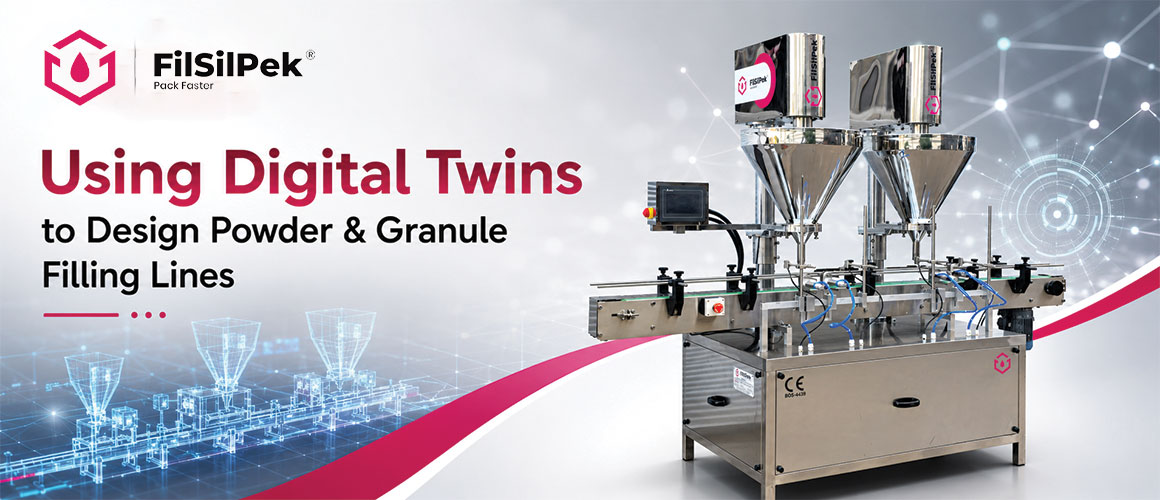
The modern manufacturing landscape is characterized by an ever-increasing demand for efficiency, precision, and adaptability, particularly within the intricate world of powder and granule filling lines. These systems, responsible for dispensing precise quantities of finely divided solids into various packaging formats, are critical to industries ranging from pharmaceuticals and food and beverage to chemicals and agricultural products. Traditionally, the design and optimization of such lines have been a laborious and often iterative process, relying heavily on physical prototypes, trial-and-error adjustments, and extensive on-site testing. However, the advent of digital twin technology is ushering in a new era, promising to revolutionize how these vital operations are conceptualized, built, and maintained.
What Is Digital Twin Technology?
At its core, a digital twin is a virtual replica of a physical asset, process, or system. It is not merely a static 3D model; rather, it is a dynamic, living representation that is continuously updated with real-time data from its physical counterpart. This data, often collected through a network of sensors, IoT devices, and other monitoring systems, allows the digital twin to accurately reflect the current state, performance, and behavior of the physical entity. The concept extends beyond simple visualization; a digital twin integrates various data streams, including operational parameters, historical performance logs, maintenance records, and even environmental conditions, to create a comprehensive and intelligent virtual model.
The Anatomy of a Digital Twin
The creation of a robust digital twin involves several key components. Firstly, there is the geometric representation, often a detailed 3D CAD model that captures the physical dimensions and layout of the filling line. Secondly, behavioral models are crucial. These are mathematical or physics-based simulations that mimic how the filling line components interact and operate. This can include models for material flow, conveyor dynamics, actuator responses, and the behavior of the powder or granule itself. Thirdly, data integration is paramount. This involves establishing secure and reliable connections to real-world sensors and control systems, enabling the continuous flow of operational data to the digital twin. Finally, analytics and AI are often embedded within the digital twin to process this data, identify patterns, predict future states, and recommend optimal actions.
The Power of Real-Time Data
The true power of a digital twin lies in its ability to ingest and interpret real-time data. As the physical filling line operates, sensors on augers, vibratory feeders, weigh scales, and packaging machines transmit information about speed, fill volume, product density, temperature, pressure, and a myriad of other variables. This data is fed into the digital twin, updating its virtual representation instantaneously. This constant synchronization allows for a dynamic and accurate reflection of the physical system’s performance, enabling proactive identification of anomalies and optimization opportunities.
Benefits of Digital Twins in Powder Filling Lines
The application of digital twin technology to powder and granule filling lines offers a transformative advantage, addressing many of the inherent challenges associated with these complex systems. The ability to simulate and analyze the entire filling process in a virtual environment before physical implementation or during operation leads to significant improvements across various operational metrics.
Enhanced Design and Optimization
One of the most compelling benefits is the profound impact on the design phase. Traditionally, engineers would develop a design, build a prototype, test it, identify issues, and then iterate. This is time-consuming and expensive. With a digital twin, engineers can create a virtual replica of the proposed filling line and subject it to a wide range of simulated scenarios. They can test different auger designs, hopper geometries, vibratory feeder settings, and control algorithms without incurring the cost of physical components or risking production downtime.
Predictive Performance Analysis
The digital twin can predict how the filling line will perform under various conditions, such as different powder densities, particle sizes, or flow rates. This allows for proactive identification of potential bottlenecks, filling inaccuracies, or material handling issues. For instance, if a particular powder exhibits poor flowability, the digital twin can simulate its behavior and suggest modifications to the hopper or feeder design to ensure consistent and accurate filling.
Material Flow Simulation
Accurately simulating the behavior of powders and granules is a complex task due to their unique physical properties. Digital twins can leverage advanced simulation techniques, such as Discrete Element Method (DEM), to model the flow of individual particles, their interactions, and their behavior within hoppers, chutes, and filling mechanisms. This allows engineers to optimize designs to prevent bridging, rat-holing, or segregation of particles, ensuring a consistent and precise fill.
Improved Operational Efficiency
Beyond the design phase, digital twins offer substantial benefits for ongoing operations. By continuously monitoring the physical line through its virtual counterpart, manufacturers can gain deeper insights into performance and identify areas for improvement.
Real-time Monitoring and Anomaly Detection
The constant stream of data from the physical line to its digital twin enables real-time monitoring of key performance indicators. Any deviation from expected behavior, such as a drop in fill accuracy or an increase in cycle time, can be immediately flagged by the digital twin. This allows maintenance teams to investigate and address issues before they escalate into major problems, minimizing unplanned downtime.
Process Optimization
The digital twin can be used to explore different operational parameters to identify the most efficient settings for the filling line. This could involve adjusting conveyor speeds, vibratory feeder intensities, or fill volume targets to maximize throughput while maintaining desired accuracy. The ability to test these changes virtually eliminates the risk of disrupting live production.
Designing Efficient Granule Filling Systems
The principles of digital twin technology are equally applicable, if not more so, to the design and operation of granule filling systems. Granules, with their often-irregular shapes and varied sizes, present unique challenges for precise and consistent dispensing. A well-developed digital twin can be instrumental in overcoming these hurdles.
Simulating Granule Behavior
Unlike fine powders, granules can exhibit more complex flow patterns. They can interlock, roll, and tumble, making precise volumetric or gravimetric dispensing difficult. Digital twins can incorporate sophisticated DEM simulations that accurately model the behavior of individual granules, their interactions with each other, and their flow through different dispensing mechanisms, such as vibratory feeders, rotary fillers, or screw feeders.
Optimizing Dispensing Mechanisms
By simulating the flow of granules through various dispensing mechanisms, engineers can identify the most suitable design for a particular granule type.
For instance, a vibratory feeder might be optimized by adjusting the frequency and amplitude of vibration, the length and angle of the chute, and the aperture size to ensure a consistent and controlled flow of granules. The digital twin can help determine the ideal settings before any physical adjustments are made.
Preventing Product Damage
Some granules are delicate and can be damaged by excessive impact or friction during the filling process. Digital twins can simulate the forces exerted on the granules throughout the line, allowing engineers to design systems that minimize stress and prevent breakage or deformation, thereby preserving product quality.
The integration of digital twins into powder and granule filling lines is a cornerstone of Industry 4.0 and the broader movement towards smart packaging automation.
Industry 4.0, characterized by the convergence of digital and physical systems, relies heavily on interconnectedness, data-driven insights, and intelligent automation.
The Role of IoT and Connectivity
Digital twins are intrinsically linked to the Internet of Things (IoT). The sensors and devices that collect real-time data from the physical filling line are the eyes and ears of the digital twin. This seamless connectivity allows for the continuous flow of information, enabling the digital twin to accurately mirror the physical world.
This data can then be used to trigger automated responses within the packaging line, creating a truly intelligent and responsive system.
Autonomous Operation and Self-Optimization
As digital twins become more sophisticated, they can contribute to increasingly autonomous operations. By analyzing real-time data and comparing it to desired performance targets, the digital twin can identify deviations and automatically adjust the filling line’s parameters to maintain optimal performance. This self-optimization capability reduces the need for constant human intervention and frees up operators to focus on more strategic tasks.
Interconnected Production Systems
Digital twins are not limited to a single filling line.
They can be integrated into a larger digital ecosystem that represents the entire production facility. This allows for a holistic view of the manufacturing process, enabling better coordination between different stages, from raw material handling to final packaging and warehousing. This interconnectedness is vital for achieving true smart manufacturing.
Reducing Downtime Through Simulation
|
Simulation Technique |
Reduction in Downtime (%) |
|
Discrete Event Simulation |
30% |
|
Monte Carlo Simulation |
25% |
|
Agent-Based Simulation |
20% |
Unplanned downtime is a significant cost driver for manufacturers, impacting productivity, profitability, and customer satisfaction. Digital twins offer a powerful tool for proactively mitigating this risk by enabling comprehensive simulation and analysis.
Predictive Maintenance
One of the most significant contributions of digital twins to reducing downtime is their ability to support predictive maintenance strategies. By analyzing historical data and real-time sensor readings, the digital twin can identify subtle signs of wear and tear on components, such as motors, bearings, or seals, before they fail. This allows maintenance teams to schedule repairs or replacements proactively during planned downtime, preventing unexpected breakdowns.
Simulating Failure Scenarios
Engineers can use the digital twin to simulate various failure scenarios, such as a motor overheating, a sensor malfunctioning, or a blockage in the filling mechanism. By observing how the digital twin responds to these simulated failures, they can develop effective contingency plans and troubleshooting procedures, ensuring that production can be restored quickly in the event of a real-world incident.
Virtual Commissioning
A critical stage in deploying any new filling line, or making significant modifications to an existing one, is commissioning. This typically involves extensive on-site testing and debugging of the control systems and physical equipment, which can be time-consuming and disruptive. Digital twins are revolutionizing this process through virtual commissioning.
Testing Control Logic
Virtual commissioning involves connecting the actual control software (PLC code) to the digital twin. This allows engineers to test the control logic and its interaction with the simulated physical system in a completely virtual environment. Any errors in the programming, such as incorrect sequencing, faulty logic, or missed interlocks, can be identified and corrected before the physical equipment is even powered up.
Training Operators and Technicians
The digital twin provides an invaluable platform for training operators and maintenance technicians. They can interact with the virtual representation of the filling line, practice normal operating procedures, learn how to respond to various alarms and fault conditions, and even perform simulated maintenance tasks. This hands-on experience in a safe, virtual environment builds confidence and competence, reducing the learning curve and improving readiness for actual operations.
Best Practices for Virtual Commissioning
To fully leverage the power of digital twins for virtual commissioning of powder and granule filling lines, adherence to certain best practices is essential. These practices ensure that the virtual environment accurately reflects the physical reality and that the commissioning process is efficient and effective.
Comprehensive Model Development
The accuracy of the digital twin is paramount for successful virtual commissioning. This requires a comprehensive and detailed development process that includes accurate geometric models, realistic behavioral models of all components, and precise integration of the control logic. Engineers must ensure that the models capture the intended functionality and operational characteristics of the physical system as closely as possible.
Iterative Refinement
Virtual commissioning is often an iterative process. As the control logic is tested against the digital twin, new insights may emerge that require adjustments to the models or the control code. Embracing an iterative approach, where the digital twin and the control system are continuously refined in parallel, leads to a more robust and well-tested final system.
Defined Validation and Verification (V&V) Strategy
A clear V&V strategy is crucial for virtual commissioning. This involves defining the specific tests to be performed, the expected outcomes, and the criteria for success. The digital twin acts as the testing ground, allowing for repeatable and objective verification of the control system’s behavior under a wide range of operational conditions, including edge cases and fault scenarios.
Collaboration Between Disciplines
Successful virtual commissioning requires close collaboration between automation engineers, mechanical engineers, process engineers, and software developers. The digital twin serves as a common platform for communication and collaboration, ensuring that all stakeholders have a shared understanding of the system’s behavior and that potential issues are addressed holistically.
By embracing digital twin technology and implementing best practices for its application, manufacturers can fundamentally transform the design, operation, and maintenance of their powder and granule filling lines. This not only leads to improved efficiency and reduced costs but also positions them at the forefront of the industry 4.0 revolution, ready to meet the ever-evolving demands of the global marketplace.
FAQs
- What is digital twin technology?
Digital twin technology is a virtual representation of a physical object or system, such as a powder or granule filling line, that allows for real-time monitoring, analysis, and optimization of its performance.
- What are the benefits of digital twins in powder filling lines?
Digital twins in powder filling lines offer benefits such as improved efficiency, reduced downtime, predictive maintenance, and the ability to test and optimize new processes and equipment in a virtual environment before implementation in the physical system.
- How can digital twins be used in designing efficient granule filling systems?
Digital twins can be used to simulate and optimize the design of granule filling systems by analyzing factors such as material flow, equipment performance, and process parameters to ensure efficient and accurate filling operations.
- What is the role of Industry 4.0 and smart packaging automation in powder and granule filling lines?
Industry 4.0 and smart packaging automation technologies, when integrated with digital twins, enable real-time data collection, analysis, and control of filling line operations, leading to increased productivity, flexibility, and quality in the production process.
- How can virtual commissioning help in reducing downtime in powder and granule filling lines?
Virtual commissioning allows for the testing and validation of control systems and equipment in a virtual environment, reducing the need for prolonged physical commissioning and minimizing the risk of downtime during the implementation of new processes or equipment.
Material Compatibility: Managing Corrosive or Volatile Liquids Safely
Material compatibility stands as a cornerstone…..
Micro Dosing and Precision Filling for Pharmaceuticals & Diagnostics
The pharmaceutical and diagnostics industries operate under…..
How predictive analytics improves inventory management of packaging materials
So, you’re wondering how predictive analytics can actually help…..
Contact Us
Address
B-603, SHALIN SQUARE HATHIJAN CIRCLE VATVA G.I.D.C ROAD, VINZOL,AHMEDABAD-382445 GUJARAT
Contact
+91 90542 94961
Inquiry Form
Contact Us
Address
B-603, SHALIN SQUARE HATHIJAN CIRCLE VATVA G.I.D.C ROAD, VINZOL,AHMEDABAD-382445 GUJARAT
Contact
+91 90542 94961
Inquiry Form
Contact Us
Address
B-603, SHALIN SQUARE HATHIJAN CIRCLE VATVA G.I.D.C ROAD, VINZOL,AHMEDABAD-382445 GUJARAT
Contact
+91 90542 94961
Inquiry Form
Contact Us
Address
B-603, SHALIN SQUARE HATHIJAN CIRCLE VATVA G.I.D.C ROAD, VINZOL,AHMEDABAD-382445 GUJARAT
Contact
+91 90542 94961
Inquiry Form