Adapting Filling Lines for High Viscosity Cosmetic Products
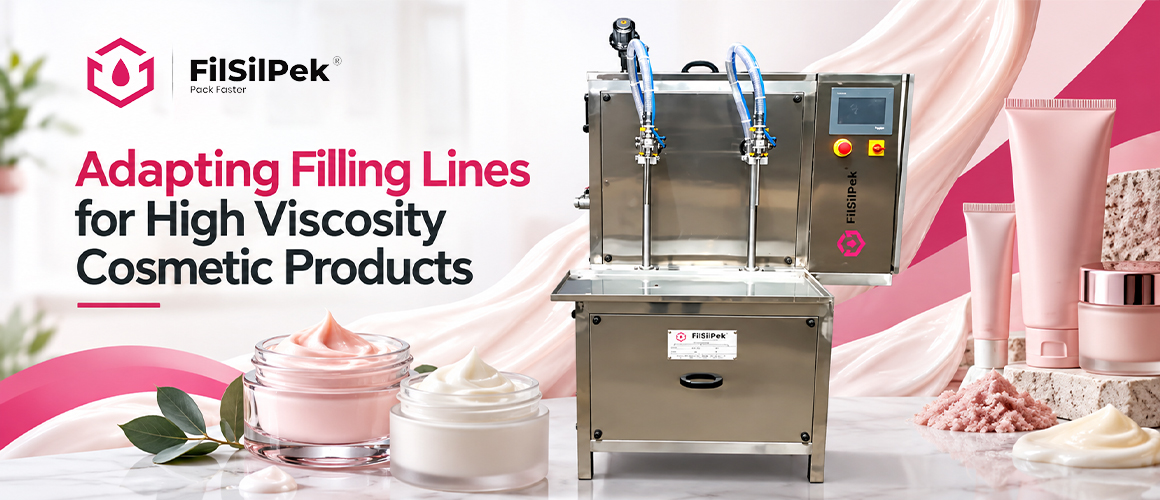
Learn how to adapt filling lines for high viscosity cosmetic products, improving dosing accuracy, product handling, and packaging efficiency for creams and gels.
Introduction
You are selecting a filling line for high-viscosity cosmetics. The goal is reliable production with precise dosing, minimal waste, and strong product integrity.
Viscosity shapes every stage from handling to packaging. Research Nester notes that understanding its interaction with filling equipment helps you choose the right machinery and practices. King Pack Machinery contributes proven solutions for high-viscosity cosmetics with robust temperature control and precision dosing. Cosmetic clay masks are a common high-viscosity formulation, often requiring careful deaeration and nozzle design to maintain texture and avoid air pockets during filling. Honey can act as a natural humectant in some cosmetic formulations, influencing viscosity and moisture retention when used in small, formulation-appropriate amounts.
This guide explains how different systems manage liquids from water-like to thick pastes and how pump choice, temperature control, and line design affect efficiency and accuracy.
Key topics include:
- Types of fillers for thick gels and pastes
- Maintaining flow and consistency at high viscosity
- Practical steps to boost quality without downtime
A Plastic tube filling machine is built to handle viscous products like gels or pastes with stable dosing and minimal tailing, making it a natural fit for high-viscosity cosmetic tubes while ensuring clean transfer from hopper to nozzle.
Understanding Viscosity and Its Impact on Cosmetic Filling
What viscosity is and how it affects flow
Viscosity describes a product’s resistance to movement. Higher viscosity yields a thicker liquid that flows more slowly, influencing how it travels through hoses, pumps, and nozzles.
Cosmetic formulations span from light liquids to dense pastes. The flow behavior guides which filling system can deliver reliable performance without air pockets or product loss.
How viscosity influences dosing accuracy and line stability
Dosing accuracy relies on predictable flow. Elevated viscosity makes flow sensitive to pressure, temperature, and the time spent in the pump and lines.
Line stability hinges on consistent shear, agitation, and temperature control. Viscosity shifts during a run can change fill volume, so robust control is essential to maintain quality.
- Expect slower fill ramps for thick products to prevent surge in the system.
- Choose filling components aligned with your viscosity range to avoid underfill or overfill.
- Monitor temperature closely as small changes can affect viscosity and flow rate.
Evaluating Pump and Filler Compatibility for High Viscosity
Diaphragm fillers for thick gels and pastes
Diaphragm fillers provide positive displacement with minimal shear, making them well suited for thick gels and pastes. They maintain consistent output across a broad viscosity range and resist shear-induced thinning that can affect accuracy. Pair them with robust temperature control and compatible materials to prevent diaphragm wear and contamination over time.
Piston fillers versus rotor pump fillers for consistency
Piston fillers deliver fixed volumes with tight tolerances, ideal for premium cosmetics where exact dosage matters. Rotor pumps support continuous flow and can handle mid to high viscosity with a steadier ramp, though they introduce more shear. Decide based on whether you need discrete fills or a smoother, continuous fill profile.
Magnetic pump fillers for low contamination risk
Magnetic drive systems minimize wetted-contact materials, reducing contamination risk and simplifying cleaning. They suit formulas with particulates or sensitive ingredients where hygiene is critical. Ensure seals and housings tolerate solvents, thickeners, and the temperature range typical of high viscosity formulations.
Treatment of High Viscosity Formulations on Line
Pre-heating and temperature control strategies
Raising temperature can lower viscosity and improve flow while preserving product integrity. Setpoints should balance workability with ingredient stability, and monitoring should extend from hopper to nozzle to prevent cold spots.
- Implement insulated pathways and targeted heating zones to sustain uniform temperature along the feed path.
- Employ inline sensors that adjust heat input in real time based on viscosity feedback.
- Record viscosity behavior at target temperatures to refine operating guidelines and prevent drift.
Agitation, shear management, and residence time
Consistent agitation prevents phase separation and settling, while controlling shear protects texture. Residence time influences dosing reliability and batch stability.
- Maintain gentle, continuous agitation in hoppers and feed lines to minimize air pockets.
- Configure pumps and valves to deliver the necessary shear without overworking the product.
- Model residence time to keep viscosity profiles stable during filling and packaging.
Air entrapment prevention and deaeration techniques
Air pockets distort fill volumes and can create defects. Effective deaeration keeps lines clean and fill accurate.
- Install inline deaeration upstream of the filler for viscous formulations.
- Choose nozzle geometries that reduce turbulence and bubble formation during discharge.
- Schedule regular vent maintenance to sustain reliable air removal and consistency.
Designing Accurate Dosing and Cutoff for Thick Products
Real-time feedback and servo-driven control
For high viscosity fills, you need reliable, immediate feedback to protect dosing accuracy. Use fast sensors that monitor flow rate and viscosity shifts, plus piston position data to correct deviations before they affect batch consistency. Servo-driven control delivers repeatable positioning and ramp profiles tailored to each formulation, reducing the risk of underfill or overfill during changes in viscosity or temperature.
Nozzle geometry and sealing considerations
Texture and thickness make nozzle design critical. Choose geometry that controls exit velocity to minimize splatter and air entrainment. Select seals and gaskets that resist abrasion, tolerate temperature swings, and maintain a tight seal across cycles. Removable tips can simplify cleaning and speed up changeovers without compromising fill integrity.
Tolerances and calibration routines
Define tolerances that reflect your product’s viscosity range and line performance targets. Regular calibration aligns dose volume with target weights or counts, accounting for environmental shifts. Maintain automated logs and reference standards to ensure traceability and sustained accuracy across runs.
Equipment Upgrades and Integration for High Viscosity
Heated hoppers and product pathways
Maintain consistent viscosity from hopper to nozzle with targeted heating along the feed path. Uniform temperature helps prevent gelation and phase separation, supporting accurate fills. Use insulated ducts and responsive controls to preserve profile across shifts.
- Inline temperature sensors deliver real time feedback to the control system
- Insulated pathways reduce heat loss and energy consumption
- Modular heated components enable quicker transitions between product families
Heavy-duty pumping components and coatings
High viscosity formulas demand robust pumps and durable coatings. Select materials that resist abrasion, chemical attack, and buildup from thick formulations. Sanitary finishes facilitate clean in place and rapid changeovers.
- Evaluate piston, diaphragm, or rotor options suited for thick pastes
- Coatings such as ceramic or PTFE reduce sticking and scoring
- Seals and gaskets designed for high shear and temperature variation
Synchronizing filling with sealing and packaging
Coordinate fill cycles with downstream equipment to avoid bottlenecks. Proper synchronization lowers downtime and improves overall efficiency.
- Servo-driven coordination maintains consistent timing across stations
- Feedback loops adjust fill volume as packaging speeds change
- Centralized monitoring enhances maintenance planning and traceability
Operational Best Practices for Stability and Efficiency
Changeover and sanitation strategies for viscous products
Viscous formulations require disciplined changeovers. Standardize cleaning, disassembly, and reassembly to minimize residue and prevent cross contamination. Use dedicated tools per product family to maintain hygiene and consistency.
- Written changeover checklist with sign-off at each step.
Batch normalization and process monitoring
Create batch baselines by aligning viscosity, temperature, and flow before production. Continuous monitoring helps detect drift and sustain fill stability across runs.
- Real-time alerts for viscosity excursions.
Downtime reduction and maintenance planning
Schedule maintenance around production windows and change cycles. Proactive upkeep preserves line efficiency and reduces unexpected stops.
- Preventive maintenance calendar for high-wear components.
FAQs
Here are concise answers to common questions about adapting filling lines for high viscosity cosmetic products. Each response focuses on actionable guidance you can apply in practice.
- What is a practical viscosity range for most high-viscosity cosmetics?
Typical product viscosities span from a few thousand to several hundred thousand mPa s. Exact targets depend on formulation, equipment, and desired flow characteristics.
- Which filling system offers the best balance of accuracy and throughput?
Diaphragm, piston, and rotor pump fillers each have strengths. For thick gels and pastes, diaphragm and piston fill accuracy is often superior, while rotor pumps suit highly viscous, steady-flow applications.
- How do you prevent air entrapment in viscous fills?
Use controlled deaeration strategies, appropriate venting, and nozzle geometries that minimize turbulence during discharge. Gentle extrusion reduces bubble formation.
- Is pre-heating always necessary?
Not always, but keeping product temperature within a targeted band can improve flow and dosing stability. Balance energy use with product integrity and sensory properties.
- What role does nozzle design play?
Nozzle diameter and seal type influence fill accuracy and material shedding. Optimized nozzles reduce drips and improve repeatability across cycles.
| Decision factor | Impact on filling high viscosity |
| Pump type | Determines shear, clog risk, and cleaning ease |
| Temperature control | Affects viscosity stability and line consistency |
| Nozzle geometry | Influences accuracy and waste |
Regulatory compliance and validation for pharmaceutical filling lines
You operate in a highly regulated environment where….
Case Study: Sustainable Packaging in Dairy & Plant-Based Milk Processing
The dairy and plant-based beverage industries….
Modular Multi-Head Capping Systems for Line Flexibility
The modern packaging landscape demands an agility that…..
Contact Us
Address
B-603, SHALIN SQUARE HATHIJAN CIRCLE VATVA G.I.D.C ROAD, VINZOL,AHMEDABAD-382445 GUJARAT
Contact
+91 90542 94961
Inquiry Form
Contact Us
Address
B-603, SHALIN SQUARE HATHIJAN CIRCLE VATVA G.I.D.C ROAD, VINZOL,AHMEDABAD-382445 GUJARAT
Contact
+91 90542 94961
Inquiry Form
Contact Us
Address
B-603, SHALIN SQUARE HATHIJAN CIRCLE VATVA G.I.D.C ROAD, VINZOL,AHMEDABAD-382445 GUJARAT
Contact
+91 90542 94961
Inquiry Form
Contact Us
Address
B-603, SHALIN SQUARE HATHIJAN CIRCLE VATVA G.I.D.C ROAD, VINZOL,AHMEDABAD-382445 GUJARAT
Contact
+91 90542 94961
Inquiry Form
Contact Us
Address
B-603, SHALIN SQUARE HATHIJAN CIRCLE VATVA G.I.D.C ROAD, VINZOL,AHMEDABAD-382445 GUJARAT
Contact
+91 90542 94961
Inquiry Form