Virtual reality training for packaging line operators
Virtual Reality: A Paradigm Shift in Packaging Line Operator Training
The modern manufacturing landscape is defined by its relentless pursuit of efficiency, safety, and operational excellence. Within this dynamic environment, packaging lines represent a critical juncture, where precision, speed, and hazard awareness are paramount. Traditionally, training packaging line operators involved a blend of theoretical instruction, on-the-job shadowing, and hands-on practice with live machinery. While these methods have their merits, they often come with inherent limitations, including the risk of errors on expensive equipment, potential safety hazards for new trainees, and the logistical challenges of scheduling production downtime for training. Enter Virtual Reality (VR) – a groundbreaking technology poised to revolutionize industrial training, particularly for packaging line operators. VR offers an immersive, interactive, and safe learning environment that addresses many of the shortcomings of conventional training methodologies, ushering in an era of enhanced skill development and operational prowess.
The Inevitable Evolution of Industrial Training
The industrial sector is constantly seeking innovative ways to improve workforce capabilities. As technology advances, so too must the methods by which we equip our employees with the knowledge and skills necessary to operate complex machinery and navigate challenging environments. VR represents a natural progression in this evolution, moving beyond static presentations and theoretical manuals to dynamic, experiential learning.
Bridging the Gap Between Theory and Practice
Traditional training often presents a significant chasm between textbook knowledge and practical application. New operators might understand the theoretical function of a machine but struggle with its tactile operation or the nuances of troubleshooting. VR training bridges this gap by allowing trainees to “virtually” interact with the very machinery they will operate, performing tasks and encountering scenarios in a risk-free digital twin of the actual packaging line.
Addressing the Limitations of On-the-Job Training
While on-the-job training (OJT) provides valuable real-world experience, it carries inherent risks. Novice operators working with live machinery can cause product damage, create safety hazards, or slow down production. VR eliminates these concerns entirely. Trainees can make mistakes, learn from them, and repeat procedures until mastery without any adverse consequences to production schedules, equipment, or personnel.
Enhancing Safety and Efficiency Through Virtual Reality Training
Safety and efficiency are two pillars of successful packaging operations. VR training significantly contributes to both by providing a controlled environment for skill development and hazard recognition. This proactive approach minimizes incidents and maximizes throughput.
Cultivating a Culture of Safety
Workplace safety is non-negotiable. VR training offers an unparalleled opportunity to immerse operators in various hazardous scenarios without any actual danger.
- Hazard Identification and Mitigation: Trainees can learn to identify potential pinch points, moving parts, electrical hazards, and chemical risks within the virtual environment. They can practice lockout/tagout procedures, emergency stops, and spill containment without the pressure or danger of a real-world incident. This repeated exposure and practice engrains safe behaviors and quick reactions, making them second nature when encountering actual hazards.
- Emergency Response Drills: Virtual reality allows for realistic simulations of emergency situations, such as machine malfunctions, component failures, or even fire evacuation protocols. Operators can practice their response, including communicating with teammates, following emergency procedures, and utilizing safety equipment, all within a consequence-free setting.
Optimizing Operational Efficiency and Throughput
Beyond safety, VR training plays a critical role in streamlining operations and boosting overall efficiency.
- Accelerated Skill Acquisition: The immersive nature of VR facilitates faster learning and skill retention. Operators can repeatedly practice complex tasks, master intricate controls, and internalize operational sequences until they become proficient. This reduced learning curve means new hires can become productive members of the team much sooner.
- Reduced Equipment Downtime for Training: One of the most significant advantages of VR is its ability to conduct comprehensive training without impacting production schedules. Traditional training often requires shutting down or slowing down active packaging lines, leading to lost revenue. VR eliminates this need entirely, allowing production to continue uninterrupted while operators hone their skills.
- Standardized Training Across Locations: For companies with multiple packaging facilities, VR offers a powerful tool for standardizing training protocols. All operators, regardless of their location, can receive the same high-quality, consistent training, ensuring uniformity in operational procedures and safety practices across the organization.
The Role of VR in Improving Skills and Performance of Packaging Line Operators
The ultimate goal of any training program is to improve the skills and performance of the workforce. VR technology excels in this area by providing a highly effective and engaging platform for skill development.
Developing Dexterity and Precision
Packaging lines demand a high degree of manual dexterity and precision. VR simulations can replicate the fine motor skills required for tasks such as product loading, machine adjustments, and quality control checks.
- Repetitive Task Mastery: Operators can practice repetitive tasks – often critical for speed and accuracy – until the movements become fluid and automatic. This muscle memory development in a virtual space translates directly to improved performance in the physical world. For instance, precisely loading delicate items or accurately placing labels can be practiced countless times.
- Troubleshooting and Problem-Solving: Virtual environments can introduce realistic fault scenarios and machine malfunctions. Operators can learn to diagnose problems, identify the root cause, and implement corrective actions, honing their problem-solving abilities without causing actual damage to expensive machinery or disrupting production.
Fostering Critical Thinking and Decision-Making
Beyond purely physical skills, VR training also cultivates essential cognitive abilities.
- Understanding interdependent Processes: Packaging lines are often a series of interconnected machines. VR allows operators to visualize and understand the flow of the entire line, recognizing how their actions on one machine can impact subsequent stages. This holistic understanding promotes better decision-making when adjusting settings or troubleshooting issues.
- Performance Monitoring and Feedback: VR platforms can track an operator’s performance, providing immediate feedback on their actions. This data-driven approach allows trainees to identify areas for improvement, track their progress, and ultimately achieve higher levels of proficiency. Analytics can highlight common mistakes or areas where more practice is needed.
Integrating Virtual Reality into Industrial Training
|
Training Aspect |
Virtual Reality |
Traditional Methods |
|
Engagement |
High level of engagement due to immersive experience |
Lower engagement as it relies on theoretical learning |
|
Retention |
Improved retention rates through interactive learning |
Lower retention rates due to passive learning |
|
Cost |
Initial investment in VR technology, but cost-effective in the long run |
Lower initial investment, but higher long-term costs for materials and resources |
|
Realism |
Provides realistic simulations for hands-on training |
Limited realism in simulations, often relying on theoretical scenarios |
The successful adoption of VR in industrial training requires a thoughtful integration strategy. It’s not just about acquiring the technology but about seamlessly weaving it into existing training frameworks to maximize its impact.
Designing Effective VR Training Modules
The effectiveness of VR training hinges on the quality and relevance of the modules.
- Collaborative Content Development: Subject matter experts (SMEs), experienced operators, and VR developers must collaborate closely to create realistic and pedagogically sound training scenarios. This ensures that the virtual environment accurately reflects real-world challenges and that the training objectives are met.
- Phased Learning Progression: Training modules should be designed with a progressive difficulty curve, starting with basic machine operation and gradually introducing more complex tasks, troubleshooting scenarios, and emergency procedures. This ensures a gradual and effective skill development pathway.
The Role of Instructors in a VR-Enhanced Environment
While VR offers self-directed learning opportunities, the role of instructors remains crucial.
- Facilitators and Mentors: Instructors transition from being primary knowledge dispensers to facilitators, guiding trainees through VR modules, providing personalized feedback, and answering complex questions that arise during the virtual experience. They can identify individual learning gaps and provide targeted support.
- Integrating VR with Traditional Methods: VR should be viewed as a powerful enhancement, not a complete replacement, for traditional training. A blended learning approach, combining VR simulations with classroom discussions, practical demonstrations on real equipment (once basic proficiency is achieved), and mentorship, will yield the most comprehensive and effective results.
Advantages of VR Training for Packaging Line Operators in the Industrial Setting
The overarching advantages of VR training for packaging line operators translate into tangible benefits for the industrial setting, impacting operational costs, employee satisfaction, and overall competitiveness.
Cost Savings and ROI
The initial investment in VR technology can seem significant, but the long-term cost savings and return on investment (ROI) are compelling.
- Reduced Training Costs: By minimizing the need for production line downtime, reducing material waste from trainee errors, and potentially lowering travel expenses for multi-site training, VR can significantly decrease overall training costs. The ability to train more operators simultaneously also adds to efficiency.
- Lower Insurance Premiums: A safer workforce, often a direct result of comprehensive VR safety training, can lead to reduced workplace accidents and, consequently, lower insurance premiums for the company. This creates a positive feedback loop of safety and financial benefit.
Improved Employee Engagement and Retention
A well-trained and engaged workforce is a productive workforce. VR training addresses both these aspects effectively.
- Engaging and Motivating Learning Experience: VR offers an intrinsically engaging and interactive learning experience that is far more motivating than passive learning methods. This increased engagement can lead to better knowledge retention and a more positive attitude towards training. Operators are more likely to enjoy the process and thus, absorb more information.
- Skill Development and Career Pathing: By equipping operators with advanced skills and providing a clear path for professional development, VR training contributes to higher job satisfaction and improved employee retention. Employees who feel valued and see opportunities for growth are more likely to remain loyal to their employer.
Agility and Adaptability to Change
The manufacturing industry is in constant flux, with new technologies and processes emerging regularly. VR training offers an agile solution for adapting to these changes.
- Rapid Skill Updates: When new machinery is introduced or existing processes are modified, VR training modules can be quickly updated to reflect these changes. This allows operators to be trained on the latest protocols and equipment without delays, ensuring a smooth transition and minimizing disruption.
- Future-Proofing the Workforce: By embracing VR, companies are investing in a training methodology that can evolve with technological advancements, ensuring their workforce remains at the forefront of industry best practices and is prepared for the challenges of tomorrow.
The integration of virtual reality into packaging line operator training is not merely an innovation; it is a strategic imperative. By leveraging the immersive power of VR, industries can cultivate a safer, more efficient, and highly skilled workforce, ultimately driving operational excellence and securing a competitive edge in an increasingly complex global market. This technological leap represents a profound transformation in how we prepare individuals for the critical roles they play in the heart of industrial production.
FAQs
What is virtual reality training for packaging line operators?
Virtual reality training for packaging line operators involves the use of VR technology to simulate real-life packaging line scenarios and provide hands-on training to operators in a virtual environment. This allows operators to practice and improve their skills without the need for physical equipment or risking safety hazards.
What are the benefits of virtual reality training for packaging line operators?
Virtual reality training offers several benefits for packaging line operators, including improved safety by allowing operators to practice in a controlled environment, increased efficiency through repetitive practice and real-time feedback, and cost savings by reducing the need for physical equipment and minimizing downtime for training.
How is VR technology revolutionizing industrial training for packaging line operators?
VR technology is revolutionizing industrial training for packaging line operators by providing a realistic and immersive training experience, allowing operators to learn and practice in a safe and controlled environment, and offering the ability to customize training scenarios to meet specific learning objectives and challenges.
How does virtual reality training enhance safety and efficiency in packaging line operations?
Virtual reality training enhances safety by allowing operators to practice in a risk-free environment, identify and correct potential hazards, and develop muscle memory for safe and efficient movements. It also improves efficiency by providing real-time feedback, allowing operators to refine their skills and reduce errors.
What role does VR play in improving the skills and performance of packaging line operators?
VR plays a crucial role in improving the skills and performance of packaging line operators by providing a platform for hands-on practice, offering interactive and engaging training experiences, and enabling operators to develop muscle memory and refine their techniques in a realistic virtual environment.
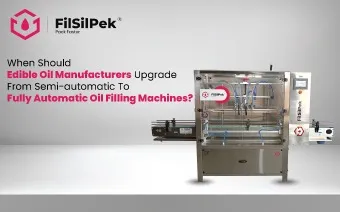
When should edible oil manufacturers upgrade from semi-automatic to fully automatic oil filling machines?
Many edible oil manufacturers…..
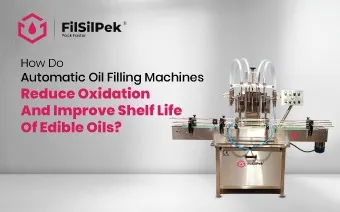
How do automatic oil filling machines reduce oxidation and improve shelf life of edible oils?
Edible oil oxidation remains one of the most persistent challenges in food processing, causing financial losses…..
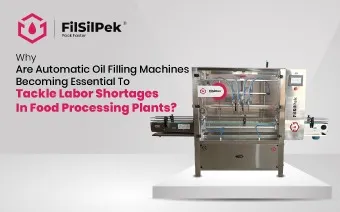
Why are automatic oil filling machines becoming essential to tackle labor shortages in food processing plants?
Food processing facilities across the United States face a persistent…..